Medically reviewed • Evidence-led under-eye filler education • Updated October 2026
Under Eye Filler for Wrinkles: Does It Really Work?14 min read
Under eye filler for wrinkles is one of the most discussed cosmetic treatments today. Many people notice fine lines, hollows, dark shadows, or creases under their eyes and naturally assume that a quick dermal filler injection can fix everything.
The truth, however, is much more specific. The under-eye area is highly delicate, with thin skin and complex vascular structures. While under eye filler can dramatically improve some wrinkle-like concerns—especially those related to volume loss—it is not a magic eraser for every type of under-eye wrinkle.
Quick Guide For 2026: Will Filler Fix Your Under-Eye Concern?
| Under Eye Concern | Can Filler Help? | The Scientific Explanation |
| Tear trough hollows | Often yes | Filler softens hollow grooves by adding structural volume support under the skin. |
| Fine lines under eyes | Sometimes | It may help if the lines appear deeper due to an underlying loss of volume. |
| Crepey under-eye skin | Usually no | Crepey texture relates to thin skin, collagen loss, and dryness. Filler does not tighten loose skin. |
| Smile lines (Dynamic) | Usually no | Lines caused by muscle movement (smiling/squinting) respond better to neuromodulators like Botox. |
| Shadow-based dark circles | Sometimes | If darkness is an optical illusion caused by hollowing, filler can lift the skin to reduce the shadow. |
| Puffy under eyes / Bags | Risky | Adding filler over existing fluid or fat pads can make puffiness look significantly worse. |
| Deep static wrinkles | Depends | Deep lines usually require a combination approach (e.g., filler for volume + lasers for skin resurfacing). |
What Are Under Eye Wrinkles?
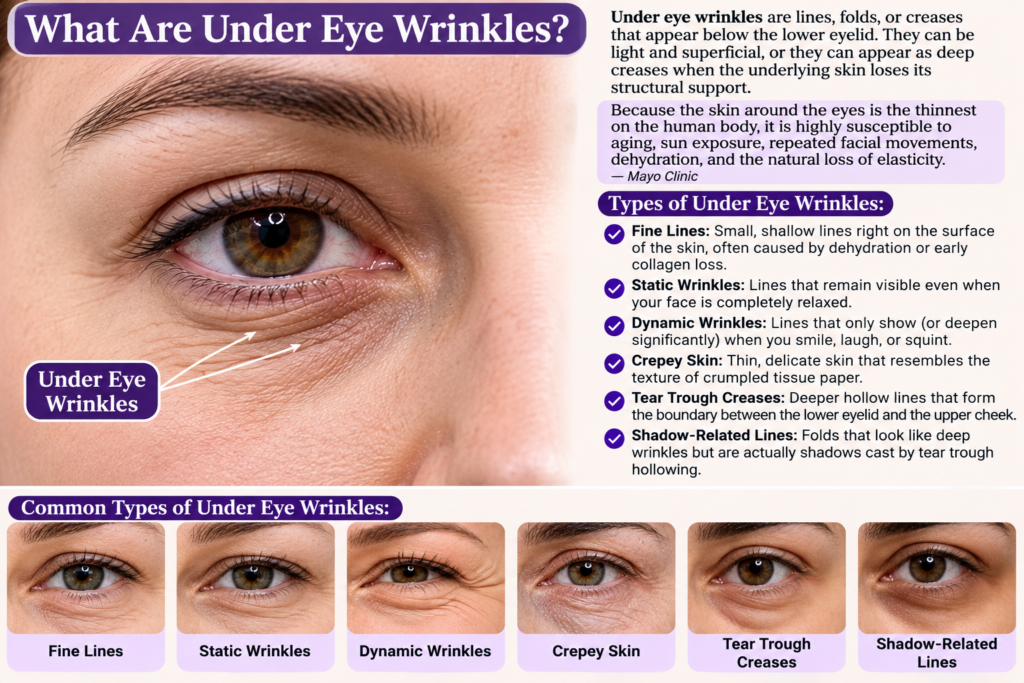
Under eye wrinkles are lines, folds, or creases that appear below the lower eyelid. They can be light and superficial, or they can appear as deep creases when the underlying skin loses its structural support.
Because the skin around the eyes is the thinnest on the human body, it is highly susceptible to aging, sun exposure, repeated facial movements, dehydration, and the natural loss of elasticity. According to the Mayo Clinic, as we age, our skin naturally becomes thinner, drier, and less elastic, making this area one of the first to show signs of aging.
To understand the right treatment, it is crucial to identify the type of wrinkle you have. They generally fall into these categories:
- Fine Lines: Small, shallow lines right on the surface of the skin, often caused by dehydration or early collagen loss.
- Static Wrinkles: Lines that remain visible even when your face is completely relaxed.
- Dynamic Wrinkles: Lines that only show (or deepen significantly) when you smile, laugh, or squint.
- Crepey Skin: Thin, delicate skin that resembles the texture of crumpled tissue paper.
- Tear Trough Creases: Deeper hollow lines that form the boundary between the lower eyelid and the upper cheek.
- Shadow-Related Lines: Folds that look like deep wrinkles but are actually shadows cast by tear trough hollowing.
This distinction is vital because dermal filler does not treat all of these conditions in the same way.
How Under Eye Filler Actually Works
Under eye filler is a cosmetic treatment where a soft, gel-like substance (usually a Hyaluronic Acid filler) is precisely injected into the tear trough area.
Hyaluronic acid is a naturally occurring substance in the body that attracts and retains moisture. The Cleveland Clinic notes that dermal fillers are designed to add volume, smooth out lines, and restore youthful fullness to specific facial contours.
The most important takeaway: In the under-eye region, filler is not primarily used to “erase” surface wrinkles. Its main job is to treat volume loss and hollowing.
When a skilled injector fills the hollow space between the lower eyelid and the cheek, the transition becomes smoother. As a result, the skin is pushed up slightly, which can stretch out certain fine lines and eliminate the dark shadows casting “fake” wrinkles. A person with structural hollowing may see a softer shadow after treatment, whereas someone whose primary concern is loose, crepey skin may see little improvement from filler.
When Under Eye Filler Can Help Wrinkles
Under eye filler shines when your wrinkles are exacerbated by a lack of underlying volume. As our faces age, the under-eye area loses fat pads, collagen, and elastin. This structural loss creates a hollow groove (the tear trough) that makes the overlying skin look wrinkled, draped, or perpetually tired.
Filler is typically highly effective when:
- The wrinkle or crease sits directly inside a tear trough hollow.
- There is a deep, visible shadow between the lower eyelid and the upper cheek.
- Fine lines appear more prominent because the skin lacks structural support underneath.
- Your under-eye skin is relatively firm, not extremely loose or puffy.
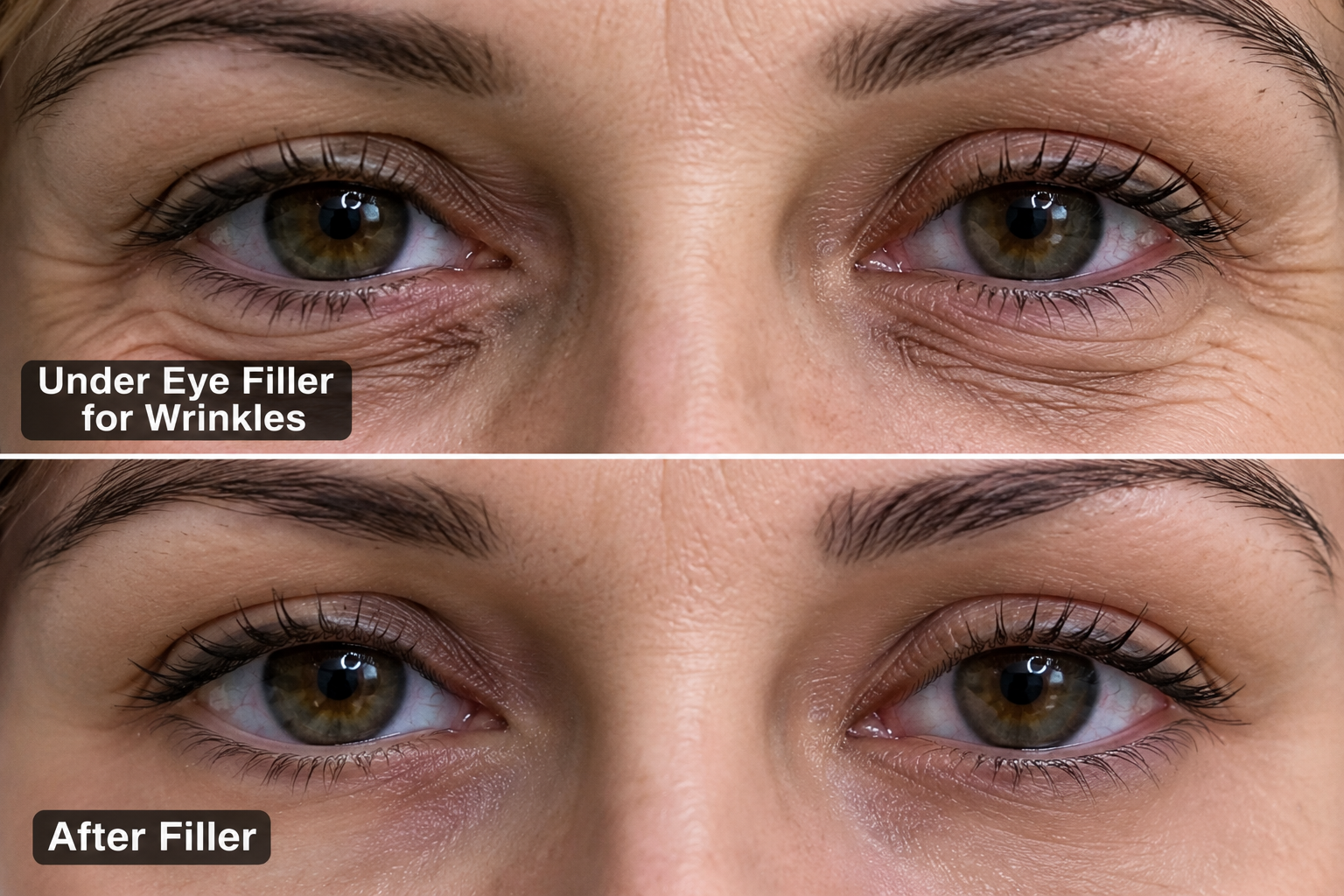
The ultimate goal here is a subtle, rested appearance rather than a dramatic transformation. To understand what is achievable, evaluating realistic under eye filler before and after results is an excellent way to set safe and natural expectations before booking a consultation.
When Filler May Not Help Under Eye Wrinkles
Filler is not a one-size-fits-all solution. Many under-eye wrinkles originate from poor skin quality or muscle movement rather than volume loss. In these scenarios, injecting filler will not resolve the root cause and might even make the area look heavy or unnatural.
Dermal fillers may not work well (or should be avoided) if your main issue is:
- Crepey Skin: Thin, delicate skin that has lost elasticity.
- Severe Skin Laxity: Noticeably loose or sagging under-eye skin.
- Sun Damage & Dehydration: Textural issues affecting the surface of the skin.
- Under-Eye Bags & Puffiness: If you already suffer from fluid retention or prominent fat pads under the eyes, adding more volume (filler) will often exacerbate the swelling, making the puffiness much more noticeable.
- Strong Dynamic Wrinkles: Deep lines that only form when you smile.
Under Eye Filler for Wrinkles vs. Botox for Wrinkles
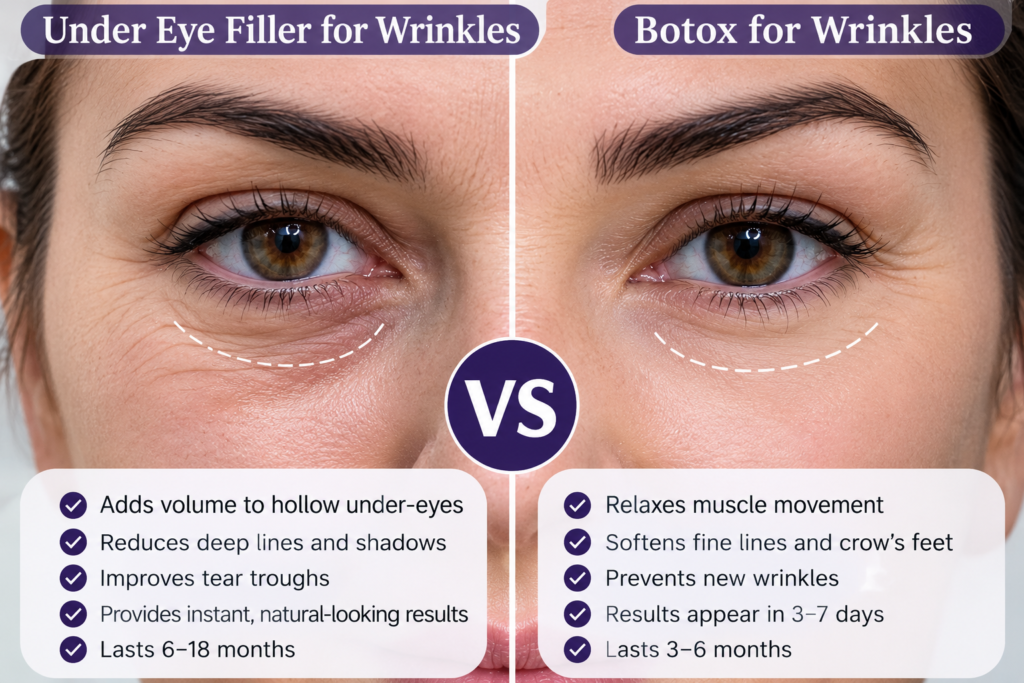
If there is one crucial concept to grasp about under-eye rejuvenation, it is the difference between filler and neuromodulators like Botox. This is where most patients get confused. They serve entirely different purposes:
- Filler adds volume and structure to hollow areas.
- Botox relaxes targeted muscle movements.
If your under-eye wrinkles are caused by hollowness and volume loss, filler is the appropriate tool. However, if your wrinkles primarily appear or worsen when you smile, squint, or laugh, these are dynamic wrinkles. According to the Mayo Clinic, Botox injections smooth facial wrinkles by temporarily blocking chemical signals from nerves, preventing the underlying muscles from contracting.
Which Treatment Do You Actually Need?
To make it simple, here is a breakdown of which treatment targets which concern:
Choose Under Eye Filler for:
- Tear trough hollows and sunken eyes.
- Hollow-induced shadows (which look like dark circles).
- General volume loss causing the skin to drape.
Choose Botox (Neuromodulators) for:
- Crow’s feet (lines at the outer corners of the eyes).
- “Jelly roll” lines (the muscle bulge right under the lower lash line when smiling).
- Smile-induced dynamic crinkling.
Choose Skin-Resurfacing Treatments for:
- Crepey skin, sun damage, and surface-level textual issues. (In these cases, treatments like fractional lasers, PRF, or microneedling are far superior to injectables).
Understanding the cause of your wrinkles—rather than just looking at the wrinkle itself—is the secret to choosing the right treatment and avoiding an overfilled, unnatural look.
Can Under Eye Filler Make Wrinkles Look Worse?
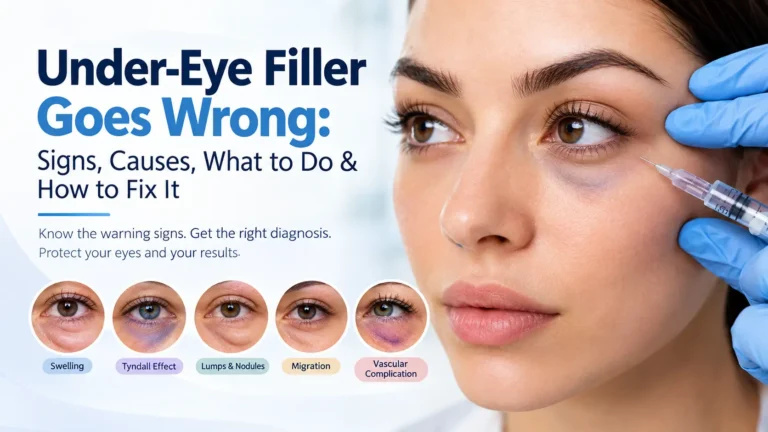
This is a very common and valid fear. Yes, in some cases, under eye filler can actually make wrinkles or the general texture of the under-eye area look worse. This typically happens when the patient is not an ideal candidate, the filler is placed at the wrong depth, or simply too much product is used.
Filler may negatively affect the under-eye appearance if it causes:
- Overfilled Puffiness: Too much volume can create a “sausage” or heavy lower eyelid look, making nearby creases look deeper by comparison.
- The Tyndall Effect: If the filler is placed too superficially (too close to the skin’s surface), it can give off a bluish tint, mimicking a dark circle.
- Lumps and Uneven Contour: Poorly placed filler can clump, creating an irregular surface texture.
- Filler Migration: Over time, or due to bad placement, filler can move from the targeted hollow into surrounding areas.
The U.S. Food and Drug Administration (FDA) warns that dermal fillers can cause swelling, bruising, infection, and other complications even when a qualified clinician performs the procedure. Accidental injection into a blood vessel can cause tissue damage, blindness, or stroke. Seek immediate medical care for unusual pain, skin color changes, or vision symptoms after injection.
This does not mean you should panic, but it does mean you must choose an experienced, medically qualified injector (like a board-certified dermatologist or oculoplastic surgeon) who thoroughly understands facial anatomy.
Why Wrinkles Can Appear After Under Eye Filler
Many patients search for “wrinkles after under eye filler” because they notice new or returning lines shortly after their treatment. If you experience this, it usually comes down to one of these four reasons:
- The Swelling Illusion: Immediately after injection, swelling plumps up the entire area, hiding every single surface line. As the swelling naturally subsides over a few weeks, your normal surface lines reappear, making you think the filler “caused” them.
- Skin Laxity: Filler adds volume underneath the skin; it cannot tighten the skin itself. If your skin is thin or crepey, plumping the area underneath won’t change the paper-like texture on top.
- Pressure Creases: In cases of slight overfilling, the added volume can push the skin up and create a new fold or crease when you smile.
- Natural Aging: Filler is a cosmetic fix, not a pause button. Collagen breakdown and facial movements continue to age the skin over time.
To avoid unnecessary panic, every patient must have a clear understanding of the normal under eye filler recovery time. Early swelling, tenderness, and minor bruising can drastically alter how the results look in the first few days. The appearance can change as swelling resolves; timing varies by person and treatment.
Fine Lines vs. Hollows: Why the Difference Matters
To summarize the technical side of the treatment, you must separate surface issues from structural issues.
- Fine lines are a surface-level problem (caused by dryness, aging, and movement).
- Hollows are a deep structural problem (caused by bone structure or fat loss).
If you have both hollows and fine lines, resolving the deep hollow with filler will often stretch the skin slightly, making the surface lines look much softer overall. However, if you only have fine lines with absolutely no volume loss, injecting filler is the wrong approach and will likely leave you looking puffy.
Under Eye Filler for Crepey Skin
Crepey under-eye skin is arguably the most challenging concern to treat with filler alone. Because crepey skin is characterized by a loss of collagen and elastin, pumping it full of hyaluronic acid gel does not fix the cellular degradation.
For patients struggling primarily with crepey texture, building collagen is the priority. Your dermatologist will likely recommend superior alternatives to filler, such as:
- Medical-grade Skincare: Prescription retinoids and deeply hydrating eye creams.
- Energy-Based Devices: RF (Radiofrequency) microneedling or fractional laser resurfacing to stimulate fresh collagen production.
- Regenerative Medicine: PRP (Platelet-Rich Plasma) or PRF treatments, which use your body’s own growth factors to rebuild tissue quality.
Under Eye Filler for Dark Circles and Wrinkles
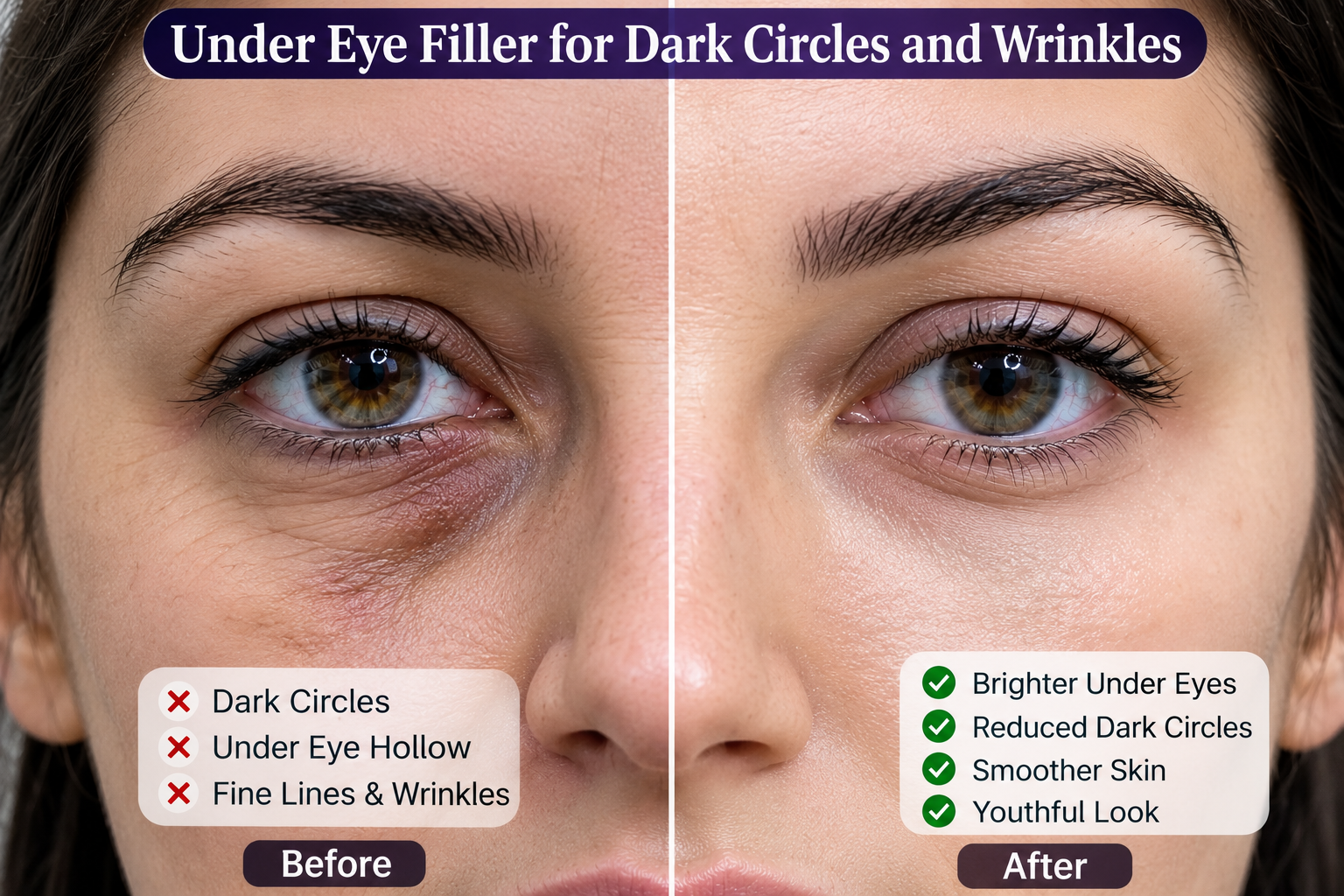
Many patients walk into a clinic wanting to fix both wrinkles and dark circles at the same time. While filler can be a fantastic tool, it only helps a specific type of dark circle.
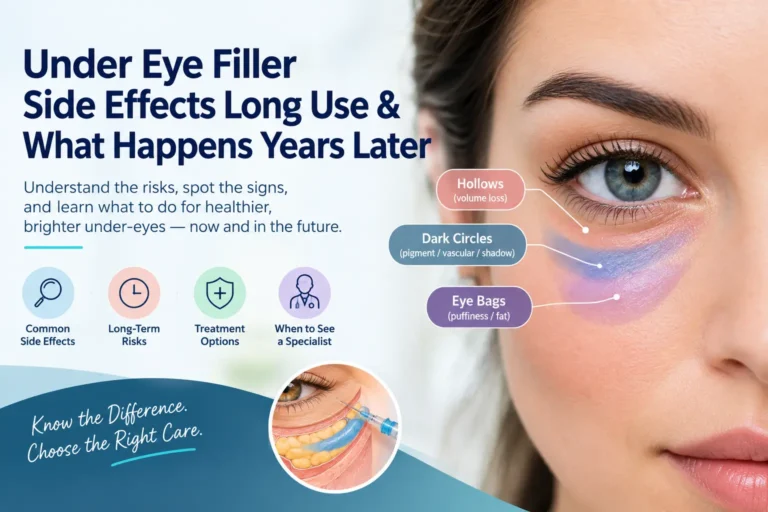
If your dark circles are caused by shadowing from hollows, filler can lift the skin and eliminate the shadow, making the area look instantly brighter. However, if your dark circles are caused by:
- Brown pigmentation (genetics or sun damage)
- Visible purple or blue blood vessels showing through thin skin
- Allergies (often called “allergic shiners”)
- Poor sleep or lifestyle factors
…then filler will not solve the main issue. In clinical practice, proper assessment is crucial. Injecting filler over pigmented or vascular dark circles can sometimes make the discoloration look more prominent due to the Tyndall effect.
Who Is an Ideal Candidate for Under Eye Filler?
A successful cosmetic outcome relies heavily on patient selection. Not everyone is a good fit for this specific procedure.
You are likely a GREAT candidate if:
- You have mild to moderate tear trough hollowing.
- Your dark circles are primarily shadows, changing depending on the lighting.
- Your under-eye skin has good elasticity and thickness.
- You are seeking a subtle, rested improvement rather than total perfection.
- You understand that filler addresses volume, not surface-level aging.
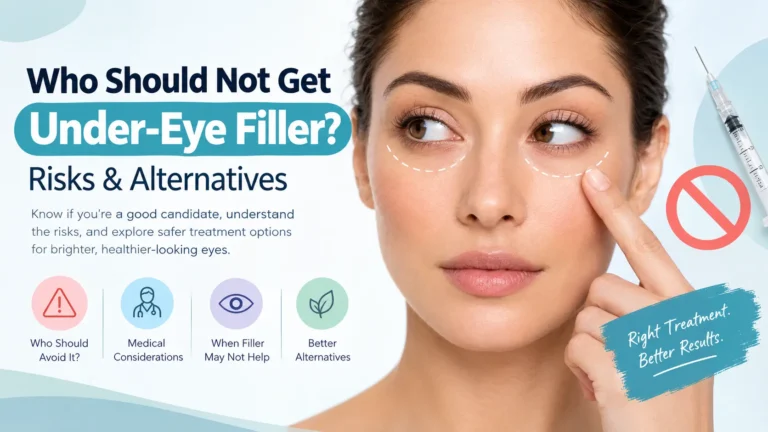
You may NOT be a good candidate if:
- You suffer from severe morning puffiness or fluid retention (malar edema).
- You have significant under-eye bags or fat prolapse (which often requires surgery, like a blepharoplasty).
- Your skin is extremely loose or highly crepey.
- You have unrealistic expectations about erasing every single wrinkle.
Safer Options & Alternatives to Under Eye Filler
If filler isn’t the right choice for your specific type of wrinkles—or if you simply want to avoid injectables—there are highly effective alternative treatments available based on your root cause.
- For Surface Fine Lines: Consistent use of prescription retinoids, deeply hydrating eye creams containing ceramides or peptides, and targeted chemical peels.
- For Dynamic Smile Lines: Neuromodulators like Botox or Dysport to relax the specific muscles causing the skin to fold.
- For Crepey, Thin Skin: Collagen-stimulating treatments such as RF microneedling, fractional lasers, or PRF (Platelet-Rich Fibrin) therapy.
- For Hollowing Without Needles: If you are hesitant about injections, there are lifestyle adjustments, specialized skincare routines, and makeup techniques you can utilize. You can read this comprehensive guide on how to fix under eye hollows without filler to explore your non-invasive options.
What Results Should You Expect & How Long Does It Last?
An appropriately selected treatment may soften the transition between the lower eyelid and cheek. Puffiness or an unnatural contour can occur; discuss persistent changes with your treating clinician.
Because the under-eye area does not experience heavy muscle movement like the lips or cheeks, filler tends to last longer here. Depending on the specific hyaluronic acid product used and your unique metabolism, duration varies by product, placement, and individual factors; ask your clinician what evidence applies to the proposed treatment.
Pro Tip for Natural Results: Less is absolutely more. The under-eye area holds filler uniquely, and conservative amounts yield the best results. A skilled injector will often under-fill the area slightly, wait two weeks for swelling to subside, and then add a tiny bit more during a follow-up appointment if necessary.
Final Takeaway
Can under eye filler help with wrinkles? Yes, but only when those wrinkles are closely connected to tear trough hollowing, structural volume loss, or deep shadowing. It can make a hollow, tired-looking under-eye area appear significantly smoother and more youthful.
However, filler is not the cure-all for every line. If your primary battle is with crepey skin, dynamic smile lines, or sun damage, energy-based skin treatments or Botox will serve you much better. The most honest advice is this: Dermal filler repairs volume, but it does not directly repair skin quality. The secret to a beautiful, safe result is matching the right treatment to the actual anatomical cause of your wrinkles.
Disclaimer
This article is for informational and educational purposes only and does not constitute medical advice. Under eye filler is a cosmetic medical procedure that carries potential risks and side effects. Always consult a board-certified dermatologist, oculoplastic surgeon, or licensed aesthetic injector to determine the safest and most effective treatment plan for your specific anatomy.
References
- U.S. Food and Drug Administration (FDA): Dermal Fillers / Soft Tissue Fillers – Guidelines on safety risks, including rare but serious complications related to accidental vascular injection.

Sarah Mitchell is the founder and research editor of Under Eyes Filler, an independent patient-education resource. She is a researcher and writer, not a licensed medical professional. Her work is to read clinical studies and official FDA and ASPS guidance, then translate them into clear, honest explanations of under-eye filler results, recovery, risks, and realistic costs, so readers can prepare better questions for their own qualified provider.