
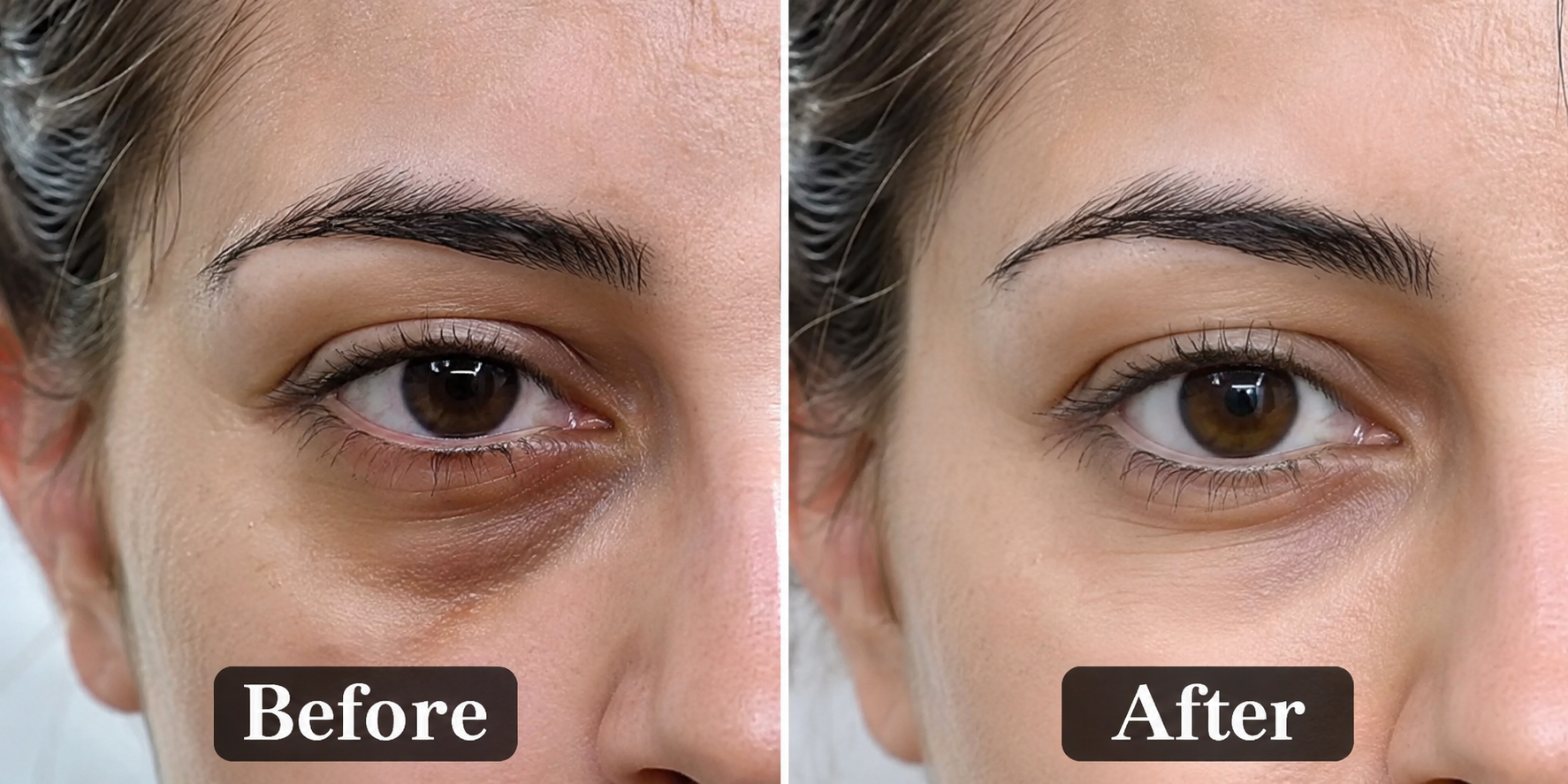
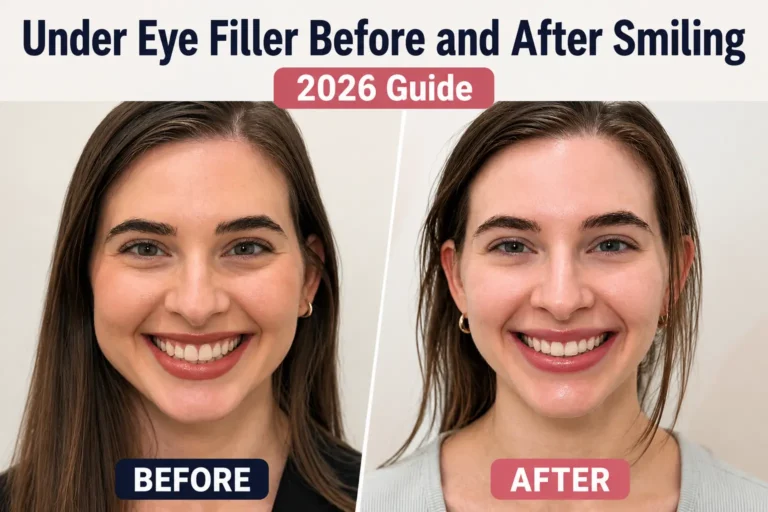
Under eye filler before and after results usually show softer tear trough hollows, reduced shadowing, and a smoother transition between the lower eyelid and cheek. The best results look natural and refreshed, not puffy, swollen, or overfilled.
However, under eye filler is often misunderstood. It can help volume-related hollowness, but it does not fix every type of dark circle, under-eye bag, pigmentation, or loose skin. Results depend on anatomy, filler type, injector skill, swelling, product placement, and whether the person is truly a good candidate.
This guide explains what realistic under eye filler before and after results look like in 2026, how much under eye filler costs, how long it lasts, what risks to know, how to judge before-and-after photos correctly, and when filler may not be the right treatment.
Medical disclaimer: This content is for educational purposes only and does not provide medical advice, diagnosis, or treatment. Always consult a qualified licensed medical provider before considering under eye filler or any cosmetic injectable treatment.
Quick Facts About Under Eye Filler Before and After Results
| Topic | Realistic Answer |
|---|---|
| Best for | Mild to moderate tear trough hollowness and volume-related shadows |
| Not best for | Severe eye bags, loose skin, fluid retention, or true pigmentation |
| Common filler type | Hyaluronic acid dermal filler |
| Results visible | Often visible quickly, but swelling can affect early results |
| Best time for after photos | Usually 2–4 weeks after treatment |
| Typical U.S. cost | Often around $600–$1,500+ per session depending on provider and location |
| General HA filler average | ASPS lists average hyaluronic acid filler cost at $715, but this is not under-eye specific |
| Duration | Often around 9–18 months, depending on product and individual response |
| Main risks | Swelling, bruising, lumps, puffiness, Tyndall effect, migration, and rare vascular complications |
| FDA-approved under-eye options | Restylane Eyelight and JUVÉDERM VOLBELLA XC are approved for infraorbital hollowing in adults over 21 |
What Are Under Eye Filler Before and After Results?
Under eye filler before and after results show how the under-eye area changes after filler is placed to soften hollowing beneath the eyes. In the right person, the tear trough may look smoother, the shadow under the eye may appear lighter, and the face may look more rested.
A realistic result may show:
- softer under-eye hollows
- less shadowing caused by volume loss
- smoother lower eyelid-to-cheek transition
- a refreshed but natural appearance
- subtle correction instead of dramatic transformation
A good result should not make the under-eye area look swollen, shiny, heavy, or obviously filled. The goal is not to erase every line. The goal is to improve the hollow or shadow that makes the under-eye area look tired.
What Is Under Eye Filler?
Under eye filler, also called tear trough filler, is an injectable treatment used to improve hollowing under the eyes. It is usually done with hyaluronic acid filler, a gel-like material used in many cosmetic dermal fillers.
The under-eye area between the lower eyelid and cheek is delicate. When this area loses volume, a groove can form and create a shadow. Filler may help soften that groove by carefully adding volume.
In the United States, Restylane Eyelight is FDA-approved to improve depressed, sunken, or hollow areas under the eyes, also called infraorbital hollowing, in people 21 years and older. JUVÉDERM VOLBELLA XC is also FDA-approved for improvement of infraorbital hollowing in adults over age 21.
FDA approval does not mean the treatment is risk-free. It means the product has been reviewed for a specific use under specific conditions. Under eye filler still requires proper patient selection, careful technique, and an experienced licensed provider.
What Can Under Eye Filler Realistically Improve?
Under eye filler works best when the main concern is hollowing or volume-related shadowing. This means the dark appearance is caused by a groove or depression rather than skin color alone.
1. Hollow Tear Troughs
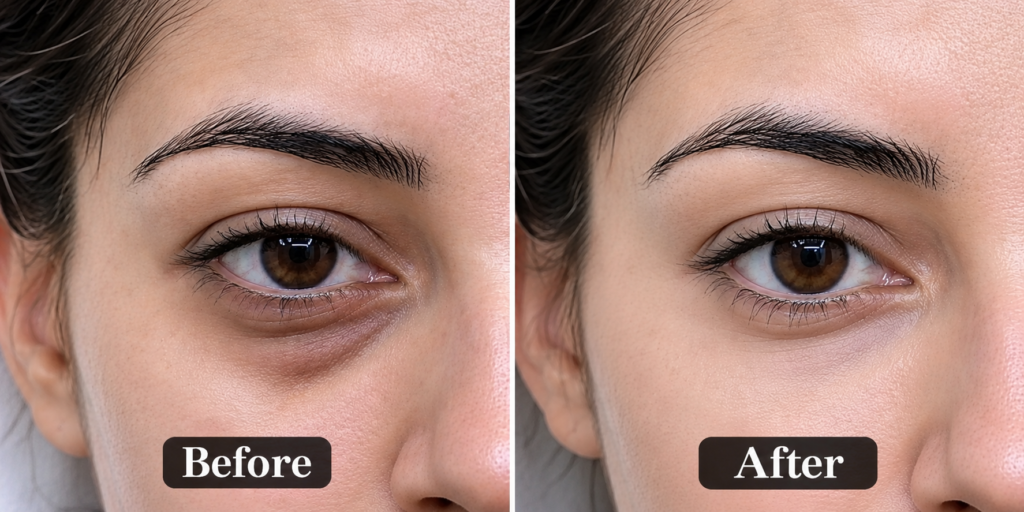
Before treatment, the tear trough may look sunken or deeply carved. After filler, the hollow may look softer because volume has been added under the skin.
A natural result should still preserve normal facial contours. If the area becomes completely flat or raised, it may look overfilled.
2. Shadows Caused by Volume Loss
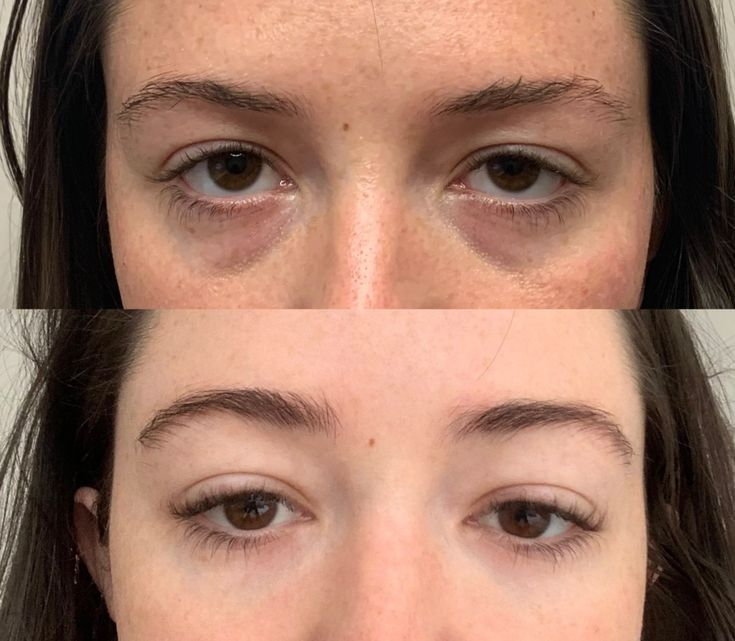
Some dark circles are actually shadows. When light hits a hollow groove, the area can look darker. If filler softens the groove, the shadow may look less visible.
This does not mean filler changes the actual skin color. It simply reduces the shadow caused by the hollow.
3. Tired-Looking Eyes
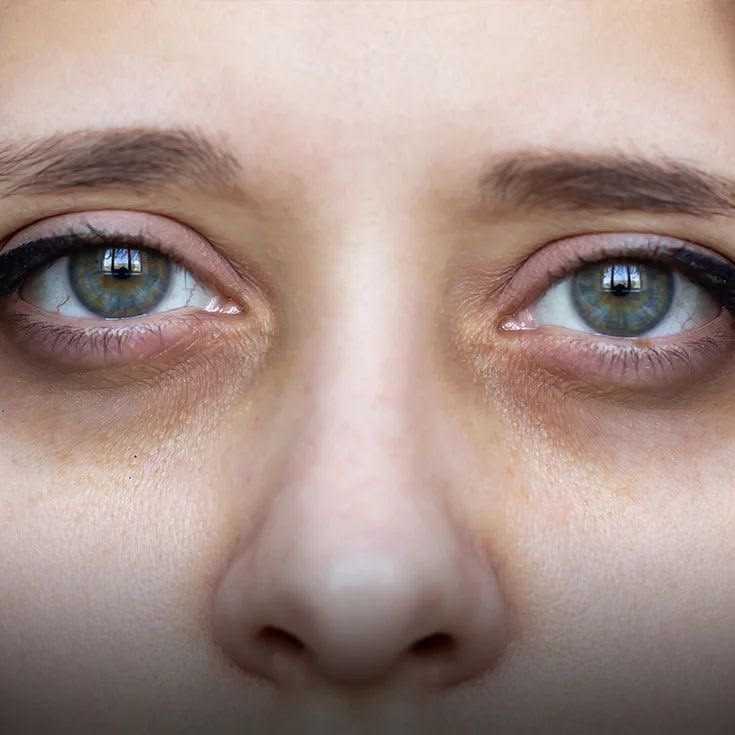
Under-eye hollows can make someone look tired even when they sleep well. A subtle filler result may make the face look more awake and balanced.
The best results usually look like the person is well-rested, not like they had cosmetic work done.
4. Lower Eyelid-to-Cheek Transition
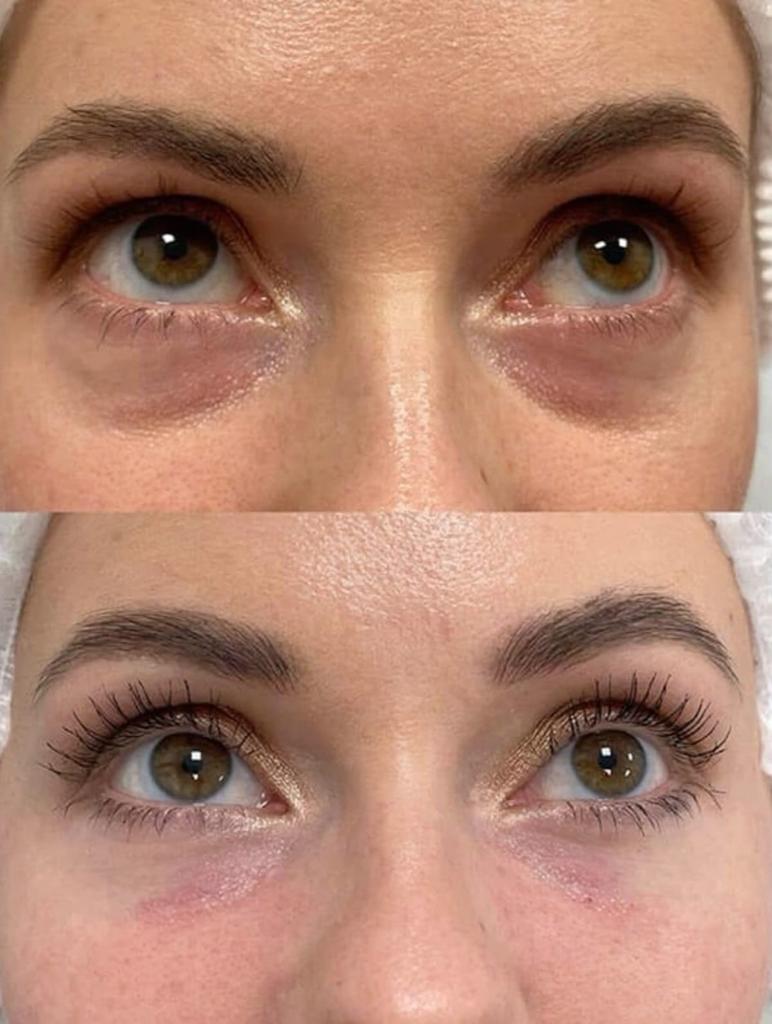
A major sign of a good under eye filler result is a smoother transition from the lower eyelid to the upper cheek. Instead of a sharp groove, the area looks more blended.
This is often what creates the “refreshed” before-and-after look.
What Under Eye Filler Cannot Fix
Under eye filler does not fix every under-eye concern. This is one of the most important things to understand before judging before-and-after photos.
Under eye filler may not fully correct:
- brown pigmentation
- blue or purple discoloration from thin skin
- loose or crepey under-eye skin
- large eye bags caused by fat pads
- allergy-related puffiness
- fluid retention
- malar edema
- deep wrinkles from skin laxity
- dark circles caused by genetics
- swelling from old filler migration
If the main problem is pigmentation, filler may not make a big difference. If the main problem is puffiness or eye bags, filler may sometimes make the area look heavier.
A safe and realistic provider should explain what filler can and cannot do before treatment.
Under Eye Filler Before and After Examples
These are educational examples of common result patterns. They are not guarantees.
Example 1: Hollow Tear Troughs
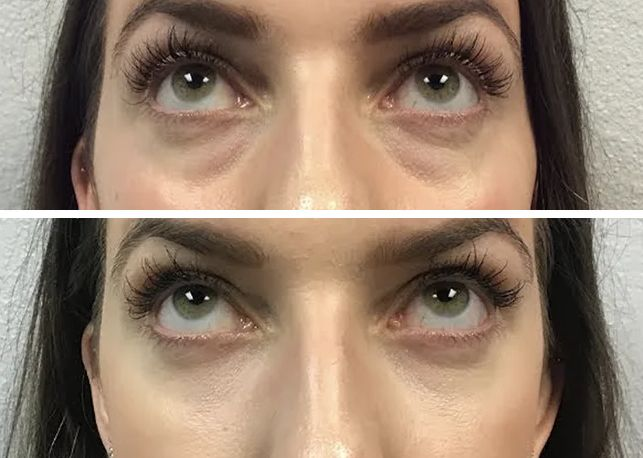
Before: The under-eye area has a visible groove between the lower eyelid and cheek. The person looks tired because the hollow creates a shadow.
After: The groove looks softer, the shadow appears lighter, and the lower eyelid blends more smoothly into the cheek.
Best candidate: Someone with mild to moderate hollowing and little puffiness.
Realistic expectation: Improvement, not perfection.
Example 2: Dark Circles From Pigmentation
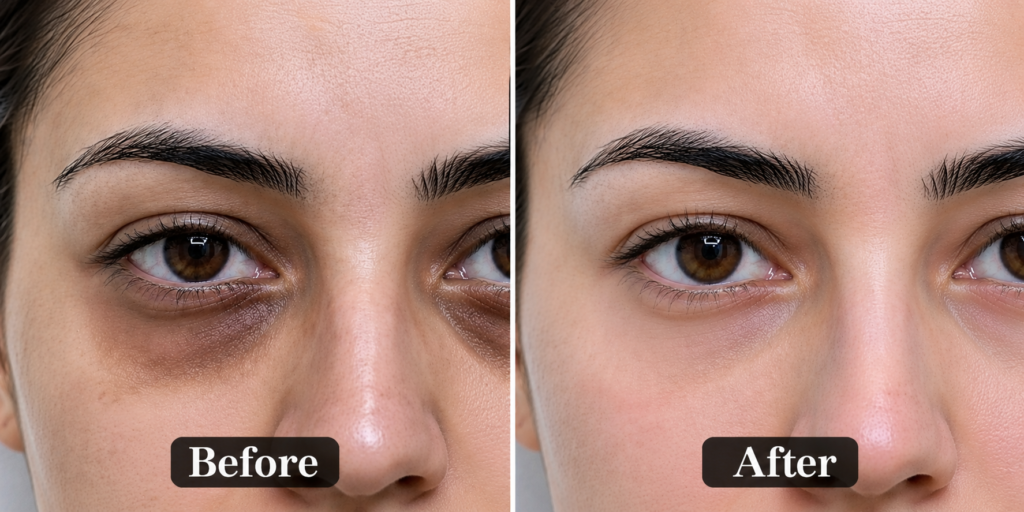
Before: The under-eye skin looks brown or gray, but there is not much hollowing.
After: Filler may give little improvement because the darkness comes from pigment, not volume loss.
Best option: A dermatologist may suggest skincare, sunscreen, pigment treatments, lasers, or other approaches.
Realistic expectation: Filler may not be worth it if pigmentation is the main issue.
Example 3: Puffy Eye Bags
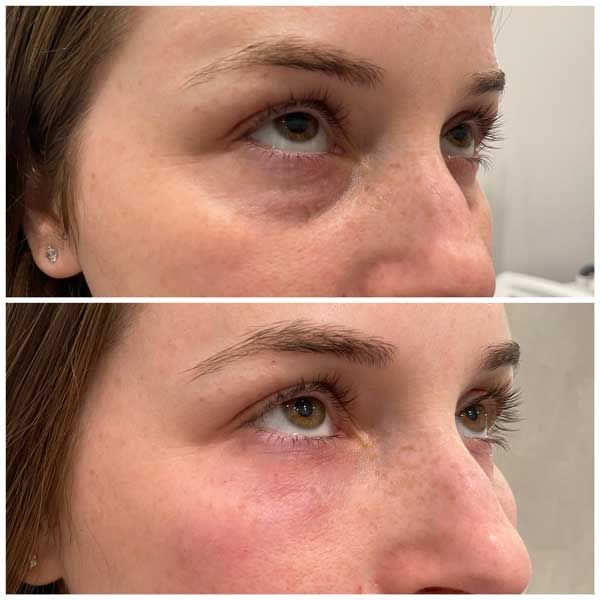
Before: The person has bulging under-eye bags or fluid retention.
After: Filler may make the area look heavier if the puffiness is not properly evaluated.
Best option: An oculoplastic surgeon or qualified specialist may assess whether surgery, skin treatment, or another option is better.
Realistic expectation: Filler is not usually the best treatment for true eye bags.
Example 4: Overfilled Under Eyes
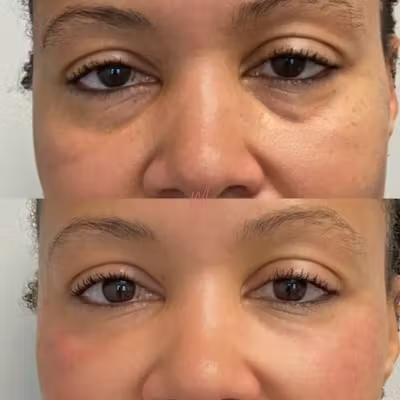
Before: Mild hollowing is present.
After: The under-eye area looks puffy, raised, or shelf-like because too much filler was used or the product was placed incorrectly.
Possible issue: Overfilling, wrong product choice, superficial placement, fluid retention, or filler migration.
Realistic solution: A qualified provider may evaluate whether dissolving or correction is needed.
How to Judge Under Eye Filler Before and After Photos
Before-and-after photos can be helpful, but they can also be misleading. Lighting, camera angle, makeup, facial expression, filters, and timing can completely change how the result looks.
| Photo Factor | Why It Matters |
|---|---|
| Same lighting | Lighting can make shadows look deeper or softer |
| Same camera angle | A different angle can exaggerate improvement |
| Same distance | Closer or farther photos can distort proportions |
| Same facial expression | Smiling or squinting changes the under-eye area |
| Same makeup | Concealer can make results look better than they are |
| Same skin prep | Brightening products or filters can hide texture |
| Timing after treatment | Early swelling can make results look fuller |
| No filters | Skin smoothing can hide lumps, shadows, or unevenness |
A reliable after photo is usually taken after swelling has settled. Many people compare results around 2–4 weeks after treatment because the early swelling is easier to judge by then.
Good Under Eye Filler Results vs Bad Results
A good under eye filler result looks smooth, balanced, and natural. A poor result may look puffy, lumpy, uneven, blue-gray, or overfilled.
| Good Result | Poor Result |
|---|---|
| Softer tear trough hollow | Puffy under-eye shelf |
| Reduced shadowing | Blue-gray discoloration |
| Smooth lid-cheek transition | Visible lumps or bumps |
| Natural refreshed look | Heavy or swollen appearance |
| Balanced both sides | Uneven contour |
| No obvious filler look | Overfilled or artificial look |
| Looks good in normal lighting | Looks worse in natural light |
A poor result does not always mean the filler product itself was bad. It may happen because of poor candidate selection, too much filler, superficial placement, wrong product choice, fluid retention, or old filler already present in the area.
Who Is a Good Candidate for Under Eye Filler?
Under eye filler is usually best for people whose main concern is hollowing or volume loss under the eyes.
You may be a better candidate if:
- your under-eye issue is mainly hollowing
- the darkness looks like a shadow from a groove
- you have mild to moderate tear trough volume loss
- your under-eye skin has enough support
- you do not have significant puffiness
- you do not have prominent eye bags
- you want subtle improvement
- you understand results vary
- you are willing to choose an experienced licensed provider
A provider should assess the whole midface, not just the line under the eye. Sometimes weak cheek support can make the tear trough look worse.
Who May Not Be a Good Candidate?
Not everyone who searches for under eye filler before and after photos should get filler.
You may not be an ideal candidate if:
- you have prominent under-eye bags
- you have fluid retention
- you have malar edema
- your dark circles are mainly pigmentation
- your skin is very loose or crepey
- you have active infection or inflammation
- you have severe allergies to filler ingredients
- you expect filler to erase all dark circles
- you already have migrated or overfilled filler
- you want a dramatic transformation
The FDA notes that dermal fillers have contraindications and potential risks, so individual medical history matters before treatment.
Good Candidate vs Poor Candidate
| Under-Eye Concern | Is Filler Likely to Help? | Why |
|---|---|---|
| Hollow tear troughs | Often yes | Filler may soften volume-related grooves |
| Shadow from hollowing | Often yes | Reducing the groove can reduce shadowing |
| Mild tired-looking eyes | Sometimes | Depends on whether volume loss is the cause |
| Brown pigmentation | Limited | Filler does not remove pigment |
| Severe eye bags | Usually no | Filler may make puffiness look worse |
| Loose skin | Limited | Skin quality may need other treatment |
| Allergy puffiness | Usually no | The issue is inflammation/fluid, not volume |
| Previous filler migration | Not until evaluated | Old filler may need assessment or dissolving |
How Much Does Under Eye Filler Cost in 2026?
Under eye filler cost in the United States usually depends on provider experience, location, filler brand, product amount, treatment complexity, and whether cheek support is needed.
A realistic U.S. estimate is often around $600 to $1,500+ per treatment session, but the final price can be higher in major cities or with highly experienced injectors.
The American Society of Plastic Surgeons lists the average cost of hyaluronic acid dermal fillers at $715, but this is a general HA filler average and not a guaranteed under-eye filler quote.
For a deeper price breakdown, read our full filler cost guide before comparing clinics or booking treatment.
Why Under Eye Filler Pricing Varies
Cost can vary because under eye filler is a delicate treatment. The price is not only about the syringe. It is also about skill, safety, product choice, and treatment planning.
Common cost factors include:
- injector experience
- medical credentials
- city or state
- filler brand
- amount of filler used
- whether cheeks need support
- consultation fees
- follow-up policy
- correction of previous filler
- complexity of anatomy
A cheap price is not always a good deal. The under-eye area is one of the most technically sensitive filler areas, so choosing only by discount can increase the risk of poor results.
Is Under Eye Filler Priced Per Syringe or Per Area?
Some clinics price dermal filler by the syringe. Others price by treatment area or treatment session.
Under eye filler may be priced:
- per syringe
- per under-eye area
- per session
- as part of an under-eye and cheek support plan
This matters because some patients assume filler is only placed directly under the eye. In reality, the provider may need to evaluate the lower eyelid, tear trough, cheek support, skin thickness, and existing volume loss together.
More filler does not always mean better results. In the under-eye area, conservative correction often looks more natural.
FDA-Approved Under Eye Filler Options
In the United States, not every filler is approved for the same use. For under-eye hollowing, FDA-approved options include Restylane Eyelight and JUVÉDERM VOLBELLA XC.
| Product | FDA-Approved Use | Age Group | Notes |
|---|---|---|---|
| Restylane Eyelight | Improvement of infraorbital hollowing | 21+ | Injected under the eyes between lower eyelid and cheekbone |
| JUVÉDERM VOLBELLA XC | Improvement of infraorbital hollowing | Over 21 | Temporarily adds volume/fullness under the eyes |
| Other HA fillers | May be off-label depending on use | Varies | Ask your provider what product is being used |
FDA approval does not mean the filler is right for everyone. It also does not remove the need for an experienced injector, proper anatomy assessment, and emergency safety planning.
How Long Does Under Eye Filler Last?
Under eye filler often lasts around 9 to 18 months, but this varies from person to person. Longevity depends on filler type, injection depth, metabolism, anatomy, lifestyle, and how the body responds.
Some people notice fading earlier. Others may see results last longer. The under-eye area does not move as aggressively as the lips, so filler may sometimes last longer there. However, longer-lasting filler is not always better if the product was poorly placed or if swelling develops.
A conservative maintenance plan is usually better than repeatedly adding filler without reassessment.
When Do Under Eye Filler Results Show?
Some improvement may be visible immediately after treatment, but the first look is not always the final result. Early swelling can make the area look fuller, uneven, or puffier than expected.
Immediate Result
The hollow may look smoother right away because volume has been added.
First Few Days
Swelling, redness, tenderness, and bruising may appear. The result may look temporarily fuller than expected.
One to Two Weeks
Swelling usually becomes easier to judge. The area may start looking more natural.
Two to Four Weeks
This is often a better time to compare before-and-after photos because early swelling has improved.
Three Months
Longer-term photos can show how the filler looks after full settling and normal facial movement.
You can also check the full recovery timeline to understand swelling, bruising, aftercare, and when results usually settle.
Under Eye Filler Recovery Timeline
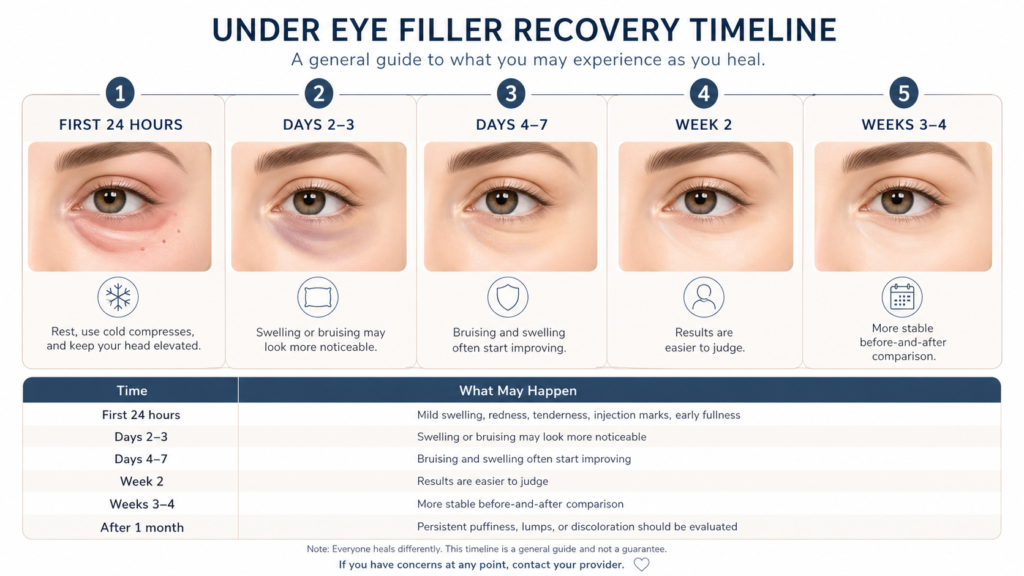
Recovery varies, but many people experience mild swelling or bruising.
| Time | What May Happen |
|---|---|
| First 24 hours | Mild swelling, redness, tenderness, injection marks, early fullness |
| Days 2–3 | Swelling or bruising may look more noticeable |
| Days 4–7 | Bruising and swelling often start improving |
| Week 2 | Results are easier to judge |
| Weeks 3–4 | More stable before-and-after comparison |
| After 1 month | Persistent puffiness, lumps, or discoloration should be evaluated |
Mild swelling can be normal. Severe pain, skin color changes, vision symptoms, spreading redness, fever, or rapidly worsening swelling should be treated as urgent warning signs.
What Should You Avoid After Under Eye Filler?
Follow your provider’s exact instructions. General aftercare advice may include avoiding pressure or activities that increase swelling soon after treatment.
A provider may advise you to temporarily avoid:
- rubbing the under-eye area
- massaging unless instructed
- intense exercise
- alcohol soon after treatment
- heat exposure such as sauna or hot yoga
- sleeping face-down
- tight goggles or facial devices
- makeup around injection sites for a short period
Aftercare instructions vary based on the provider, product, technique, and your individual situation.
Can You Wear Makeup After Under Eye Filler?
Many providers recommend waiting before applying makeup around injection sites. This may reduce irritation or contamination risk.
If there are visible injection points, tenderness, swelling, or bruising, be cautious. Makeup should not be used to hide concerning symptoms such as severe pain, unusual skin discoloration, spreading redness, or vision changes.
Ask your provider when it is safe to apply makeup again.
Risks and Side Effects of Under Eye Filler
Under eye filler can look smooth and natural in the right person, but it is still a medical procedure. The under-eye area is thin-skinned and close to important blood vessels.
Common side effects may include:
- swelling
- bruising
- tenderness
- redness
- mild pain
- itching
- temporary firmness
- small bumps
- temporary asymmetry
The FDA lists common dermal filler risks such as bruising, redness, swelling, pain, tenderness, itching, and rash. It also warns about less common but serious complications, including infection, nodules, migration, tissue damage, vision problems, and stroke.
The Most Serious Risk: Blood Vessel Injection
The most serious dermal filler risk is accidental injection into a blood vessel. The FDA states that this can block blood supply and may lead to serious complications such as tissue death, vision abnormalities including blindness, and stroke. Although the chance is low, the complications can be serious and permanent.
Urgent warning signs may include:
- severe or unusual pain
- skin turning white, gray, blue, or blotchy
- sudden vision changes
- severe headache
- weakness or numbness
- facial drooping
- difficulty speaking
- rapidly worsening swelling
- spreading redness or warmth
If any of these symptoms happen during or after filler treatment, seek urgent medical care immediately.
What Does Bad Under Eye Filler Look Like?
Bad under eye filler may look puffy, lumpy, blue-gray, uneven, swollen, or unnatural.
Possible signs include:
- persistent puffiness
- visible lumps or bumps
- uneven contour
- one side fuller than the other
- blue-gray discoloration
- under-eye filler shelf
- heavy-looking lower eyelids
- filler migration
- prolonged swelling
- worse appearance in natural lighting
Some issues may be temporary swelling. Others may involve placement, product choice, overfilling, old filler, or poor candidate selection.
Tyndall Effect: Blue or Gray Color After Under Eye Filler
The Tyndall effect is a bluish or grayish cast that can happen when filler is placed too superficially under thin skin. Since under-eye skin is naturally thin, this problem may be more visible in the tear trough area.
Possible causes include:
- filler placed too close to the surface
- thin under-eye skin
- incorrect product choice
- too much filler
- visible filler through the skin
If the filler is hyaluronic acid-based, a qualified provider may discuss whether dissolving is appropriate.
Under Eye Filler Migration
Filler migration means the product appears to move or spread away from the intended area. Under the eyes, migration may create puffiness, a swollen ridge, or a heavy look.
Possible signs include:
- persistent under-eye swelling
- fullness below the tear trough
- swollen ridge under the eye
- heaviness that develops over time
- filler visible outside the original hollow
Migration can be more noticeable in people prone to fluid retention or people who repeatedly add filler without reassessment.
Can Under Eye Filler Be Dissolved?
Many under eye fillers are made from hyaluronic acid. In some cases, hyaluronic acid filler can be dissolved using hyaluronidase.
Dissolving may be considered for:
- overfilling
- unwanted puffiness
- lumps
- migration
- Tyndall effect
- poor contour
- unsatisfactory results
However, dissolving filler is also a medical procedure. It should be performed by a qualified provider. Some fillers, especially permanent or non-hyaluronic acid fillers, may be difficult or impossible to remove completely. The FDA notes that removing or reducing fillers may require injections, surgery, or other interventions.
Always ask what product is being injected and whether it is reversible.
How to Avoid Bad Under Eye Filler Results
No cosmetic treatment is completely risk-free, but careful choices can reduce risk.
Choose a Qualified Licensed Provider
Under eye filler should be performed by a licensed medical provider trained in facial anatomy and filler complications. The FDA advises patients not to buy fillers online or inject themselves.
Avoid Overfilling
The under-eye area usually needs subtle correction. More filler can create puffiness, heaviness, and an unnatural contour.
Ask What Product Is Being Used
Before treatment, ask:
- What filler brand is being used?
- Is it hyaluronic acid-based?
- Is it FDA-approved for under-eye hollowing?
- Can it be dissolved?
- What risks apply to my anatomy?
- What is the emergency plan if a complication happens?
Make Sure You Are a Good Candidate
If your main concern is pigmentation, eye bags, loose skin, or fluid retention, filler may not be the right option.
Take Proper Before-and-After Photos
Use the same lighting, angle, distance, expression, and makeup level. This helps you judge the real result.
Under Eye Filler vs Other Treatments
Under eye filler is not the only option. The best treatment depends on the cause of the concern.
| Concern | Filler | Better Alternative May Be |
|---|---|---|
| Hollow tear trough | Often helpful | Filler or cheek support |
| Volume-related shadow | Often helpful | Filler |
| Brown pigmentation | Limited | Skincare, pigment treatment, dermatologist |
| Thin skin | Limited | Skin treatments, PRP/PRF in selected cases |
| Loose skin | Limited | Laser, resurfacing, surgery consult |
| True eye bags | Usually not ideal | Lower blepharoplasty consult |
| Old filler puffiness | No | Assessment or dissolving |
Under Eye Filler vs Cheek Support
Sometimes under-eye hollows are not only an under-eye problem. Weak upper cheek support can make the tear trough look deeper.
In selected cases, subtle cheek support may improve the lower eyelid-to-cheek transition. This does not mean everyone needs cheek filler. It means the provider should assess the whole midface before deciding where filler should go.
A good result depends on balance, not simply adding more filler under the eye.
Is Under Eye Filler Worth It?
Under eye filler may be worth it for people with true tear trough hollowing, realistic expectations, and a qualified provider. It is less likely to be worth it if the main issue is pigmentation, severe eye bags, loose skin, fluid retention, or previous filler problems.
A good way to decide is to ask:
- Is my darkness caused by hollowing or pigment?
- Do I have puffiness or true eye bags?
- Am I a good candidate?
- What result is realistic for my anatomy?
- What are the risks?
- Can the product be dissolved?
- What happens if I do not like the result?
Under eye filler is best when it is used conservatively and for the right reason.
Cost vs Quality: Why Cheap Under Eye Filler Can Be Risky
Under eye filler is not the treatment to choose based only on the lowest price. The area is delicate, and poor technique can lead to puffiness, lumps, unevenness, visible filler, or serious complications.
A higher price does not guarantee a better result, but a very low price may be a warning sign if it comes with poor credentials, unclear product information, or no emergency protocol.
Before booking, check:
- provider credentials
- tear trough experience
- realistic before-and-after examples
- product name
- follow-up policy
- emergency protocol
- willingness to say no when filler is not appropriate
A trustworthy provider should explain limitations, not promise perfect dark circle removal.
Final Expectations: What Should Under Eye Filler Before and After Look Like?
The best under eye filler before and after results look subtle, smooth, and natural. The face may look more rested, but it should not look obviously filled.
A realistic result may include:
- softer under-eye hollows
- reduced shadowing
- smoother lid-cheek transition
- refreshed appearance
- natural contour
- no obvious puffiness
- no heavy under-eye shelf
Under eye filler is not magic. It will not reliably erase pigmentation, loose skin, severe bags, or medical causes of dark circles. The safest outcomes usually come from conservative treatment, correct product choice, proper candidate selection, and an experienced licensed provider.
FAQs About Under Eye Filler Before and After
How long does under eye filler last?
Under eye filler often lasts around 9 to 18 months, but results vary by product, metabolism, anatomy, placement, and lifestyle. Some people need maintenance earlier, while others may keep visible improvement longer.
Does under eye filler help dark circles?
Under eye filler may help dark circles when darkness is caused by hollowing or shadowing. It may not help much if the darkness is caused by pigmentation, thin skin, allergies, genetics, or medical issues.
Does under eye filler help eye bags?
Usually, under eye filler is not the best treatment for true eye bags. If bags are caused by fat pads or fluid retention, filler may make puffiness look worse. A specialist can assess whether surgery or another treatment is better.
How long does under eye filler take to settle?
Some results appear immediately, but swelling can distort the early look. Many people judge a more stable result around 2 to 4 weeks after treatment.
Is under eye filler painful?
Most people describe under eye filler as uncomfortable rather than extremely painful. Many fillers contain lidocaine, and providers may use comfort measures. Severe pain is not normal and should be evaluated urgently.
Can under eye filler cause blindness?
Blindness is rare, but it is a serious reported risk of dermal fillers if filler accidentally enters a blood vessel. The FDA warns that accidental blood vessel injection can cause tissue damage, vision abnormalities including blindness, and stroke.
Can under eye filler be dissolved?
Many hyaluronic acid fillers can sometimes be dissolved with hyaluronidase. However, dissolving filler should only be done by a qualified provider. Some permanent or non-HA fillers may be difficult or impossible to remove completely.
What are signs of bad under eye filler?
Signs may include persistent puffiness, lumps, unevenness, blue-gray discoloration, heaviness, migration, or worsening under-eye bags. Severe pain, skin color changes, or vision symptoms require urgent medical care.
How much does under eye filler cost?
In the United States, under eye filler often costs around $600 to $1,500+ per session, depending on provider, location, product, and complexity. ASPS lists average hyaluronic acid filler cost at $715, but this is a general average and not under-eye specific.
Is under eye filler better than surgery?
It depends on the problem. Filler may help hollowing, while lower blepharoplasty may be better for true eye bags or loose skin. A qualified provider can evaluate which option fits your anatomy.
Can under eye filler look natural?
Yes. Under eye filler can look natural when the person is a good candidate, the provider uses conservative technique, and the product is placed carefully. The best results look refreshed, not obviously filled.
What should I avoid after under eye filler?
Follow your provider’s instructions. Common temporary avoidances may include rubbing the area, intense exercise, alcohol, heat exposure, sleeping face-down, and pressure on the under-eye area.
Is tear trough filler the same as under eye filler?
Tear trough filler is a common type of under eye filler. It usually refers to filler placed to soften the groove between the lower eyelid and cheek.
Who should avoid under eye filler?
People with severe puffiness, prominent eye bags, fluid retention, malar edema, mainly pigmented dark circles, active infection, or unrealistic expectations may not be good candidates.
What is the safest under eye filler?
There is no single safest filler for everyone. Safety depends on product choice, anatomy, technique, provider training, and emergency planning. FDA-approved hyaluronic acid options for infraorbital hollowing include Restylane Eyelight and JUVÉDERM VOLBELLA XC.
Conclusion
Under eye filler before and after results can be impressive when the right person receives conservative treatment from a qualified provider. The best results usually show softer hollows, reduced shadowing, and a smoother transition from the lower eyelid to the cheek.
But under eye filler is not right for every under-eye concern. It does not reliably fix pigmentation, severe bags, loose skin, fluid retention, or medical causes of dark circles. It also carries risks, including swelling, bruising, lumps, puffiness, migration, Tyndall effect, and rare but serious vascular complications.
For 2026, the best approach is simple: look for realistic results, avoid overfilled trends, understand the risks, choose an experienced licensed provider, and remember that natural-looking improvement is better than dramatic overcorrection.
References
- U.S. Food & Drug Administration — Dermal Fillers Safety Information. The FDA explains common risks, serious vascular complications, removal concerns, and patient safety guidance for dermal fillers.
- U.S. Food & Drug Administration — Restylane Eyelight Approval. This confirms use for improving infraorbital hollowing in people 21 years and older.
- U.S. Food & Drug Administration — JUVÉDERM VOLBELLA XC Approval. This confirms expanded use for infraorbital hollowing in adults over age 21.
- American Society of Plastic Surgeons — Dermal Fillers Cost. ASPS lists average hyaluronic acid filler cost at $715 according to latest statistics.
Disclaimer: This information is for educational purposes only and does not provide medical advice, diagnosis, or treatment. Always consult a qualified licensed medical provider before considering under eye filler or any cosmetic injectable treatment.

Sarah Mitchell is the founder and research editor of Under Eyes Filler, an independent patient-education resource. She is a researcher and writer, not a licensed medical professional. Her work is to read clinical studies and official FDA and ASPS guidance, then translate them into clear, honest explanations of under-eye filler results, recovery, risks, and realistic costs, so readers can prepare better questions for their own qualified provider.
[…] comparing prices, it also helps to understand what realistic under eye filler before and after results actually look like, because the best value is not always the cheapest […]
[…] a better idea of realistic results, you can also review before-and-after photos once the swelling has […]
[…] you are comparing non-filler options with filler, it can help to look at realistic under eye filler before and after results so you understand what filler can and cannot […]
[…] rather than a dramatic transformation. To understand what is achievable, evaluating realistic under eye filler before and after results is an excellent way to set safe and natural expectations before booking a […]
[…] understand under eye filler before and after results fully, you must look at dynamic movements, not just static […]
[…] or inflammation hiding the outcome. This is the stage where you can accurately compare your own under eye filler before and after transformation to see if the hollows were successfully […]
[…] is our detail guide on Under Eye Filler Before and After with […]
[…] Now a days people are doing under eye filler for the beauty. For your beauty Under Eyes Filler before and after. […]
[…] you want to see what this timeline looks like in real patients rather than just in description, our under eye filler before and after photo guide walks through actual results at each […]
[…] you’re looking for the best filler for under eyes, you’ve probably noticed that not every filler works the same way in this area — and […]
[…] eye hollows can make a person look tired even after a full night of sleep. This is why filler for under eye hollows has become one of the most searched non surgical treatments in the United States. This […]
[…] good under eye filler before and after result should look refreshed, not overfilled. The goal is usually to soften the hollow, not […]