Medically reviewed • Evidence-led under-eye filler education • Updated October 2026
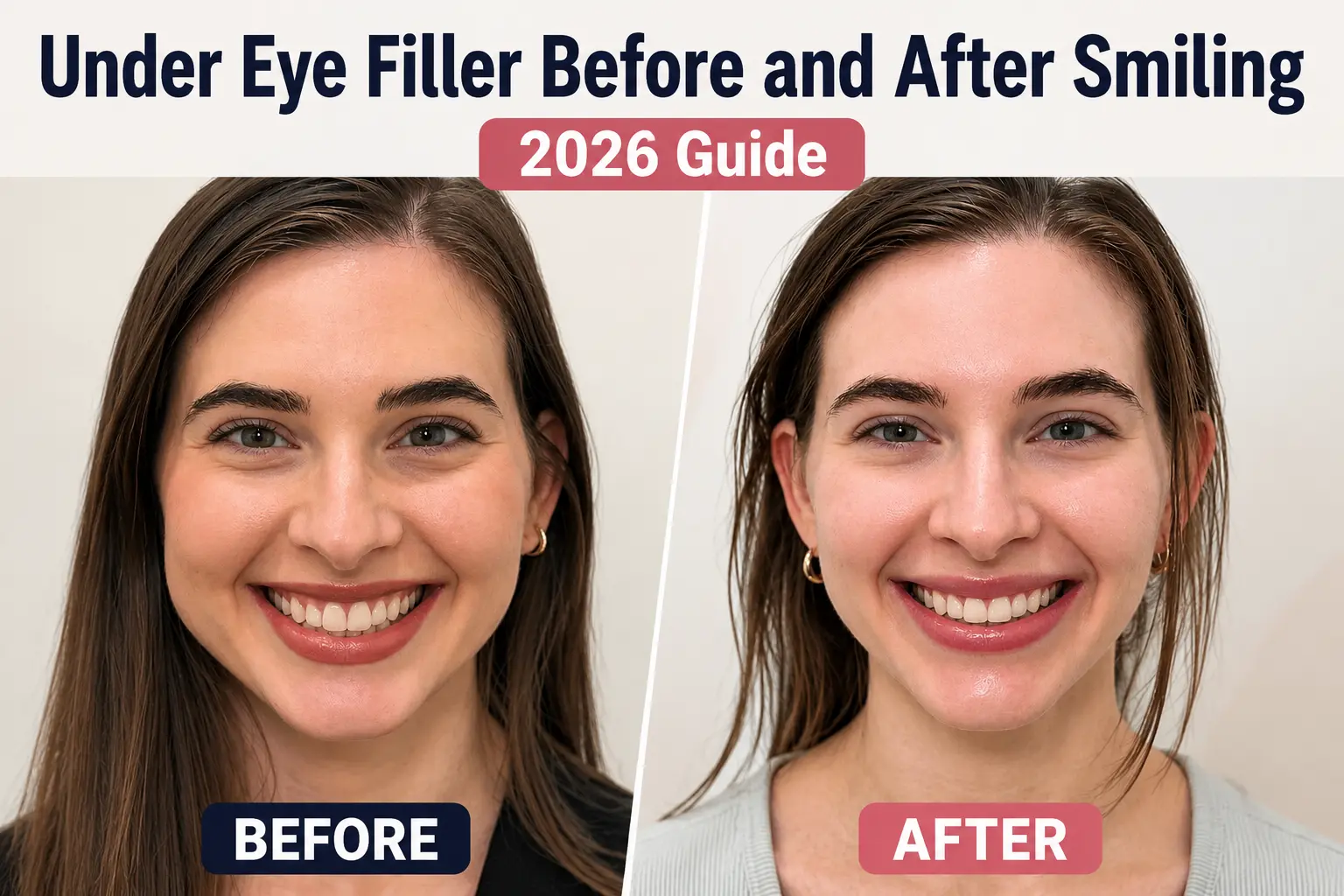
Under Eye Filler Before and After Smiling: Natural Results vs. Puffy Bulges8 min read
Under Eye Filler Before and After Smiling Guide For 2026
| Condition | Looking Straight (Resting Face) | While Smiling (Dynamic Movement) |
| Ideal Result | Smooth transition, no hollows or dark circles. | Natural cheek elevation, no lumps visible. |
| Overfilled | Slightly puffy or heavy appearance. | Significant bulging, looks like a “sausage”. |
| Wrong Placement | Looks fine, but may have a faint blue tint. | Visible lumps or bunching of skin. |
| Recovery Phase | Mild swelling or bruising. | Temporary tightness may improve as swelling settles; recovery varies. |
Many people love their tear trough injections when looking in the mirror with a relaxed face. However, the real test of a successful treatment is how it behaves when you laugh or smile. The biggest fear for most patients is experiencing unnatural bulges or puffy lines under the eyes during facial movement.
To understand under eye filler before and after results fully, you must look at dynamic movements, not just static photos.
Why Does Filler Look Different When You Smile?
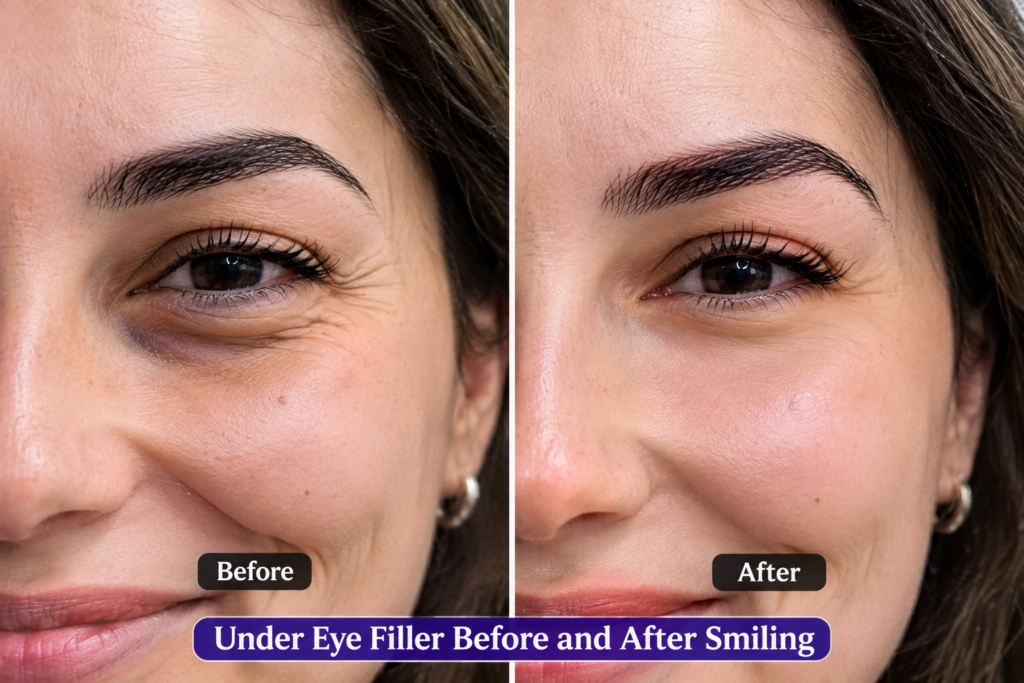
Your face is a complex network of muscles. When you smile, a circular muscle around your eye called the Orbicularis Oculi contracts, while your cheek muscles push upward.
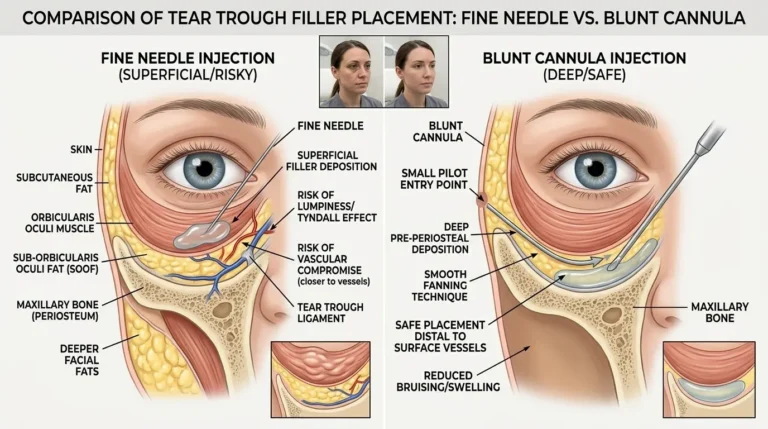
- The Muscle Conflict: If a Hyaluronic Acid (HA) filler is injected too close to the surface of the skin (superficial placement), the contracting muscles will push the filler upward.
- The Sausage Effect: This upward push creates a visible shelf, bulge, or “sausage” look under the eyes that disappears when you stop smiling.
Proper technique requires the injector to place the filler deep, directly over the bone. Deep placement allows the muscle to glide smoothly over the filler without pushing it around.
Core Issues During Facial Expressions
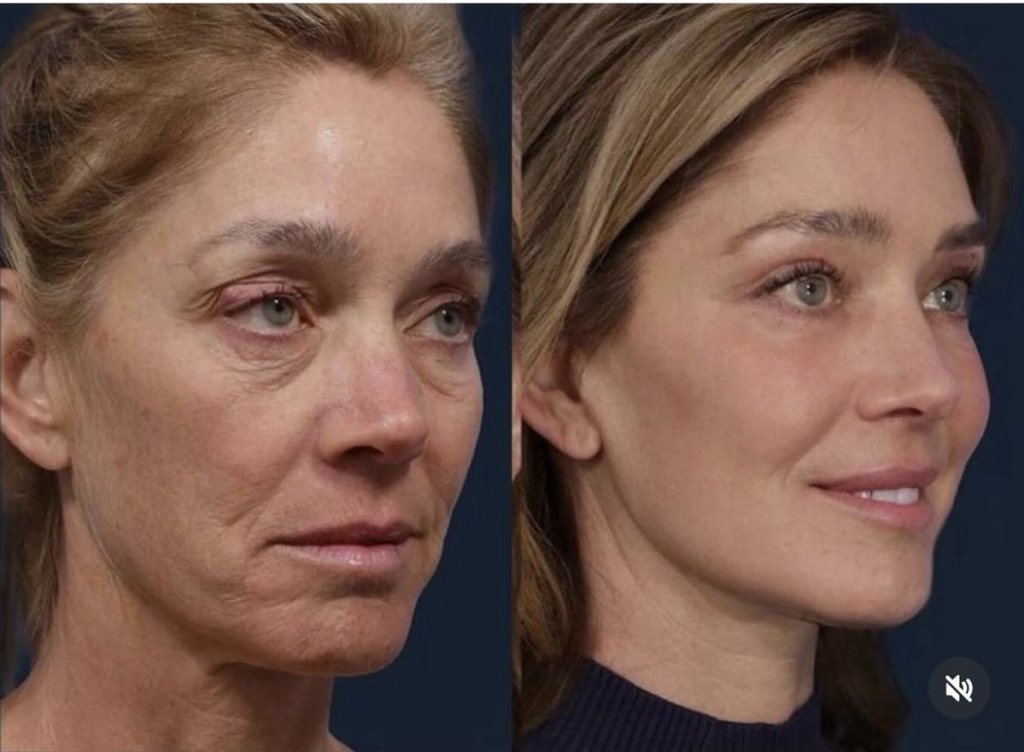
When evaluating results, pay attention to these common reactions:
- The Tyndall Effect: If the filler is placed too shallow, it can create a bluish tint under the skin. When you smile, the skin stretches and thins out, making this blue tint even more visible.
- Bunching and Lumps: Incorrect filler consistency causes bunching. Thicker fillers (like certain Juvederm products) are too heavy for the delicate under-eye area. Thinner, more flexible fillers (like Restylane) blend better with facial movements.
- Delayed Swelling: Sometimes, the filler looks perfect initially but starts to look puffy months later when you smile. This happens because HA fillers attract water, extending the under eye filler recovery time and causing fluid retention over time.
Important Note: Always ask your injector to show you portfolio pictures of their patients while smiling. A static before-and-after photo only tells half the story.
How to Ensure a Natural Look When Smiling
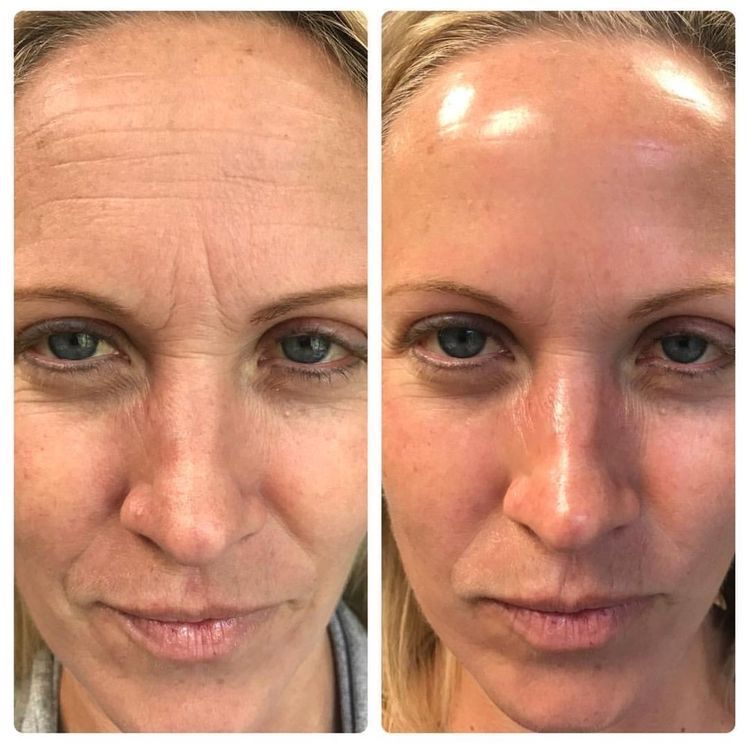
Getting seamless results that move naturally with your facial expressions requires advanced skill. Here is what an experienced injector will do to prevent bunching or puffiness:
- Choosing the Right Product: Not all fillers belong under the eyes. Thick, highly cohesive fillers are prone to bunching. Thinner, more flexible fillers like Restylane or Belotero are much better suited for this delicate area because they mimic the natural density of the tissue.
- Proper Depth and Placement: Placing the filler deep against the orbital bone, rather than superficially just beneath the skin, prevents the muscle from catching and pushing the gel upward when you smile.
- The “Less is More” Rule: Excess volume can contribute to a visible ridge when smiling, although anatomy, swelling, and filler placement also matter. Ask an experienced clinician to assess the cause and whether any additional treatment is appropriate.
The Importance of Midface and Cheek Support
Often, the issue isn’t the under-eye area itself, but a lack of structural support in the midface. As volume is lost in the cheeks, the tear trough becomes more prominent.
If an injector tries to fill the tear trough without addressing the deflated cheek beneath it, the filler lacks a solid foundation. When you smile, this unsupported filler shifts and bulges. By adding a small amount of volume to the upper cheeks first, it creates an anchor. This support keeps the under-eye area smooth and stable during all dynamic facial movements.
What to Do If Your Filler Bulges When Smiling?
If you already have filler and are unhappy with how it creates lumps, dents, or puffy lines when you laugh, you have practical options to correct it:
- Wait Out the Healing Process: If your procedure was recent, wait at least two to four weeks. Initial swelling, bruising, and fluid retention can distort the area. The filler needs time to integrate with your tissue.
- Dissolve the Filler: A clinician may use hyaluronidase to dissolve some hyaluronic acid (HA) filler when clinically appropriate. Results and timing vary, and dissolving carries its own risks; it cannot guarantee reversal of every complication. Seek urgent medical assessment for severe pain, skin color changes, or any vision symptoms after filler.
- Explore Non-Filler Alternatives: Some patients have anatomy that simply does not hold filler well due to severe fluid retention or very thin skin. If you want to avoid injectables altogether, treatments like PRP, lasers, or medical-grade skincare can help. For a detailed breakdown of these options, read our guide on how to fix under eye hollows without filler.
Does Price Impact the Final Result?
Achieving a flawless dynamic result requires a deep understanding of facial anatomy and muscle mechanics. Going to a highly trained, board-certified dermatologist or plastic surgeon usually requires a higher budget, but it significantly reduces the risk of botched results, the Tyndall effect, or weird lumps. To understand the standard pricing and what you are actually paying for, review our complete breakdown of how much is under eye filler.
Common Questions About Under Eye Filler and Smiling
Here are some of the most frequent concerns patients have regarding how their fillers behave during facial expressions:
Why does my under eye filler look like a sausage when I smile?
This is commonly known as the “sausage effect” or “bunching.” It happens when the filler is injected too superficially (close to the surface) or if the filler material is too thick. When you smile, your facial muscles push the filler upward, creating a visible ridge. If this persists after the initial under eye filler recovery time, you may need to have it dissolved.
Can under eye fillers fix wrinkles that appear only when I smile?
Fillers are excellent for filling hollows (static volume loss), but they are not always the best solution for “dynamic” wrinkles (lines that only appear when you move your face). In fact, overfilling the area to hide smile lines can lead to a puffy, unnatural look. For a better understanding of how to treat these lines, see our guide on under eye filler for wrinkles.
Is it normal to see a blue tint under my eyes when I laugh?
A bluish tint, known as the Tyndall Effect, occurs when light reflects off the filler gel through thin skin. Because smiling stretches and thins the skin even further, this blue shadow can become much more obvious during facial expressions. Using a thinner filler and injecting it deeper can prevent this.
How much should I expect to pay for a natural-looking result?
The price often reflects the expertise of the injector. Someone who understands the complex anatomy of the eye area will charge more but is less likely to cause issues like bunching or migration. You can find a detailed price breakdown in our under eye filler cost guide.
Will my eyes look smaller when I smile after getting fillers?
If the area is overfilled, the excess volume can push against the lower eyelid when you smile, making the eyes appear smaller or “squinty.” A conservative approach is the best way to ensure your eyes remain bright and open during laughter.
Medical References and Official Guidelines
This article was developed based on clinical safety standards and dermal filler guidelines provided by the following government health authorities:
- U.S. Food and Drug Administration (FDA): Dermal Filler Do’s and Don’ts for Soft Tissue Fillers – Guidelines on safety, risks, and approved uses of injectable fillers.
- National Institutes of Health (NIH): Hyaluronic Acid Fillers in the Management of the Tear Trough Deformity – A clinical study explaining the anatomy of the eye and the importance of proper filler placement.
Disclaimer: The information provided in this article is for educational and informational purposes only. It is not intended to be a substitute for professional medical advice, diagnosis, or treatment. Always seek the advice of a qualified healthcare provider or board-certified dermatologist with any questions you may have regarding a medical condition or aesthetic procedure. Never disregard professional medical advice because of something you have read on this website.

Sarah Mitchell is the founder and research editor of Under Eyes Filler, an independent patient-education resource. She is a researcher and writer, not a licensed medical professional. Her work is to read clinical studies and official FDA and ASPS guidance, then translate them into clear, honest explanations of under-eye filler results, recovery, risks, and realistic costs, so readers can prepare better questions for their own qualified provider.