
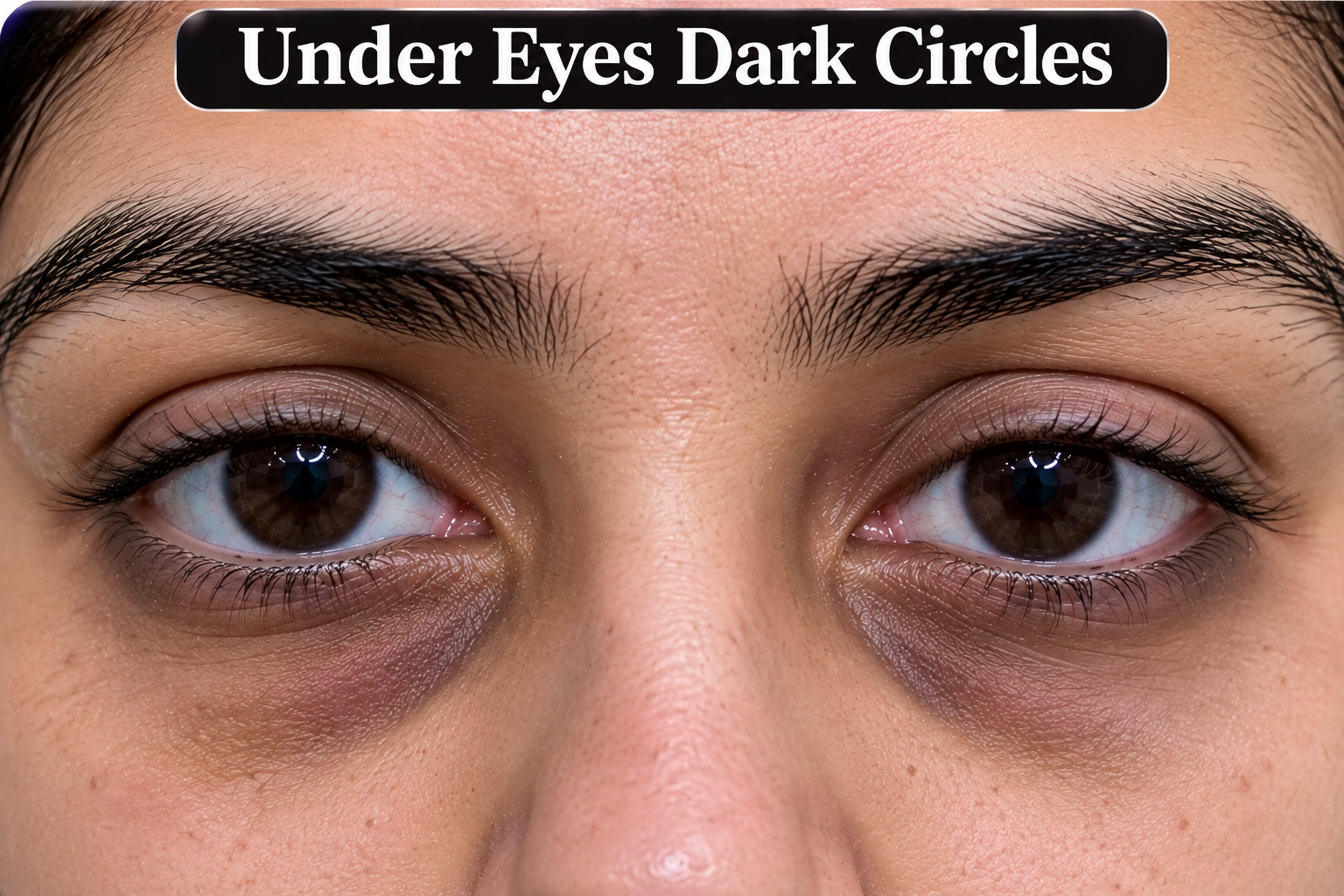
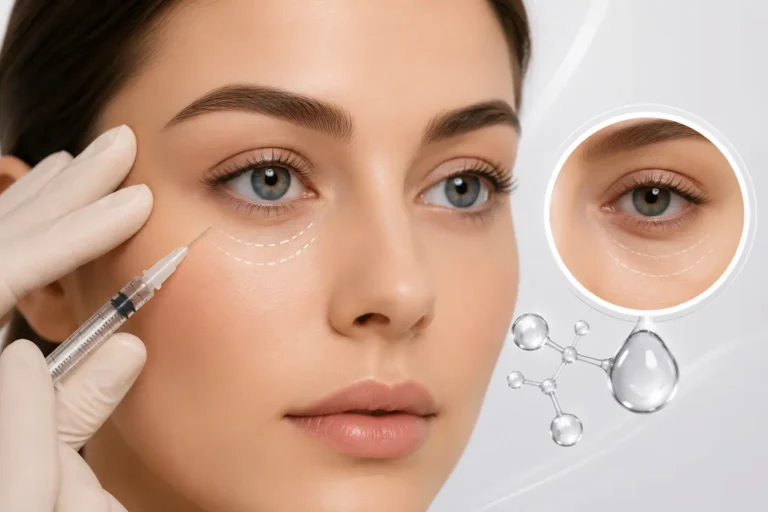
Periorbital dark circles represent one of the most common aesthetic concerns presented in clinical settings. While hyaluronic acid (HA) based dermal fillers are highly effective, minimally invasive treatments for this area, they are not a universal cure. Treating this delicate region requires isolating the exact anatomical root cause of the discoloration.
Understanding the Anatomy 2026: Why Do Dark Circles Form?
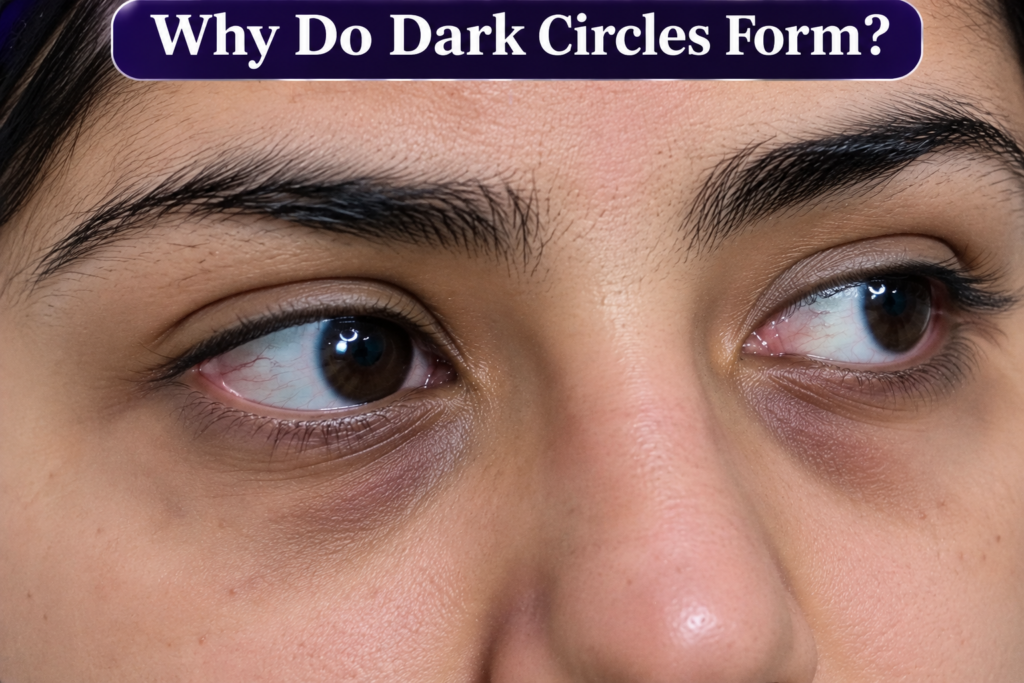
Before establishing any treatment protocol, the underlying cause of the dark circle must be correctly diagnosed. In aesthetic medicine, infraorbital shadowing is categorized into distinct anatomical pathways.
Structural Volume Loss (The Tear Trough Deformity)
The most common indication for dermal filler is physical volume loss. Whether due to natural aging, genetics, or bone resorption, a gap often forms between the maxilla (upper jawbone) and the orbicularis oculi muscle. This physical depression is known as the tear trough.
This structural deficit casts a deep shadow that mimics the appearance of darkened skin. In reality, there is no surface pigmentation; it is strictly a trick of the light. HA fillers exhibit their highest efficacy here, as restoring the physical volume immediately lifts the skin and eliminates the shadow. For patients exploring alternative approaches to structural volume deficits, analyzing how to fix under eye hollows without filler provides a broader view of non-injectable clinical protocols.
Vascular Prominence vs. Hyperpigmentation
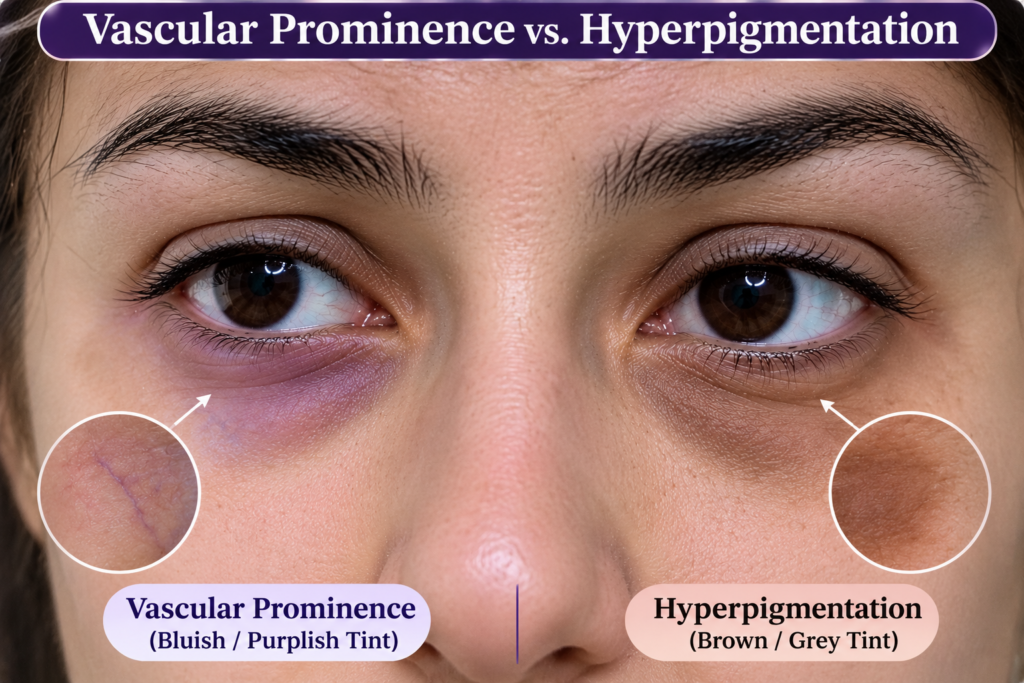
A secondary cause of discoloration is vascular prominence. The periorbital area contains some of the thinnest subcutaneous tissue on the human body. When this skin is exceptionally translucent, the underlying capillary network and venous structures show through, creating a bluish or purplish tint.
Conversely, hyperpigmentation is a dermatological condition characterized by the excess production and deposition of melanin in the skin, resulting in true brown or grey surface darkening.
| Cause of Dark Circle | Clinical Mechanism | Dermal Filler Efficacy |
| Structural Hollows | Shadowing caused by bone resorption and descending fat pads. | High. Direct volume restoration physically eliminates the shadow. |
| Vascular Thin Skin | Translucent dermis revealing the underlying blood vessels. | Moderate. Filler can create a slight buffer between the skin and vessels, but it does not remove the vascularity. |
| Hyperpigmentation | Accumulation of melanin pigment on the skin’s surface. | None. Fillers do not target melanin. Lasers or topical tyrosinase inhibitors are required. |
Contraindications: Who Should Avoid Tear Trough Fillers?
While highly effective for structural hollows, HA fillers are strictly contraindicated for specific anatomical presentations. Patients with pre-existing malar bags (festoons) or significant lower eyelid skin laxity are poor candidates. The hydrophilic (water-binding) nature of the filler will inevitably exacerbate puffiness and fluid retention in these individuals. In such instances, surgical interventions like a lower blepharoplasty or fat grafting are the appropriate clinical pathways.
How Hyaluronic Acid Fillers Work in the Infraorbital Region
The mechanism of action for dermal fillers in the tear trough extends far beyond simply “filling a space.” It relies heavily on rheology and polymer physics to restructure the tissue matrix safely.
The Role of HA in Tissue Hydration
Hyaluronic acid is a naturally occurring glycosaminoglycan found within the human dermis. When synthetically cross-linked and injected as a dermal filler, this polymer network binds to water molecules at many times its own weight.
This localized hydration not only lifts the deep structural hollow but also improves the elasticity, turgor, and overall texture of the overlying skin. It is this specific hydration mechanism that makes softer HA formulations highly effective as an under eye filler for wrinkles, smoothing fine periorbital lines that result from dehydration and skin laxity.
The Procedure: Micro-Cannula vs. Sharp Needle
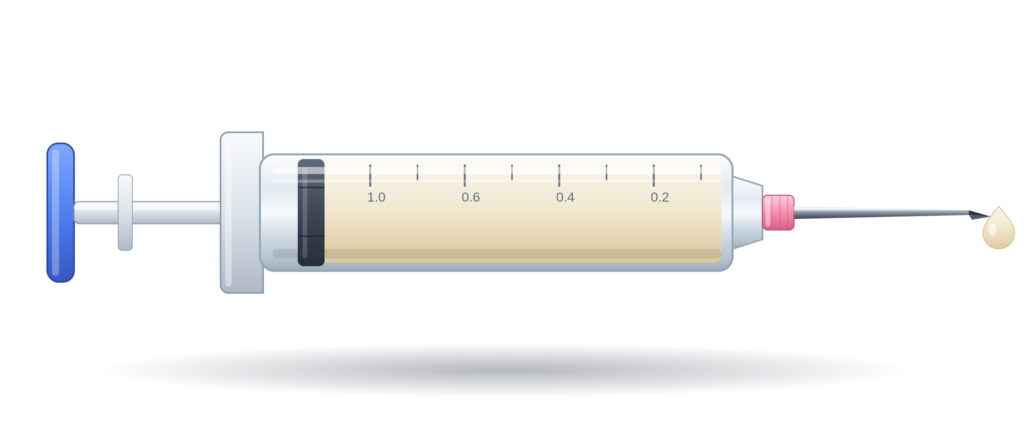
A primary concern for patients is the safety and precision of the injection process. Advanced aesthetic practitioners frequently utilize a blunt-tip micro-cannula instead of a traditional sharp needle for the infraorbital region. A cannula requires only a single entry point lower on the cheek, gently sliding beneath the tissue to deliver the filler. Because the tip is blunt, it pushes blood vessels aside rather than piercing them. This technique drastically reduces the risk of severe tissue trauma and nearly eliminates the risk of vascular occlusion.
The Bilaminar Injection Technique
Advanced clinical protocols dictate that treating the tear trough cannot rely on a single, uniform layer of product. The complex osteoligamentous architecture of the eye requires a dual-plane, or “bilaminar,” injection technique to ensure natural, undetectable integration.
- Supraperiosteal Plane (Deep Structure): A high firmness (high-elasticity) filler is placed directly onto the maxilla bone, deep beneath the muscle. This acts as a rigid structural pillar to support the orbicularis oculi muscle and bridge the tear trough retaining ligament without migrating.
- Subdermal Plane (Superficial Refinement): A soft, flexible, and cohesive filler is distributed in micro-droplets superficially within the sub-orbicularis oculi fat (SOOF). This creates a seamless, hydrated transition between the lower eyelid and the cheek complex, preventing the appearance of visible lumps.
Comparing FDA-Approved Fillers for Tear Troughs
Not all hyaluronic acid fillers are suitable for the infraorbital region. Product selection relies heavily on the specific rheology of the gel—specifically its firmness and hydrophilicity (water-binding capacity). Utilizing an incorrect, highly hydrophilic formulation can result in chronic fluid retention known as malar edema.
Here is a clinical comparison of the leading filler brands utilized for tear trough correction:
| Filler Brand | Rheological Profile | Best Clinical Application | FDA Status for Under Eyes |
| Restylane (Galderma) | High firmness, low water-binding capacity. Resists migration and swelling. | Deep structural hollows requiring robust support over the maxilla. | Approved (Restylane Eyelight) |
| Juvéderm Volbella (Allergan) | Moderate firmness, utilizes VYCROSS technology for smooth integration. | Superficial volume loss in patients with delicate skin requiring subtle transitions. | Approved |
| Teosyal Redensity II | Hybrid cross-linked HA blended with amino acids, antioxidants, and minerals. | Patients requiring both volume restoration and localized skin boosting/hydration. | Off-label (widely used globally) |
| Belotero Balance | Very low firmness, highly cohesive (CPM technology). Integrates seamlessly. | Extremely thin skin requiring superficial correction with virtually zero risk of lumps. | Off-label |
Clinical Risks, Safety Protocols, and Side Effects
Due to the dense vascular network and exceptionally thin skin of the periorbital area, this procedure requires advanced anatomical knowledge and should only be performed by highly credentialed injectors. Potential risks are categorized into three distinct tiers:
- Common & Acute Reactions: Immediate edema (swelling) and ecchymosis (bruising) are expected physiological responses to the mechanical trauma of the cannula or needle.
- Aesthetic Complications (The Tyndall Effect): If the HA filler is placed too superficially within the dermis, it alters how light passes through the skin. Short-wavelength visible light scatters, creating a distinct bluish tint known as the Tyndall effect, which ironically exacerbates the appearance of dark circles.
- Severe Medical Complications: Though rare, inadvertent injection into a blood vessel (such as the infraorbital artery) can cause vascular occlusion, leading to tissue ischemia (oxygen deprivation). Additionally, delayed immune responses can trigger the formation of sterile nodules or granulomas months after the procedure.
The Reversibility Factor: Managing Unwanted Results
A primary safety advantage of utilizing hyaluronic acid fillers is their complete reversibility. If a patient experiences the Tyndall effect, prolonged asymmetry, or a severe vascular complication, practitioners utilize an enzyme called hyaluronidase.
When injected directly into the treatment site, hyaluronidase immediately breaks the cross-links of the HA polymer, dissolving the filler within hours and returning the tissue to its baseline anatomical state.
How Long Do Under-Eye Fillers Last?
Unlike highly mobile areas of the face (such as the lips or perioral region), the infraorbital area experiences relatively little muscular shear stress. Consequently, HA fillers placed deep in the tear trough exhibit excellent longevity. Most patients can expect clinical results to last anywhere from 9 to 18 months, depending on their individual metabolism and the specific HA cross-linking technology used. Routine maintenance is typically required every 1 to 2 years to sustain the structural correction.
Post-Procedure Care and Patient Recovery Timeline
The aesthetic result of an under-eye filler procedure is not static immediately upon leaving the clinic. The HA gel requires a specific biological window to bind with interstitial fluid and integrate into the cellular matrix.
- Day 1 (Immediate Phase): Immediate mechanical volume expansion is visible. Expect localized tenderness and mild erythema (redness) at the entry points.
- Days 2–5 (Acute Swelling): The inflammatory cascade peaks during this window. As the HA polymer draws in water, the under-eye may appear temporarily over-corrected, puffy, or slightly asymmetric.
- Days 7–14 (Integration Phase): Edema rapidly resolves. The gel softens and integrates with the surrounding tissue, yielding a smooth, stable transition between the eyelid and the midface.
To ensure optimal tissue integration and minimize prolonged edema, tracking daily progress and understanding specific sleep positioning protocols is crucial. For a granular, day-by-day roadmap of the healing process, review the complete clinical timeline for under eye filler recovery time.
Cost Expectations and Insurance
Because dermal fillers are categorized as elective cosmetic procedures, they are not covered by medical insurance. The total investment depends on geographic location, the specific HA product utilized, and the credentialing of the provider. Most clinical tear trough corrections require 1 to 2 syringes total. Patients should prioritize board-certified expertise over discounted prices to mitigate severe complication risks.
Final Verdict: Are You a Good Candidate?
Under-eye fillers offer a highly effective, non-surgical intervention for dark circles, provided the underlying cause is structural volume loss. If the discoloration is strictly driven by hyperpigmentation or vascular translucency, HA fillers will not resolve the aesthetic concern.
To determine exact candidacy and establish a targeted treatment plan, patients should always undergo an in-person clinical assessment with a board-certified professional specializing in dermatology or plastic surgery. Accurate diagnosis combined with precise bilaminar injection techniques ensures a safe, optimized, and entirely natural aesthetic outcome.
Clinical References & Regulatory Guidelines
To ensure the highest standards of medical accuracy, transparency, and patient safety, the anatomical data, product safety profiles, and clinical protocols discussed in this guide are directly grounded in research from the following government health authorities and clinical databases:
- U.S. Food and Drug Administration (FDA) Guidelines on Dermal FillersClinical Relevance: Utilized to strictly verify the regulatory approval status of specific hyaluronic acid formulations (such as Juvéderm Volbella and Restylane Eyelight) for use in the infraorbital hollows, and to source official safety warnings regarding rare complications like vascular occlusion.
- National Center for Biotechnology Information (NCBI) – Periorbital Anatomy ResearchClinical Relevance: Sourced to validate the complex osteoligamentous anatomy of the tear trough ligament and to cross-reference peer-reviewed histological data regarding how the cross-linked HA polymer integrates with subcutaneous tissue, ensuring the 14-day recovery timeline is medically accurate.
Disclaimer
This content is for informational purposes only and should not replace professional medical advice. Always consult with a qualified aesthetic practitioner or board-certified doctor to determine if you are a suitable candidate for dermal fillers or any other medical procedure.

Sarah Mitchell is the founder and research editor of Under Eyes Filler, an independent patient-education resource. She is a researcher and writer, not a licensed medical professional. Her work is to read clinical studies and official FDA and ASPS guidance, then translate them into clear, honest explanations of under-eye filler results, recovery, risks, and realistic costs, so readers can prepare better questions for their own qualified provider.


[…] It is the same optical mechanism that causes under-eye darkness in the first place. If under eye fillers for dark circles were the primary goal of your treatment and a hollow remains, correcting the structural issue will […]