Medically reviewed • Evidence-led under-eye filler education • Updated October 2026
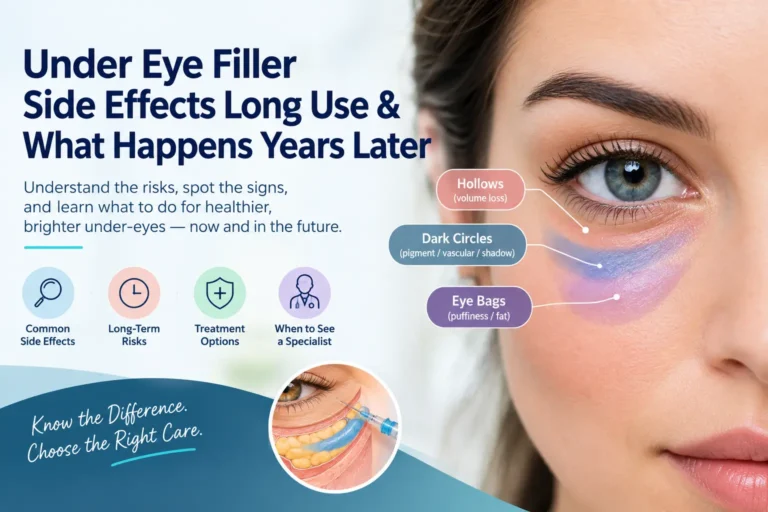
Under Eye Filler Migration: Causes, Symptoms, Prevention & Treatment (Latest Guide)28 min read
Under Eye Filler Migration: Causes, Symptoms, Prevention & Treatment (2026 Guide)
Have you noticed persistent puffiness, swelling, or an unnatural bulge after tear trough filler? You may be wondering whether it’s normal healing—or a sign of under-eye filler migration.
Filler migration is one possible explanation for a changing contour, but swelling, edema, existing bags and superficial placement can look similar. A clinician should assess the cause before treatment. The delicate anatomy of the tear trough makes this one of the most technically demanding cosmetic treatments. Factors such as injection technique, filler selection, facial anatomy, and aftercare all influence the final result.
An appropriately qualified clinician can assess whether there is migrated filler, swelling or another cause. Management may include observation, imaging or hyaluronidase for HA filler when clinically appropriate; the outcome is not guaranteed. Sudden vision changes or severe pain after injection require urgent medical evaluation. See the complications and warning signs guide.
In this comprehensive guide, you’ll learn:
- What under eye filler migration really is
- Why it happens
- Early warning signs
- How doctors diagnose it
- Treatment options
- Recovery timeline
- Prevention strategies
- Alternatives to tear trough filler
- Latest medical insights that many competing articles overlook
Whether you’re considering treatment or trying to correct existing filler, this guide will help you make informed, evidence-based decisions.
What Is Under Eye Filler Migration?
Under eye filler migration refers to filler material moving away from the area where it was originally injected. With under-eye or tear trough filler, this may cause the product to appear outside the intended treatment area, sometimes creating puffiness, swelling, unevenness, lumps, or a bluish-gray discoloration known as the Tyndall effect.
Migration is more commonly discussed with hyaluronic acid (HA) fillers, although persistent swelling or puffiness isn’t necessarily proof that filler has migrated. Other factors—including fluid retention, inflammation, product placement, skin thickness, and the patient’s anatomy—can create similar appearances.
However, it’s important to understand that not every swollen or puffy under eye is true filler migration.
Many patients mistake:
- temporary swelling
- fluid retention (edema)
- festoons
- malar bags
- natural aging
for migrated filler.
This distinction is crucial because each condition requires a different treatment approach.
How Tear Trough Filler Normally Works
Tear trough fillers are typically made from hyaluronic acid (HA), a gel-like substance that restores lost volume beneath the eyes. When injected correctly along the orbital rim at the appropriate depth, the filler blends the transition between the lower eyelid and cheek, creating a smoother, refreshed appearance.
The goal is subtle correction—not dramatic volume.
What does under eye filler migration look like?
Signs and Symptoms of Under-Eye Filler Migration
Under-eye filler migration can occur when filler moves beyond its intended treatment area. The signs may develop gradually and can sometimes resemble ordinary swelling or under-eye bags. Not every case of puffiness means filler has migrated, so persistent or unusual changes should be assessed by a qualified medical professional.
Common Signs of Filler Migration
- Persistent puffiness: The under-eye area may look unusually full or swollen even after the normal post-treatment swelling should have subsided.
- Filler appearing outside the intended area: Fullness may become noticeable below the tear trough or in an area that wasn’t intentionally treated.
- Lumps or uneven texture: You may notice small bumps, ridges, or an uneven contour beneath the skin.
- Asymmetry: One side may appear fuller or different from the other.
- Bluish or gray discoloration: With superficial hyaluronic acid filler, a blue-gray appearance can occur due to the Tyndall effect.
- A heavier or puffy appearance: Instead of creating a smooth transition between the lower eyelid and cheek, the area may look swollen or overfilled.
- Changes that persist or appear later: Migration or other filler-related problems may become noticeable after the initial swelling has disappeared.
What Does Filler Migration Actually Mean?
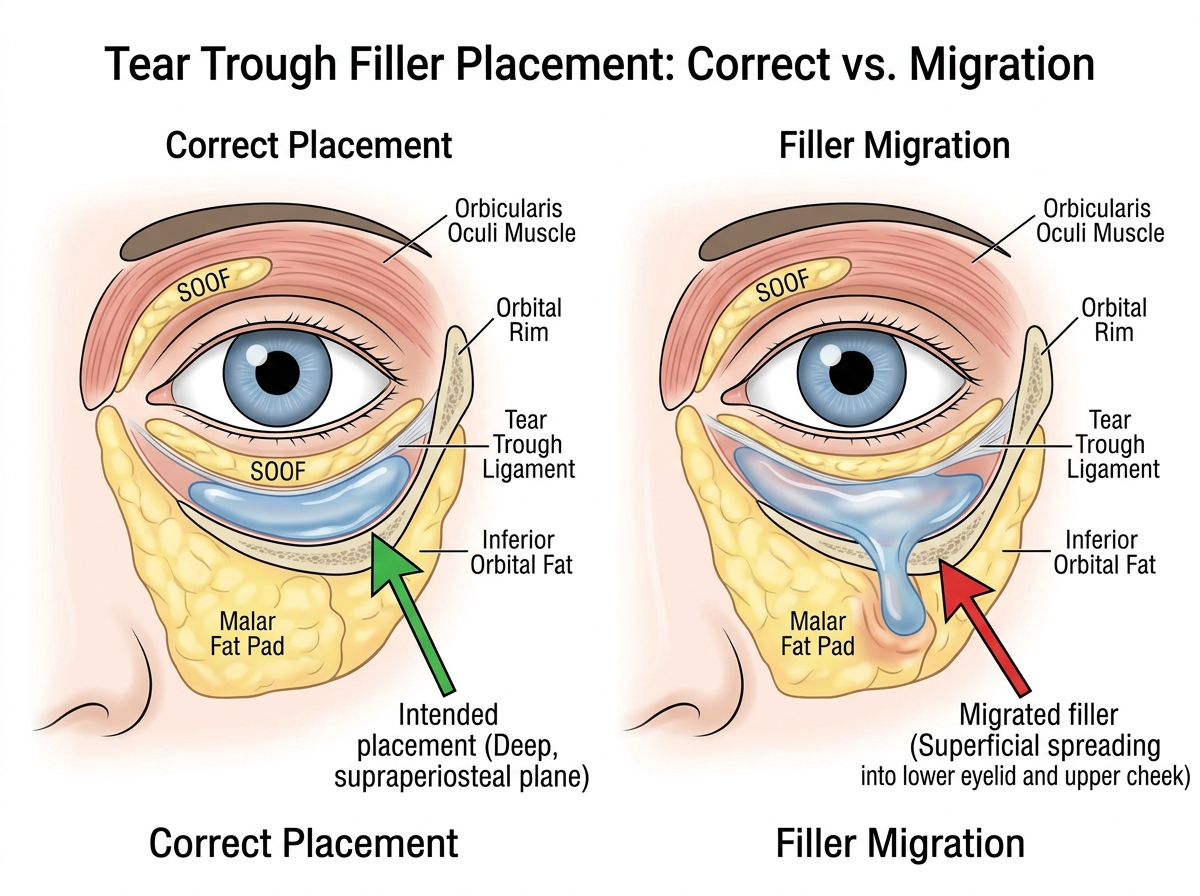
True migration means the filler has physically moved from its original placement into nearby tissues.
Common migration patterns include:
- upward toward the lower eyelid
- downward into the upper cheek
- spreading medially toward the nose
- collecting beneath the orbicularis oculi muscle
Migration may develop gradually over weeks, months, or even years, depending on several factors.
Can Under-Eye Filler Actually Migrate?
Yes, under-eye filler can migrate, particularly when hyaluronic acid (HA) filler moves beyond the area where it was originally placed. However, true migration is not the only explanation for under-eye puffiness or swelling, and it can sometimes be difficult to distinguish migration from other causes.
The tear trough is a delicate area with thin skin and complex anatomy. If filler is placed too superficially, too much product is used, or the treatment isn’t well matched to the patient’s anatomy, filler may become visible or create persistent fullness outside the desired contour.
What might indicate migration?
Possible signs include:
- New or persistent puffiness beneath the original treatment area
- Filler appearing as a visible ridge or fullness
- Lumps or unevenness
- Bluish or gray discoloration, sometimes associated with the Tyndall effect
- A result that becomes increasingly noticeable over time
However, puffiness does not automatically mean migration. Fluid retention, inflammation, the filler itself attracting water, skin characteristics, or an underlying tendency toward under-eye bags can produce a similar appearanc
Understanding Tear Trough Anatomy
Many complications occur because patients—and sometimes inexperienced injectors—underestimate how complex the under eye region truly is.
A basic understanding of anatomy helps explain why migration occurs.
The Tear Trough
The tear trough is the groove extending from the inner corner of the eye toward the upper cheek.
As we age:
- fat pads shrink
- bone support decreases
- skin becomes thinner
- collagen declines
These changes create hollowness and shadowing beneath the eyes.
The Orbital Rim
The orbital rim is the bony edge surrounding the eye socket.
Most expert injectors place filler directly along this bone because it provides stable structural support while minimizing the risk of superficial lumps.
The Orbicularis Oculi Muscle
This circular muscle controls blinking and facial expressions.
Constant muscle movement may contribute to filler displacement when injections are placed too superficially.
The Orbital Septum
The orbital septum separates the eyelid from deeper orbital fat.
Weakening of this structure with age may contribute to:
- eye bags
- fat prolapse
- persistent puffiness
These changes are frequently mistaken for migrated filler.
Lymphatic Drainage
The under eye region has delicate lymphatic vessels responsible for removing excess fluid.
When filler compresses these vessels—or when too much filler is injected—fluid drainage slows, causing chronic swelling that resembles migration.
Why This Area Is So Challenging
The tear trough has:
- extremely thin skin
- minimal soft tissue
- constant facial movement
- important blood vessels
- delicate lymphatic channels
- limited space for filler
For this reason, many specialists consider it one of the most technically demanding filler treatments.
What Causes Under Eye Filler Migration?

Migration rarely results from a single mistake. Instead, it usually develops from a combination of patient anatomy, filler characteristics, and injection technique.
- Excessive Filler Volume (Overfilling)
Overfilling remains the most common cause of migration.
Because the tear trough is a small anatomical space, even slight overcorrection increases pressure within surrounding tissues.
As pressure builds, filler may gradually spread beyond its intended location.
Signs of overfilling include:
- persistent puffiness
- unnatural fullness
- visible ridges
- loss of lower eyelid definition
Experienced injectors often recommend less filler initially, with reassessment several weeks later if additional correction is needed.
2 Injection Depth and Under-Eye Filler Migration
Injection depth refers to how deep a filler is placed within the tissues beneath the skin. It is particularly important under the eyes because the skin is thin and the anatomy is delicate. The depth chosen depends on the patient’s anatomy, the filler being used, the treatment goal, and the injector’s technique.
If hyaluronic acid filler is placed too superficially, it may become visible through the thin skin and contribute to puffiness, irregularities, or a blue-gray appearance known as the Tyndall effect. If filler is placed in an inappropriate tissue plane or an excessive amount is used, unwanted fullness or contour changes may also occur.
- Choosing the Wrong Filler
Not every hyaluronic acid filler is suitable for the under eye area.
Fillers with high water affinity (hydrophilic properties) may attract excess fluid, increasing swelling and creating the appearance of migration.
Many experienced injectors prefer softer, lower G-prime fillers specifically designed for delicate facial areas.
- Poor Injection Technique
Technical errors can dramatically increase complication rates.
Examples include:
- injecting excessive amounts in one session
- uneven product distribution
- improper cannula or needle selection
- failure to assess facial anatomy
- ignoring asymmetry
- repeated injections into the same area
Choosing a qualified, experienced injector is one of the most important preventive measures.
- Repeated Filler Treatments
Patients sometimes receive additional filler before previous injections have fully integrated.
Layering multiple treatments over time can create excess volume, increasing the risk of delayed migration and persistent puffiness.
- Facial Movement
The orbicularis oculi muscle contracts thousands of times every day through blinking, smiling, and facial expressions.
Over time, repeated muscle movement may influence filler position—particularly when product is placed too superficially.
- Natural Aging
Even perfectly placed filler exists within tissues that continue to change.
Aging affects:
- skin elasticity
- collagen production
- ligament support
- fat distribution
- bone volume
These changes may alter the appearance of filler months or years after treatment without true migration occurring.
- Individual Anatomy
Every face is different.
Certain anatomical features increase the likelihood of complications, including:
- prominent eye bags
- festoons
- malar edema
- thin skin
- weak ligament support
- chronic fluid retention
- previous lower eyelid surgery
Patients with these characteristics may benefit from alternative treatments rather than tear trough filler alone.
Risk Factors for Under Eye Filler Migration
While under eye filler migration can happen to anyone, certain factors significantly increase the likelihood of complications. Understanding these risks helps patients make informed decisions before treatment.
| Risk Factor | How It Increases Migration Risk |
| Overfilled tear trough | Creates pressure that can push filler into surrounding tissues |
| Thin skin | Makes filler more visible and prone to contour irregularities |
| Poor injection technique | Incorrect depth or placement increases displacement risk |
| Inexperienced injector | Higher chance of overcorrection or anatomical errors |
| High water-attracting filler | May lead to chronic swelling that mimics migration |
| Repeated filler sessions | Product buildup can create excessive volume |
| Festoons or malar bags | Existing fluid retention can worsen post-treatment puffiness |
| Aging skin | Reduced collagen and ligament support affect filler stability |
| Chronic allergies | Persistent inflammation may contribute to swelling |
| Sleeping face-down | Can temporarily worsen morning swelling, though evidence for true migration is limited |
Expert Tip: The best prevention isn’t avoiding filler—it’s selecting an experienced injector who understands the complex anatomy of the tear trough.
Symptoms of Under Eye Filler Migration
Not every under-eye irregularity means your filler has migrated. Temporary swelling is expected during the first few days after treatment. However, symptoms that persist for weeks or months deserve professional evaluation.
Early Symptoms
Early signs may appear within days or weeks after treatment.
Common symptoms include:
- Mild puffiness beneath the eyes
- Uneven contour
- Persistent swelling
- Small, soft lumps
- Tenderness
- Asymmetrical appearance
- Feeling of fullness when smiling
These symptoms may resolve naturally as healing progresses.
Late Symptoms
Delayed migration often develops gradually over several months.
Possible signs include:
- Fullness extending into the upper cheek
- Swelling that worsens in the morning
- Bulging beneath the eyelid
- Changes in facial contour
- Filler becoming more noticeable over time
- Puffiness despite no recent treatment
Visual Signs
Patients often notice:
- Rounded bulges
- Loss of natural tear trough definition
- Asymmetrical under-eye appearance
- Puffy lower eyelids
- Visible filler through thin skin
Photographs taken before treatment can help compare subtle changes.
Blue Discoloration (Tyndall Effect)
One of the most misunderstood complications is the Tyndall effect.
This occurs when filler is injected too close to the surface of the skin, causing light to scatter and create a bluish tint.
Although it resembles migration, it is actually a placement issue rather than filler movement.
Persistent Swelling
Chronic swelling is one of the most common reasons patients believe their filler has migrated.
In reality, persistent puffiness may result from:
- lymphatic obstruction
- water absorption by hyaluronic acid
- allergies
- sinus congestion
- poor sleep
- salt intake
An experienced injector can usually distinguish swelling from true migration.
How to Tell Under-Eye Filler Migration Apart From Other Causes
Not every puffy or discolored under-eye after filler means the product has migrated. Normal post-treatment swelling, the Tyndall effect, malar edema, and pre-existing eye bags can produce similar-looking changes but have different causes and management approaches. The comparisons below can help you understand the key differences and recognize when persistent changes may warrant an assessment by a qualified medical professional.
Migration vs. Normal Swelling
| Feature | Filler Migration | Normal Post-Filler Swelling |
|---|---|---|
| When it occurs | May appear gradually or persist after the initial healing period | Usually occurs shortly after treatment |
| Duration | Can persist or become noticeable over time | Typically improves as the area heals |
| Appearance | Unwanted fullness, puffiness, lumps, or filler appearing outside the intended area | Generalized mild swelling around the injection site |
| Progression | May remain persistent or become more noticeable | Usually decreases progressively |
| Other symptoms | May include asymmetry or visible filler | Mild tenderness, redness, or bruising can accompany swelling |
| What to do | Requires professional assessment if persistent | Usually monitored during normal recovery |
Important: Swelling immediately after under-eye filler does not automatically mean the filler has migrated. Early swelling is a common response to injections and can temporarily make the under-eye area look fuller than expected.
Migration vs. Tyndall Effect
The Tyndall effect is not the same thing as filler migration. It is a bluish or grayish discoloration that can occur when hyaluronic acid filler is placed too superficially beneath thin skin.
| Feature | Filler Migration | Tyndall Effect |
|---|---|---|
| Main problem | Filler moves or becomes apparent outside its intended location | Superficially placed HA creates a blue-gray optical effect |
| Typical appearance | Puffiness, fullness, lumps, or uneven contour | Blue, gray, or sometimes slightly translucent discoloration |
| Main cause | Product placement, anatomy, filler characteristics, or other contributing factors | HA positioned too close to the skin surface |
| Does it always involve movement? | By definition, migration involves movement from the intended location | No |
| Can they occur together? | Yes | Yes |
| Management | Depends on the underlying cause | May require professional assessment and, in some cases, treatment with hyaluronidase if HA is responsible |
A blue-gray appearance after under-eye filler should not automatically be labeled as migration. The location and color of the change can help a qualified professional determine what is happening.
Migration vs. Malar Edema
Malar edema is swelling in the cheek area beneath the lower eyelid, often around the malar or “festoons” region. It can sometimes look similar to migrated filler, particularly when swelling develops after treatment.
| Feature | Filler Migration | Malar Edema |
|---|---|---|
| Location | May occur beyond the intended filler placement | Usually affects the upper cheek/malar region |
| Appearance | Filler-related fullness, puffiness, lumps, or contour changes | Soft or puffy swelling beneath the eyes and over the cheeks |
| Cause | Related to filler placement/product behavior or individual anatomy | Can involve fluid accumulation and underlying anatomical factors |
| Texture | May feel or appear like localized filler fullness | Often appears as diffuse soft swelling |
| Timing | Can develop or remain noticeable after treatment | May fluctuate and can become more apparent at certain times |
| Treatment | Depends on whether filler is actually involved | Treatment depends on the underlying cause |
Under-eye filler can sometimes make pre-existing malar edema more noticeable or contribute to persistent fullness in susceptible patients. An examination is needed to distinguish the two.
Migration vs. Eye Bags
Another important distinction is between filler migration and genuine under-eye bags. Eye bags are usually related to the anatomy of the lower eyelid, including protruding or displaced orbital fat, skin laxity, or age-related structural changes.
| Feature | Filler Migration | Under-Eye Bags |
|---|---|---|
| Primary cause | Unwanted movement or visibility of injected filler | Usually natural anatomy, fat protrusion, skin laxity, or aging |
| Onset | Develops after filler treatment | May exist before treatment and gradually become more noticeable |
| Appearance | New or unusual fullness after filler | Rounded or persistent bulging beneath the eyes |
| Relation to treatment | Directly associated with an injectable treatment | May be completely unrelated to filler |
| Treatment approach | Assessment may involve monitoring, correction, or dissolving HA filler | Depending on severity, options may include skincare, fillers for selected cases, or surgical evaluation |
| Can filler make it look worse? | N/A | Yes, adding volume to someone with prominent bags may sometimes increase the appearance of puffiness |
The Key Difference
The simplest way to understand these conditions is:
Migration = where the filler is.
Normal swelling = temporary healing response.
Tyndall effect = blue-gray appearance from superficial HA.
Malar edema = swelling in the cheek/malar region.
Eye bags = underlying anatomical bulging or tissue changes.
Because these conditions can look very similar in photographs, persistent under-eye swelling after filler should be evaluated by an experienced medical professional rather than diagnosed based on appearance alone.
How Doctors Diagnose Under Eye Filler Migration
An experienced cosmetic physician or oculoplastic specialist will assess several factors before recommending treatment.
1. Medical History
Your provider will ask:
- When was the filler injected?
- Which product was used?
- How much filler was injected?
- Have you had previous filler treatments?
- When did symptoms begin?
- Has swelling changed over time?
Previous treatment records are extremely valuable.
2. Physical Examination
The injector carefully examines:
- Skin quality
- Facial symmetry
- Swelling pattern
- Palpable nodules
- Lower eyelid support
- Cheek anatomy
- Eye bags
- Festoons
This evaluation often identifies the true cause without imaging.
3. Ultrasound Imaging
One of the biggest advancements in aesthetic medicine is high-frequency ultrasound.
Ultrasound can:
- Locate filler precisely
- Measure filler volume
- Differentiate filler from fluid
- Guide hyaluronidase injections
- Reduce unnecessary dissolving
Many leading aesthetic clinics now use ultrasound-guided filler correction because it improves accuracy and preserves healthy tissue.
4. MRI (Magnetic Resonance Imaging)
MRI studies have shown that hyaluronic acid filler can remain visible much longer than previously believed.
MRI may be recommended when:
- Previous treatment history is unclear
- Multiple fillers have been injected
- Persistent swelling has no obvious cause
- Complex revision is planned
Although MRI is highly informative, it is not routinely required for most patients.
MRI vs. Ultrasound
| Feature | Ultrasound | MRI |
| Cost | Lower | Higher |
| Real-time imaging | ✔ | ✖ |
| Guides injections | ✔ | ✖ |
| Detects filler | ✔ | ✔ |
| Widely available | Increasingly common | Less common |
| Best for routine evaluation | ✔ | Usually reserved for complex cases |
5. Differential Diagnosis
Before diagnosing migration, experienced providers rule out:
- Allergic reactions
- Chronic edema
- Eye bags
- Malar festoons
- Infection
- Granulomas
- Skin laxity
- Fat prolapse
This step is often overlooked but is essential for choosing the correct treatment.
Can Under Eye Filler Migrate Months or Years Later?
Yes—but it’s relatively uncommon.
Migration can occur:
- A few weeks after treatment
- Several months later
- Occasionally years after injection
However, delayed changes don’t always indicate filler movement.
Over time, natural aging affects:
- Skin elasticity
- Facial fat distribution
- Ligament support
- Bone structure
These age-related changes may alter how filler looks without the filler actually moving.
Research has also shown that hyaluronic acid fillers may persist longer than previously thought. In some patients, small amounts of filler remain detectable years after treatment, especially when multiple sessions have been performed.
Is Under Eye Filler Migration Dangerous?
Most cases are cosmetic rather than medically dangerous.
Symptoms usually involve:
- Puffiness
- Uneven contour
- Swelling
- Visible filler
However, seek immediate medical attention if you experience:
- Sudden vision changes
- Severe eye pain
- Skin turning pale, white, or dark
- Rapidly increasing swelling
- Fever
- Signs of infection
These symptoms could indicate rare but serious complications such as vascular occlusion or infection and require urgent treatment.
When Should You See an Experienced Injector?
Arrange an assessment if you notice:
- Swelling lasting longer than four weeks
- Increasing puffiness months after treatment
- Hard lumps
- Significant asymmetry
- Blue discoloration beneath the skin
- Changes that continue to worsen
Early evaluation often allows simpler, less invasive treatment.
Treatment Options for Under Eye Filler Migration
The best treatment depends on whether you have true filler migration, persistent swelling, Tyndall effect, or another condition. An experienced injector should evaluate the area before recommending corrective treatment.
1. Observation (Watchful Waiting)
Not every irregularity requires immediate treatment.
If your symptoms are mild and you’ve had filler recently, your provider may recommend monitoring the area for several weeks. During this period:
- Initial swelling usually subsides.
- The filler continues to integrate with surrounding tissues.
- Minor asymmetry often improves naturally.
Best for:
- Mild swelling
- Early healing
- Small contour irregularities
2. Hyaluronidase (Filler Dissolving)
Hyaluronidase is the gold standard for correcting migrated hyaluronic acid (HA) fillers.
It works by breaking down HA filler so the body can absorb it naturally.
Benefits
- Fast correction
- Precise treatment
- Minimally invasive
- High success rate
- Can improve both migration and Tyndall effect
Possible Side Effects
- Temporary swelling
- Mild bruising
- Tenderness
- Rare allergic reaction
Most patients notice improvement within 24–72 hours, although some require multiple sessions.
Expert Tip: Avoid dissolving filler based solely on appearance. Whenever possible, ultrasound-guided treatment helps target only the migrated product while preserving well-placed filler.
3. Ultrasound-Guided Correction
One of the biggest advances in aesthetic medicine is high-frequency ultrasound.
Instead of guessing where filler has moved, ultrasound allows providers to:
- Locate filler precisely
- Measure remaining filler
- Differentiate filler from fluid
- Avoid unnecessary dissolving
- Improve treatment accuracy
This approach is becoming the preferred standard for complex filler corrections.
4. Massage (Only When Recommended)
Patients often ask if massage can fix filler migration.
The answer is sometimes—but only in very specific situations.
Massage may help if:
- It is performed shortly after treatment.
- Your injector specifically recommends it.
- The filler has not fully integrated.
Aggressive self-massage weeks or months later may worsen swelling or irritate delicate tissues.
Always follow your injector’s instructions.
5. Treating Swelling Instead of Migration
Sometimes the filler isn’t the problem.
Persistent puffiness may improve by addressing fluid retention through:
- Reducing salt intake
- Staying hydrated
- Managing allergies
- Sleeping with your head elevated
- Improving lymphatic drainage
- Treating sinus congestion when appropriate
Correct diagnosis prevents unnecessary filler dissolution.
6. PRF (Platelet-Rich Fibrin)
For patients with thin skin or volume loss, Platelet-Rich Fibrin (PRF) is becoming an increasingly popular alternative.
Unlike dermal fillers, PRF uses your own blood components to stimulate:
- Collagen production
- Improved skin quality
- Better circulation
- Gradual tissue regeneration
PRF does not migrate like HA filler because it is a regenerative treatment rather than a volumizing gel.
7. Radiofrequency Microneedling
When skin laxity contributes to under-eye concerns, RF microneedling may improve:
- Fine lines
- Mild skin laxity
- Collagen production
- Overall skin texture
While it doesn’t dissolve filler, it can complement other treatments.
8. Lower Blepharoplasty (Surgery)
Some patients are not ideal candidates for filler because their concerns stem from:
- Fat pad prolapse
- Significant eye bags
- Excess skin
- Advanced aging
In these cases, lower blepharoplasty often provides a more predictable and longer-lasting result than repeated filler treatments.
Do I Have Under-Eye Filler Migration?
Not every change after under-eye filler means the product has migrated. Swelling, fluid retention, the Tyndall effect, malar edema, and pre-existing eye bags can all create similar-looking changes. Use the guide below as a starting point—not as a diagnosis—to understand what your symptoms may indicate.Quick Decision Guide
| What you’re noticing | Possible explanation |
|---|---|
| Swelling shortly after treatment that is improving | Normal post-treatment swelling |
| Persistent puffiness after the expected healing period | Needs professional assessment |
| Blue-gray discoloration | Possible Tyndall effect |
| Fullness extending into the cheek/malar area | Possible malar edema |
| Bags that existed before treatment | Underlying eye bags/anatomy |
| New fullness or irregularity outside the intended treatment area | Possible filler migration or another filler-related issue |
When Should You See a Professional?
If under-eye fullness persists, worsens, becomes asymmetric, develops into lumps, or changes the appearance of the treated area, contact the medical professional who performed the treatment. They can examine the area and determine whether the issue is migration, swelling, Tyndall effect, malar edema, an underlying eye bag, or another cause.
Seek urgent medical attention for severe pain, unusual skin discoloration, or any vision changes after filler, as these can indicate a serious vascular complication rather than simple migration.
Remember: There is no reliable way to confirm filler migration simply by looking in a mirror. A qualified medical professional should make the diagnosis.
Is It Filler Migration or Normal Swelling?
| Symptom | Possible Explanation | What to Do |
|---|---|---|
| Swelling immediately after treatment | Normal post-treatment response | Monitor according to provider instructions |
| Persistent puffiness | Could have multiple causes | Professional assessment |
| Blue/gray discoloration | Possible Tyndall effect | Professional evaluation |
| Persistent lump | Possible filler-related issue | Assessment |
| Puffiness below the original treatment area | Possible migration or edema | Assessment |
| Increasing redness, warmth or pain | Possible complication | Prompt medical evaluation |
This gives your article much more practical value than competitors’ generic explanations.
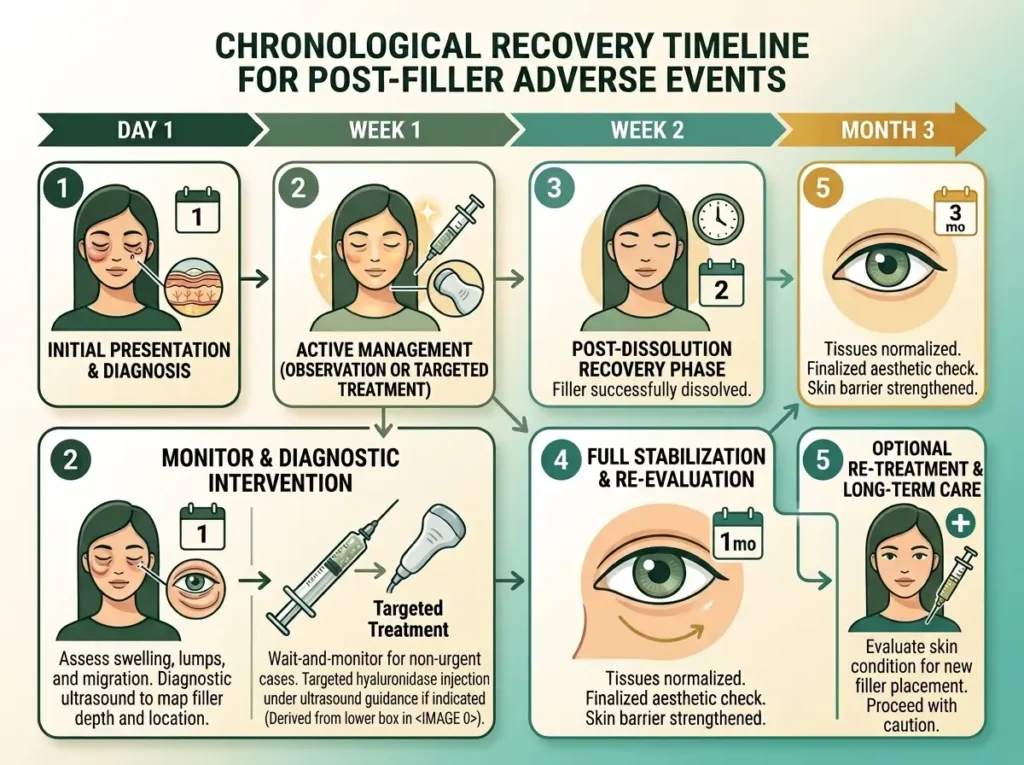
Recovery Timeline After Correcting Under Eye Filler Migration
Understanding the recovery process helps set realistic expectations.
| Timeline | What to Expect |
| Day 1 | Mild swelling, redness, tenderness |
| Days 2–3 | Bruising may become more noticeable; dissolved filler begins to break down if hyaluronidase was used |
| Week 1 | Swelling typically decreases; facial contours start to improve |
| Weeks 2–4 | Most bruising resolves; final contour becomes clearer |
| Months 1–3 | Tissues stabilize; any follow-up treatment can be assessed |
Important: Final results should be evaluated only after healing is complete. Avoid requesting additional filler too soon, as this increases the risk of overcorrection.
How to Prevent Under Eye Filler Migration
Prevention begins long before the injection.
Choose an Experienced Injector
The tear trough is one of the most technically demanding areas of the face.
Look for a provider who:
- Understands detailed facial anatomy
- Performs tear trough treatments regularly
- Uses conservative techniques
- Has before-and-after photos
- Offers thorough consultations
- Explains risks honestly
Use the Right Filler
Not every filler is appropriate for the under-eye area.
Experienced injectors often choose softer, lower G’ hyaluronic acid fillers that are less likely to attract excess water.
Avoid Overfilling
More filler does not equal better results.
Most experts recommend starting with the smallest amount needed and reassessing after healing.
Follow Aftercare Instructions
During the first 24–48 hours:
- Avoid strenuous exercise.
- Avoid alcohol.
- Sleep with your head elevated.
- Avoid rubbing the treated area.
- Use cold compresses if advised.
Allow Time Between Treatments
Repeated injections before previous filler has settled increase the risk of excessive volume and delayed migration.
What Does Under Eye Filler Migration Look Like? — A Staged Guide
Stage 1 — Early Signs (Days to Weeks Post-Injection)
- Subtle puffiness that looks like it might just be swelling
- Mild fullness that does not quite match the other side
- The treated area looks slightly less defined than immediately after treatment
- You can press the area and it feels soft — similar to edema
What to do: Do not panic. Some puffiness in the first week is entirely normal post-procedural swelling. Wait at least 10–14 days before assessing whether something is genuinely wrong.
Stage 2 — Intermediate Signs (Weeks to Months)
- Swelling does not resolve after two weeks
- A faint blue-grey tint develops — this is the Tyndall effect, confirming superficially placed filler
- The area feels firmer to touch than normal skin
- One side appears more swollen or full than the other
- The treated area does not look like the result you expected
What to do: Book an assessment with your injector or an experienced aesthetic practitioner. Bring photos of your immediate post-treatment result for comparison if possible.
Stage 3 — Advanced Signs (Months to Years)
- Pronounced pillow effect — a soft, cushion-like bulge beneath the eyes
- Clearly visible lumps or nodules
- Marked asymmetry between the two sides
- Persistent Tyndall effect — blue-grey discoloration visible in natural light
- The area feels heavy and looks puffy regardless of how much sleep you have had
What to do: Seek correction. Advanced migration rarely resolves without hyaluronidase treatment.
Is It Migration — Or Something Else? Complete Differential Guide
This is where many patients and even some practitioners go wrong. Several conditions can closely mimic migrated under-eye filler.
Migration vs. Normal Post-Treatment Swelling
| Feature | Migration | Normal Swelling |
|---|---|---|
| Onset | Weeks to months post-injection | Hours to days post-injection |
| Palpation | Firm, mobile lump | Soft, fluid-like |
| Color change | Bluish or tinted | Usually normal skin tone |
| Resolution | Persistent without treatment | Resolves within 72 hours |
| Symmetry | Often asymmetric | Usually bilateral |
| Correct treatment | Hyaluronidase | Ice, elevation, time |
Migration vs. Natural Eye Bags
Natural eye bags are caused by orbital fat prolapse — fat pushing forward through a weakened orbital septum. This is entirely unrelated to filler. Distinguishing features: eye bags were present before treatment, they feel firm and attached, and they have a characteristic rounded shape that starts medially. Migrated filler typically appears in slightly different areas and correlates directly with where filler was injected.
Migration vs. Festoons and Malar Mounds
Festoons are significant folds of loose muscle and skin in the lower eyelid and midface — and filler makes them worse, not better. If you had festoons before your treatment and they are now more pronounced, this is expected filler-related worsening, not migration in the classical sense. Treatment: dissolve the filler.
Migration vs. Foreign Body Granuloma
A granuloma is a delayed inflammatory reaction to filler — usually appearing 6–24 months after injection. Unlike migration, granulomas are typically painful, firm, and do not respond to simple hyaluronidase treatment. They represent a different complication pathway requiring specialist management.
Daily Habits That Can Affect Your Results
Although daily habits do not directly “push” filler into a new location, they can influence swelling and overall appearance.
Sleeping Position
Sleeping flat or face-down may increase morning puffiness.
Try sleeping on your back with your head slightly elevated.
Salt Intake
A high-sodium diet encourages fluid retention, making under-eye fullness appear worse.
Alcohol
Alcohol can increase temporary swelling during the early healing period.
Limiting alcohol for the first few days after treatment is generally recommended.
Exercise
Avoid intense workouts for 24–48 hours after filler injections, as increased blood flow may worsen swelling or bruising.
Skincare
Gentle skincare is best during healing.
Avoid:
- Strong acids
- Retinoids
- Aggressive exfoliation
until your provider advises it is safe.
Makeup
Wait until injection sites have closed—typically around 24 hours—before applying makeup to reduce the risk of irritation or infection.
Air Travel
Flying does not cause filler migration, but cabin pressure and dehydration may temporarily worsen swelling in some individuals.
Stay hydrated and follow your provider’s advice if traveling soon after treatment.
Who Should Avoid Tear Trough Fillers?
Not everyone is a suitable candidate.
You may benefit from alternative treatments if you have:
- Significant eye bags
- Large festoons
- Severe skin laxity
- Active infection
- Uncontrolled autoimmune disease
- Unrealistic expectations
- Poor skin quality
- Chronic under-eye edema
A thorough consultation is essential to determine the most appropriate treatment.
Best Alternatives to Under Eye Fillers
If filler isn’t the right choice, several effective alternatives are available.
| Treatment | Best For |
| PRF / PRP | Skin rejuvenation and collagen stimulation |
| Lower Blepharoplasty | Eye bags and excess skin |
| Fat Grafting | Long-term volume restoration |
| RF Microneedling | Mild laxity and texture |
| Laser Resurfacing | Fine lines and pigmentation |
| Skin Boosters | Hydration and skin quality |
Myth vs. Fact
| Myth | Fact |
| All under-eye fillers eventually migrate. | Most properly placed fillers remain stable. |
| Every puffy under-eye is migrated filler. | Swelling, edema, and eye bags are more common causes. |
| Massage always fixes migration. | Massage is only appropriate in specific situations and under professional guidance. |
| More filler creates better results. | Conservative treatment generally produces the most natural outcomes. |
| MRI is always required. | Most cases can be diagnosed through clinical assessment, with ultrasound increasingly preferred. |

Expert Takeaway
Under-eye filler migration is often misunderstood. In many cases, what appears to be migration is actually temporary swelling, lymphatic edema, or age-related anatomical changes. Accurate diagnosis is the foundation of effective treatment.
The best outcomes come from conservative treatment plans, individualized patient assessment, and experienced injectors who understand the unique anatomy of the tear trough. When complications do occur, modern tools such as ultrasound-guided evaluation and hyaluronidase have made correction more precise and predictable than ever before.
By choosing a qualified provider, following aftercare instructions, and avoiding unnecessary repeat treatments, most patients can enjoy natural-looking, long-lasting results with a low risk of complications.
External Authoritative References
- U.S. Food and Drug Administration (FDA) – Dermal Filler Safety
- American Society of Plastic Surgeons (ASPS)
- American Academy of Ophthalmology (AAO)
- Plastic and Reconstructive Surgery (PRS Journal)
- Peer-reviewed studies from Aesthetic Surgery Journal, Plastic and Reconstructive Surgery, and PubMed on tear trough filler longevity, MRI findings, and hyaluronidase use.

Sarah Mitchell is the founder and research editor of Under Eyes Filler, an independent patient-education resource. She is a researcher and writer, not a licensed medical professional. Her work is to read clinical studies and official FDA and ASPS guidance, then translate them into clear, honest explanations of under-eye filler results, recovery, risks, and realistic costs, so readers can prepare better questions for their own qualified provider.