
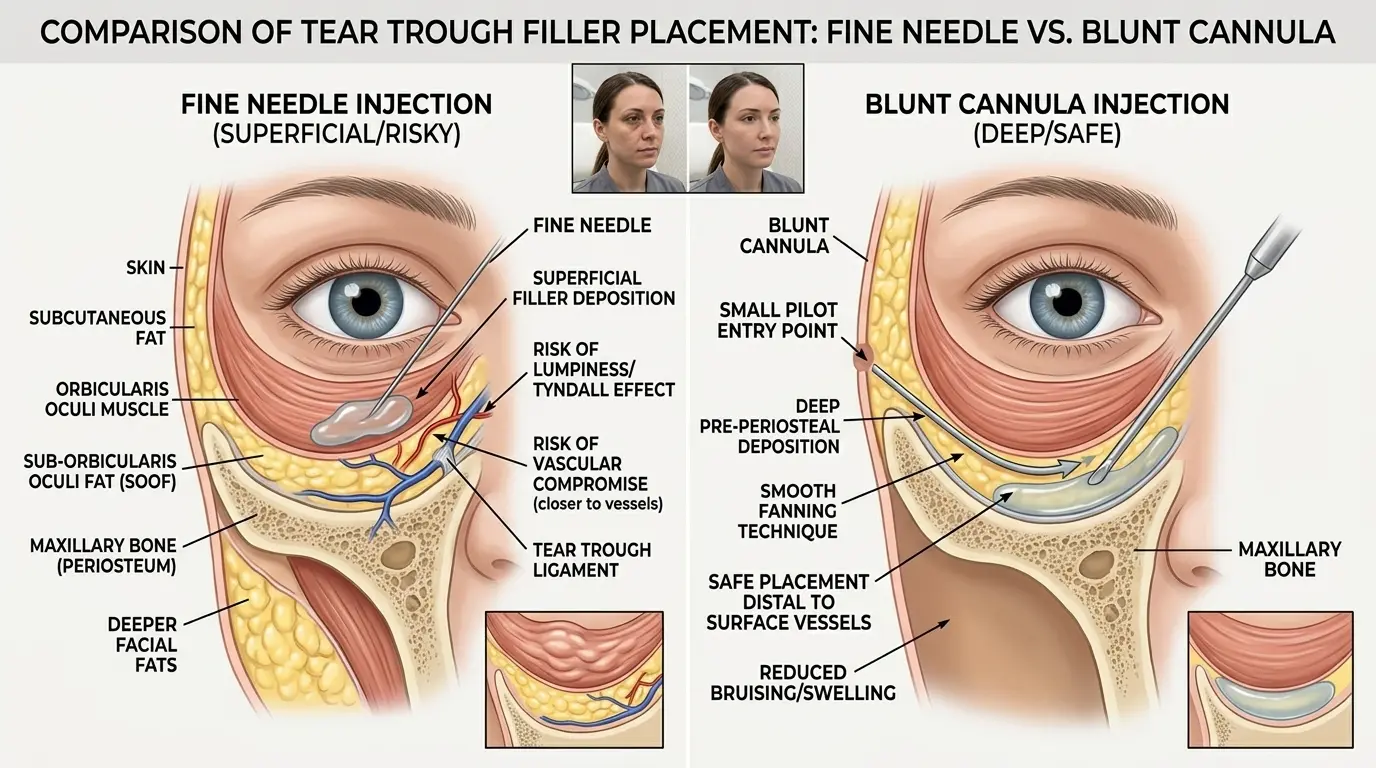
You sleep well, feel rested, and still look exhausted. If that describes you, the culprit is likely a hollow tear trough — the groove beneath the lower eyelid that deepens with age or genetics, casting a shadow that reads as dark circles and fatigue regardless of how you actually feel.
Natural under eye filler before and after results show one of the most quietly impressive transformations in non-surgical aesthetics. Done correctly, the result is not a filled or puffy look — it is simply you, looking genuinely rested. This guide explains everything: what to expect, how the procedure works, what recovery looks like day by day, and how to make sure your result stays natural.
What Is Natural Under Eye Filler?
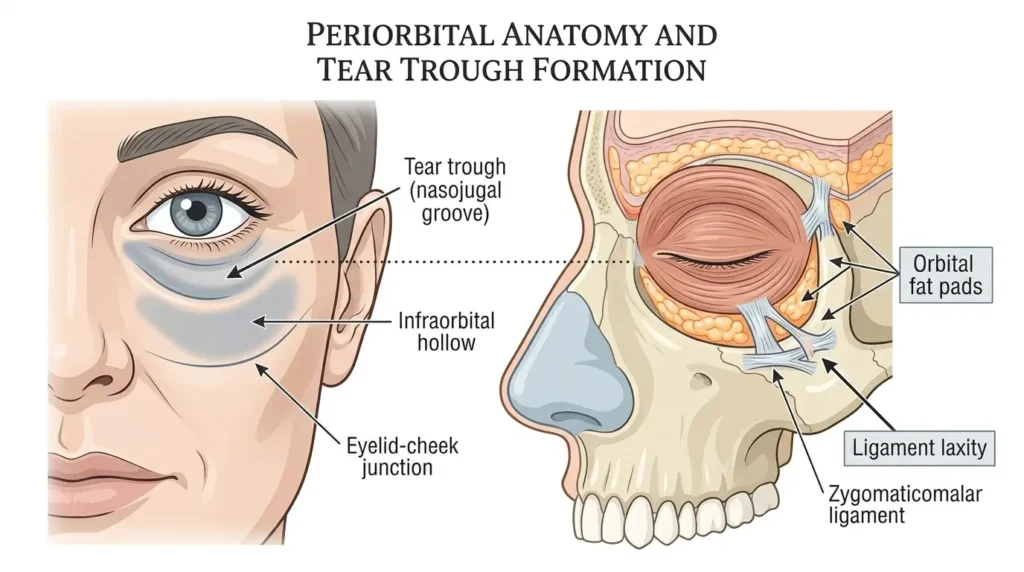
Under eye filler — also called tear trough filler — is an injectable treatment using hyaluronic acid (HA) gel to restore volume to the hollow groove beneath the lower eyelid. Hyaluronic acid is a naturally occurring molecule in your skin that binds to water and provides structural volume. When placed at the correct depth in the tear trough, it smooth’s the hollow, reduces the shadow it casts, and restores a rested, balanced appearance.
The word natural is not simply marketing language here. It describes a specific clinical goal: the under-eye area should look smoother and brighter — not fuller, rounder, or obviously treated. Natural results require the right product, conservative volume, and precise placement deep in the tissue rather than close to the skin surface.
Shadow-Based Dark Circles vs. Pigmentation — A Critical Distinction
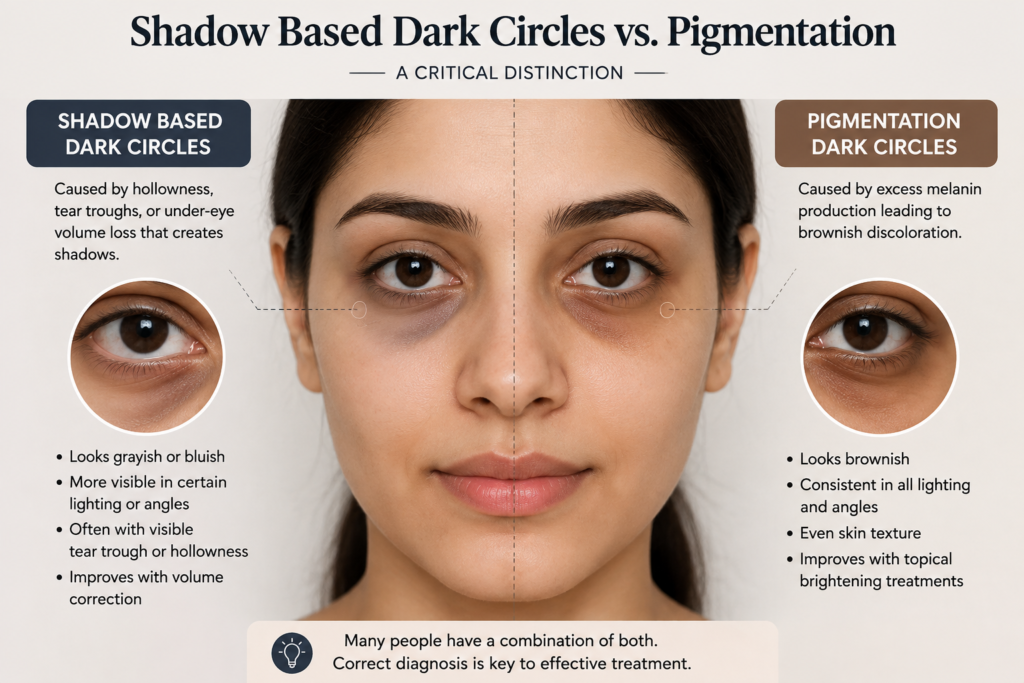
Before considering treatment, it is essential to understand which type of dark circles you have. Filler addresses shadow-based darkness — the appearance created by a hollow casting a shadow on the lower eyelid skin. It does not affect pigmentation-based darkness (excess melanin in the skin) or vascular dark circles (blood vessels visible through thin skin).
| Shadow-Based Dark Circles | Pigmentation-Based Dark Circles |
| Caused by the hollow tear trough casting a shadow | Caused by melanin deposits or visible blood vessels |
| Varies with lighting — worse under overhead light | Consistent regardless of lighting angle |
| Filler directly addresses the root cause | Filler offers little or no improvement |
| Results can be dramatic and immediate | Laser, topical brighteners, or peels are more appropriate |
A qualified injector will identify which type applies to you before recommending treatment. This assessment is non-negotiable.
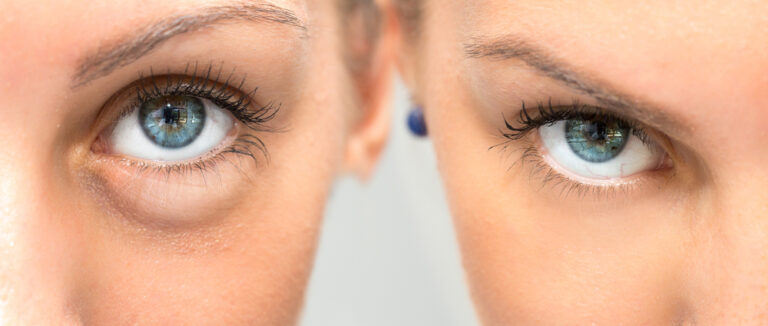
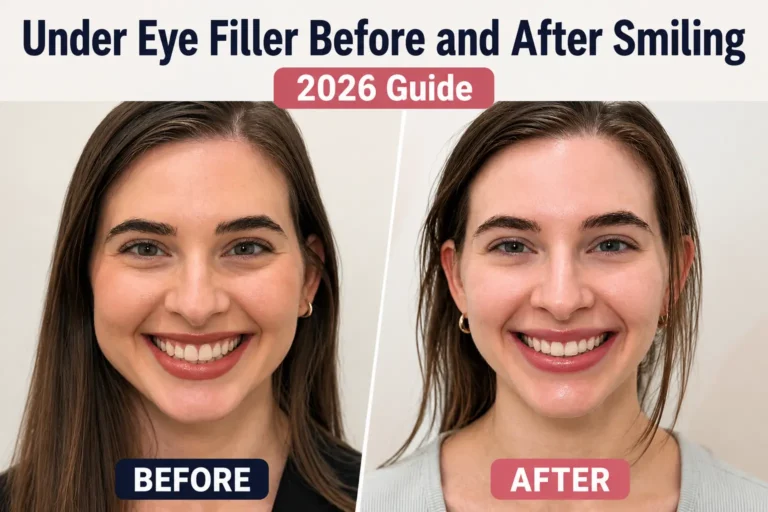
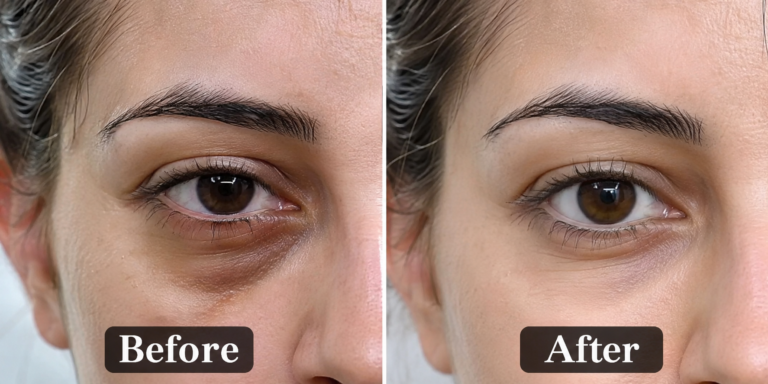
Natural under Eye Filler Before and After: What Real Results Look Like
Understanding what to expect in before and after results — and what good results genuinely look like — protects you from unrealistic expectations and helps you evaluate any clinic’s portfolio honestly.
What a Natural Result Should Show
- Reduced hollow: The groove beneath the eye is smoother, not completely flat — a subtle, gradual curve from lower eyelid to cheek replaces the sharp depression.
- Brighter under-eye area: Shadow disappears when the hollow that created it is filled. The area looks naturally brighter without looking filled.
- No visible product: A natural result shows no puffiness, no bluish tint (Tyndall effect), and no visible dome of filler under the skin.
- Rested appearance: The most common comment from others after treatment is: “You look so well-rested.” Not: “Did you get filler?”
Results by Age Group — What to Realistically Expect
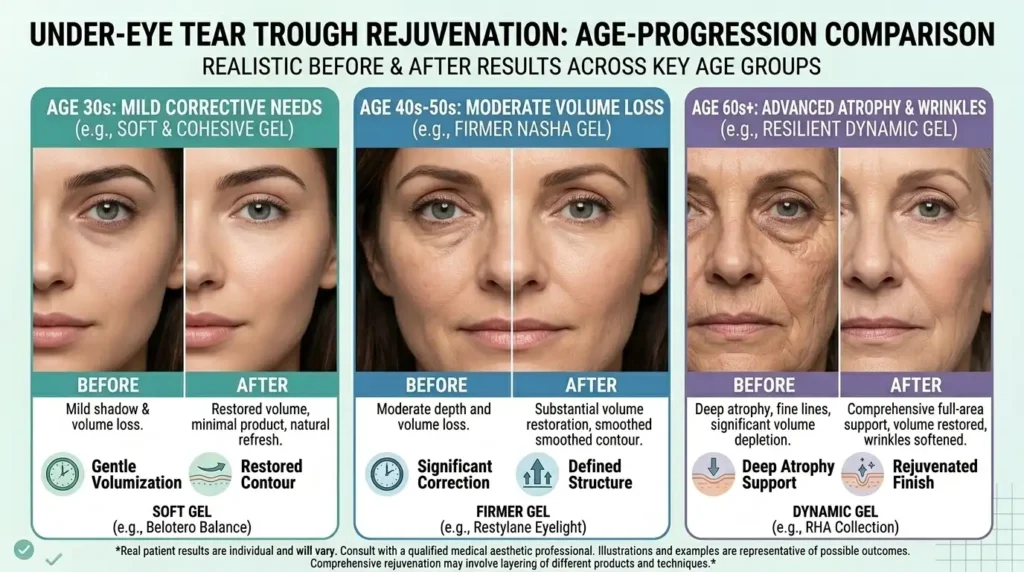
Results differ meaningfully across age groups — something most resources fail to address clearly.
In your 20s and 30s, hollow tear troughs are usually genetic rather than age-related. Small volumes (0.3–0.7 mL total) typically produce excellent brightening with a completely natural appearance. Results last up to 18 months.
In your 40s and 50s, volume loss extends into the midface. Experienced injectors often recommend adding a small amount of cheek filler alongside tear trough treatment to provide structural support from below. This combined approach produces more natural, longer-lasting results than isolated tear trough treatment.
In your 60s and beyond, skin laxity and bone resorption are more significant. Filler combined with skin-tightening treatments such as radiofrequency or Ultherapy may give the most balanced outcome. For patients with significant fat herniation (true under-eye bags), surgical blepharoplasty should be discussed alongside non-surgical options.
Male Patients: Different Anatomy, Different Goals
Male patients represent a growing proportion of tear trough filler patients. Natural results in men require maintaining angular, defined facial structure — not creating softness or feminising roundness. Conservative volumes, stronger injection depths, and attention to the more prominent male brow ridge and orbital anatomy produce the most appropriate outcome: a rested, sharp, healthy appearance rather than a treated one.
How to Read Before and After Photos Correctly
This is the most overlooked skill in aesthetic research — and one no competitor addresses directly. Not all before and after images tell the same story.
Green Flags in a Good Clinical Portfolio
- Consistent lighting: Both images photographed under the same conditions, from the same angle, with no make-up.
- Natural eyelid-cheek transition: A gentle curve — not a dome or a right angle — between lower eyelid and cheek in the after image.
- Multiple patients with diverse anatomy: A single impressive result proves nothing. Consistent results across different ages and structures demonstrates genuine skill.
- After photos taken at two weeks: This is when swelling has fully resolved and filler has integrated — the true settled result.
Red Flags to Walk Away From
- Different lighting in before vs after: Brighter lighting in the after image eliminates shadows without any treatment — the most common photographic manipulation.
- Heavy make-up in the after image: Concealer can mask dark circles more effectively than any filler.
- Puffy or rounded under-eye in the after: This is an over-filling complication presented as a result — not a good outcome.
- Only one or two photos in the portfolio: Genuine expertise produces a substantial library of consistent results across different patients.
The Procedure and Recovery: Day-by-Day Timeline
The tear trough filler appointment typically takes 20 to 35 minutes from preparation to aftercare briefing. Here is exactly what the procedure and recovery involve.
The Procedure: Step by Step
- Consultation and anatomy assessment: The injector examines the periorbital area under multiple lighting conditions, identifies your dark circle type, assesses skin quality and laxity, and discusses realistic expectations.
- Topical numbing: Anaesthetic cream is applied for 20–30 minutes. Most modern HA fillers also contain lidocaine premixed — most patients feel only mild pressure, not pain.
- Injection — cannula or needle: A blunt-tipped cannula (inserted through a single entry point) or a fine needle places filler precisely along the tear trough at periosteal depth. Cannulas reduce bruising by 60–70% compared with needle technique and carry a lower vascular risk.
- Moulding and assessment: The injector gently smooths the product and assesses symmetry from multiple angles before releasing the patient.
- Aftercare briefing: Ice is applied, post-treatment instructions are given, and a two-week review appointment is booked.
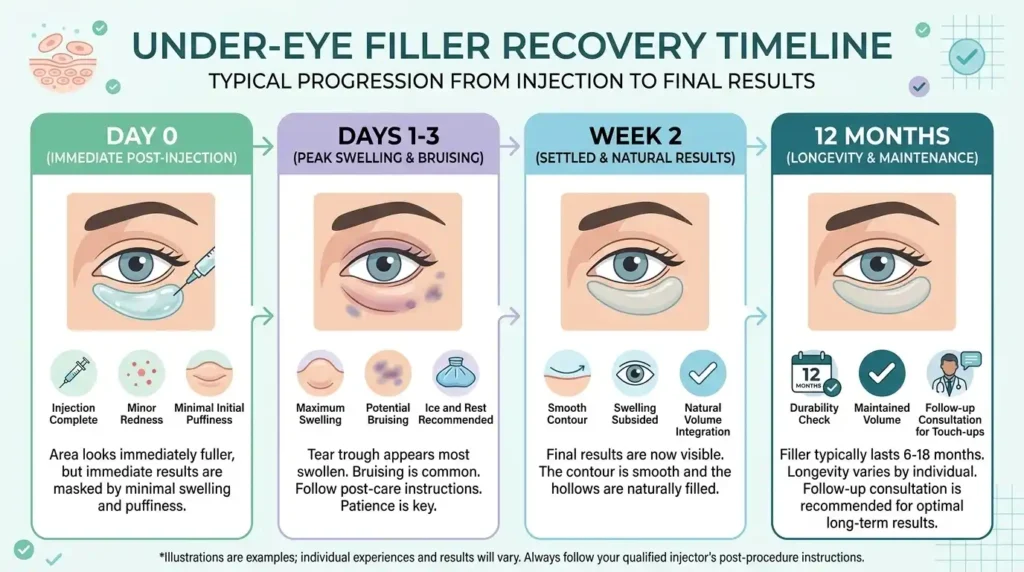
Day-by-Day Recovery Timeline
| Under Eye Filler Recovery at a Glance |
| Immediately after: Results visible — but swelling is also present. Not the final result. |
| Days 1–3: Peak swelling period. Sleep elevated, avoid alcohol, heat, and exercise. |
| Days 4–7: Swelling subsides. Bruising (if present) fades. Most patients return to social activities. |
| Week 2: Filler fully integrates. Final natural result is now visible. |
| Months 9–18: Gradual, slow return of hollow. Maintenance treatment available at any point. |
The most important point: what you see immediately after injection includes procedural swelling. The true result — and the appropriate time to assess whether a touch-up is needed — is at the two-week review appointment.
Preparation, Aftercare and Maintaining Your Results
Before Your Appointment
- Avoid alcohol and vigorous exercise for 24 hours beforehand
- Stop blood-thinning supplements (vitamin E, fish oil, turmeric) five days before
- Disclose all medications — anticoagulants and certain antidepressants affect bleeding risk
- Arrive without make-up for accurate anatomy assessment and reduced infection risk
Aftercare: First 48 Hours
- Sleep with head elevated — reduces overnight fluid pooling in the under-eye area
- Apply ice gently for 10–15 minutes at a time — do not apply direct pressure
- Do not touch, rub, or massage the treated area for 48 hours
- Avoid alcohol, heat (saunas, hot baths), and strenuous exercise for 48 hours
- Take paracetamol for discomfort — not aspirin or ibuprofen, which worsen bruising
How to Maintain Results Longer
Hyaluronic acid filler breaks down faster with UV exposure. Daily broad-spectrum SPF 30 or higher is the single most effective measure for prolonging results. Supporting the surrounding skin with a peptide eye cream, adequate hydration (1.5–2 litres of water daily), and a topical vitamin C serum in the morning all contribute to the overall appearance and help the filler integrate and last optimally.
Risks, Side Effects and How to Avoid Unnatural Results
Common Temporary Side Effects
- Swelling: Normal and expected in the first 48–72 hours. Resolves within one week for most patients.
- Bruising: Variable. Ranges from minimal to more visible, particularly in patients taking blood-thinning medications. Resolves within one to two weeks.
- Tenderness: Mild soreness at injection sites for two to three days.
Day by day swelling stages of patients where people show there results.
Important Complications to Know
- Tyndall effect: A bluish cast visible beneath the skin when filler is placed too superficially. Treatable with hyaluronidase dissolution. Avoided with proper depth placement.
- Overfilling: The most common cause of unnatural results — rounded, puffy under-eyes that look worse than before. Prevented by conservative volume placement and a planned two-week review. Corrected with hyaluronidase.
- Vascular occlusion: Rare but serious. Blanching, severe pain, or mottled skin immediately after injection requires emergency treatment. Clinics must have hyaluronidase on site.
The reversibility of hyaluronic acid filler is its most important safety feature. Hyaluronidase enzyme completely dissolves HA filler within 24–48 hours, returning the area to its pre-treatment baseline if needed.
How to Choose the Right Injector for Natural Results
The injector you choose matters more than any other variable. The under-eye area is the highest-stakes region for filler placement on the face — thin skin, complex vascular anatomy, and a narrow margin for error make specialist expertise essential.
- Medical credentials: Choose a board-certified physician, oculoplastic surgeon, dermatologist, or qualified medical professional with specific advanced periorbital training.
- Specialist periorbital experience: Ask specifically how many tear trough treatments they perform per month — not just general filler experience.
- Genuine before and after portfolio: Request clinical photographs of their own patients with anatomy similar to yours — not manufacturer marketing images.
- Hyaluronidase on site: Non-negotiable. Any clinic performing tear trough filler must have dissolution capability immediately available.
- Honest candidacy assessment: A skilled injector will tell you clearly if filler is not the right treatment for your concern and will suggest alternatives without pressure.
- Transparent pricing: Significant pricing below market rates suggests diluted product, counterfeit filler, or dangerously inexperienced practitioners. This is not an area to bargain-shop.
Frequently Asked Questions
How long does natural under eye filler last?
Most patients see results lasting 12 to 18 months. The tear trough area retains filler longer than more dynamic facial zones because it experiences minimal muscle movement.
Does under eye filler hurt?
Most patients describe mild pressure rather than pain. Topical numbing cream and lidocaine premixed in the filler itself make the procedure comfortable for the majority of patients.
Can filler fix all types of dark circles?
No. Filler effectively addresses shadow-based dark circles caused by the hollow tear trough. It does not improve pigmentation-based darkness or vascular discolouration. Accurate diagnosis before treatment is essential.
When do final results appear?
You see an immediate improvement but the final, natural, settled result is visible at two weeks once all swelling has resolved and the filler has fully integrated into the tissue.
Can under eye filler be reversed?
Yes — completely. Hyaluronidase enzyme dissolves HA filler within 24 to 48 hours, returning the area to its pre-treatment baseline. This reversibility is one of the most important safety advantages of HA filler over surgical alternatives.
How much does tear trough filler cost?
In the United States, expect $600 to $1,500 per session at a reputable specialist clinic. In the United Kingdom, costs typically range from £300 to £800. Pricing significantly below these ranges should prompt caution about product quality and practitioner credentials.
The Bottom Line: Natural Results Come from the Right Approach
The transformation that well-placed, conservative tear trough filler delivers is one of the most effective in non-surgical aesthetics — not because it changes how you look dramatically, but because it removes the shadow of tiredness from a face that no longer deserves to carry it.
Natural results depend on the right patient selection, the right product placed at the right depth, and — above all — an injector with genuine periorbital expertise and a commitment to undertreatment over overtreatment. When all of those conditions are met, no one will know you had anything done. They will simply notice that you look well.
| Key Takeaways |
| Shadow-based dark circles respond well to filler. Pigmentation-based dark circles do not. |
| Final natural results are visible at 2 weeks — not immediately after injection. |
| Blunt cannula technique reduces bruising risk by 60–70% vs needle injection. |
| Over-filling is the most common cause of unnatural results — conservative volume is always safer. |
| Hyaluronidase completely reverses HA filler if needed — reversibility is a key safety advantage. |
| SPF daily is the single most effective way to prolong your filler results. |
| Hyaluronidase must be on-site at any clinic performing tear trough treatment. |
Medical Disclaimer: This content is for informational and educational purposes only. It does not constitute medical advice or a recommendation for treatment. Always consult a qualified licensed medical professional before considering any injectable cosmetic procedure.
Medical References and Official Guidelines
This article was developed based on clinical safety standards and dermal filler guidelines provided by the following government health authorities:
- U.S. Food and Drug Administration (FDA): Dermal Filler Do’s and Don’ts for Soft Tissue Fillers – Guidelines on safety, risks, and approved uses of injectable fillers.
- National Institutes of Health (NIH): Hyaluronic Acid Fillers in the Management of the Tear Trough Deformity – A clinical study explaining the anatomy of the eye and the importance of proper filler placement.

Sarah Mitchell is the founder and research editor of Under Eyes Filler, an independent patient-education resource. She is a researcher and writer, not a licensed medical professional. Her work is to read clinical studies and official FDA and ASPS guidance, then translate them into clear, honest explanations of under-eye filler results, recovery, risks, and realistic costs, so readers can prepare better questions for their own qualified provider.
[…] becomes clear around the two-week mark. If you want a realistic idea of what that looks like, this natural under eye filler before and after gallery is worth a look before your […]
[…] made from hyaluronic acid (HA) — a polysaccharide (a long chain of sugar molecules) that occurs naturally throughout your body, particularly in your skin, joints, and connective tissue. Its principal […]