Medically reviewed • Evidence-led under-eye filler education • Updated October 2026

Asian Eyelid Surgery: Types, Recovery, and What to Realistically Expect11 min read
Disclaimer: This article is for educational and informational purposes only and does not replace professional medical advice. Always consult a board-certified plastic surgeon or oculoplastic surgeon before undergoing any cosmetic surgical procedure.
Direct answer: Asian eyelid surgery, medically known as Asian blepharoplasty or double eyelid surgery, creates a defined crease in the upper eyelid, producing a larger, more symmetric, almond-shaped eye. It’s an elective cosmetic procedure with three main surgical approaches — full incision, partial incision, and no-incision — chosen based on how much excess skin and fat is present, and the preferred crease height is customized to the individual rather than following a single universal standard.
This last point is worth understanding from the outset, because it shapes everything else about how the procedure is planned. Roughly half of people of East Asian descent are born without a visible upper eyelid crease — this is a completely normal anatomical variation, not something to correct in a medical sense, but a structural difference that some people choose to change for aesthetic reasons, the same way anyone might choose any other elective cosmetic procedure. The decision to pursue Asian eyelid surgery is personal, and a skilled surgeon plans the crease around the patient’s own eye shape, face proportions, and stated preference — not a fixed template.
That customization matters because eyelid anatomy varies meaningfully even within broad regional groupings, and this is one of the more genuinely useful things to understand before a consultation. Preferences for crease height differ by region and individual preference: people of Northeast Asian descent — including Chinese, Mongolian, Korean, Taiwanese, and Japanese backgrounds — more often prefer a lower, subtler crease, typically in the 3 to 6 millimeter range above the lash line. People of Southeast Asian descent — including Thai, Vietnamese, Burmese, Indonesian, and Malaysian backgrounds — more often prefer a taller, more pronounced crease, typically 7 to 10 millimeters. These are general patterns rather than rules, and an experienced surgeon discusses individual preference directly rather than assuming based on background alone.
The procedure is sometimes performed alongside epicanthoplasty, a separate technique that extends the inner corner of the eye toward the nose, which some patients combine with the crease procedure to adjust both the width and height of the eye at once — though this is an additional decision made based on individual anatomy and goals, not a required part of every double eyelid surgery.
This guide breaks down the three surgical techniques used in Asian eyelid surgery and who each one suits, the signs that typically indicate a good candidate, what recovery actually looks like week by week, and the questions worth asking before choosing a surgeon. For those specifically weighing surgical eyelid changes against non-surgical volume treatments in the surrounding eye area, undereyesfiller.com covers injectable options that address a different, non-structural set of concerns than this procedure does.

Who Is a Good Candidate for Asian Eyelid Surgery
Direct answer: Good candidates for Asian eyelid surgery typically have one or more of the following: an upper eyelid that drapes heavily over the iris, visible puffiness from excess eyelid fat, or an inward-folding eyelid that causes eyelashes to rub against the eye and cause irritation.
Beyond these physical signs, candidacy also comes down to realistic expectations and overall eye health. A thorough consultation typically evaluates eyelid skin thickness, existing fat distribution, brow position, and any pre-existing dry eye symptoms, since eyelid surgery can occasionally affect blink completeness and tear film in the months following the procedure. Discussing this directly with a surgeon beforehand, rather than assuming it won’t apply to your case, is part of an informed decision.
The Three Surgical Techniques for Double Eyelid Surgery
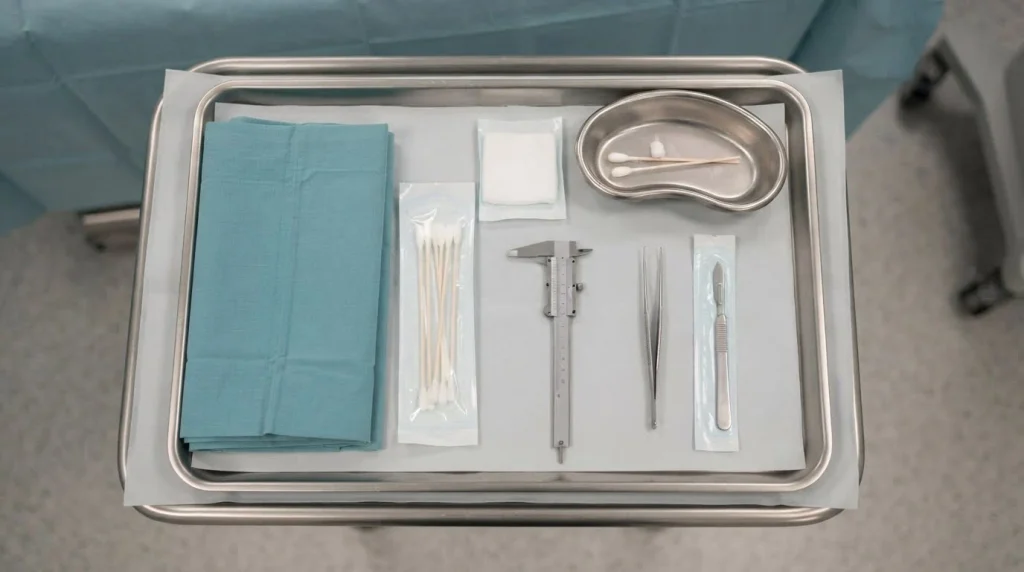
Direct answer: Asian eyelid surgery is performed using one of three techniques — full incision, partial incision, or no-incision — and the right choice depends primarily on how much excess eyelid skin and fat needs to be addressed, not just on personal preference for scarring.
| Technique | Best Suited For | Scarring | Durability |
|---|---|---|---|
| Full incision | Excess skin and excess fat present | Visible scar along the crease line, but typically cosmetically well-hidden due to thin eyelid skin | Most permanent of the three methods |
| Partial incision | Excess fat without excess skin, or patients wanting more durable results than the no-incision method | Minimal; incisions under about 5mm are typically undetectable once healed | More durable than no-incision, less invasive than full incision |
| No incision | Little to no excess fat or skin | No visible scar; minimal to no swelling | Least durable — the crease may soften or unfold over time in some patients |
Full Incision Technique
This approach involves an incision along most of the length of the new eyelid crease, giving the surgeon full access to remove excess skin and fat before placing sutures that recreate the internal fibrous attachments a natural double eyelid has. It’s generally the most reliable, long-lasting option and the standard choice for patients with a meaningful amount of excess tissue to address.
Partial Incision Technique
A shorter incision — kept as small as possible along the upper border of the intended crease — gives the surgeon a smaller working window to remove excess fat while keeping visible scarring to a minimum. This technique is more technically demanding than the full-incision approach because of that limited access, but it offers a middle ground: more durable results than the no-incision method, with less visible scarring than the full-incision approach.
No-Incision Technique
Rather than a continuous incision, this method uses several small punctures through which sutures are placed to mimic the internal attachments of a natural crease, with all suturing buried beneath the skin. It suits patients with little to no excess fat or skin and offers the advantage of no visible scar and minimal swelling — but because it relies more heavily on scarring and adhesion to hold the crease in place rather than surgical fixation, it carries a higher chance that the fold may soften or disappear over time compared to the incisional methods.

Recovery Timeline After Asian Eyelid Surgery
Recovery specifics vary by technique and by how much tissue was removed, but a general pattern holds across most patients:
- Immediately after surgery: Most patients report minimal pain. Swelling is typically more pronounced after full-incision procedures involving fat and skin removal than after the partial or no-incision methods.
- 4 to 6 days: Sutures are removed in clinic for the full and partial incision techniques. The no-incision method uses buried sutures, so no removal visit is needed for that approach.
- About 2 weeks: Bruising has generally resolved by this point for most patients.
- 1 week: Many patients are able to return to a desk job around this time, depending on how they feel and how visible any remaining swelling is.
- 1 to 2 weeks: Driving typically resumes within this window once vision isn’t affected by swelling and any discomfort has eased.
- 2 to 4 weeks: Physical activity is generally reintroduced gradually during this period, following a surgeon’s specific guidance based on the technique used.
Final results take time to settle. Initial swelling can make the crease look higher or more pronounced than the eventual outcome, which is why most surgeons recommend waiting at least several weeks, and sometimes longer, before judging the final shape and height of the new crease.

What to Expect: Realistic Before and After Results
The most consistent, reliable outcome across double eyelid surgery before and after comparisons is a visibly larger, more open, almond-shaped eye with a defined crease that wasn’t previously present or visible. When combined with epicanthoplasty, the change also typically includes a subtly widened appearance to the eye’s inner corner.
A natural-looking result depends heavily on matching crease height and shape to the individual’s existing eyelid anatomy, brow position, and stated preference, rather than applying a single universal look. This is why reviewing eyelid surgery before and after Asian patient examples from a specific surgeon’s own practice — not generic stock photos — is one of the most useful steps before committing to a consultation, since it shows how that surgeon actually tailors results across different starting anatomies rather than producing one repeated look.

Choosing a Surgeon for Asian Eye Plastic Surgery
Because eyelid anatomy in Asian patients differs structurally from the anatomy most general blepharoplasty training is built around — including differences in fat distribution and where internal eyelid structures naturally attach — technique-specific experience matters more here than in many other cosmetic procedures. Questions worth asking directly in a consultation include:
- How many Asian eyelid surgery procedures has the surgeon performed specifically, as opposed to general blepharoplasty?
- Which of the three techniques would they recommend for your specific anatomy, and why?
- Can they show before and after examples from patients with a similar starting eyelid shape to yours?
- What is their approach to matching crease height to personal preference, rather than a fixed standard?
A surgeon who takes time to understand your specific goals — rather than proposing one default crease height for every patient — is generally a stronger sign of technique-specific experience than credentials alone.
For an additional overview of the anatomical and surgical detail behind this procedure from a medical reference source, EyeWiki’s entry on Asian blepharoplasty is worth reviewing as further reading alongside this guide.
Frequently Asked Questions
What is Asian eyelid surgery? Asian eyelid surgery, or Asian blepharoplasty, is an elective cosmetic procedure that creates a defined crease in the upper eyelid, resulting in a larger, more symmetric, almond-shaped eye. Crease height and shape are customized to each patient’s anatomy and preference.
Is double eyelid surgery permanent? It depends on the technique. Full-incision surgery generally produces the most permanent results, since the surgeon directly recreates the internal attachments that hold a crease in place. The no-incision method, which relies more on scarring to maintain the fold, has a higher chance of the crease softening or fading over time in some patients.
How long does recovery take after Asian eyelid surgery? Most patients see sutures removed within 4 to 6 days for incisional techniques, with bruising typically resolved by around 2 weeks. Many return to desk-based work around 1 week post-surgery, with physical activity reintroduced gradually over 2 to 4 weeks.
What’s the difference between full incision, partial incision, and no-incision double eyelid surgery? Full incision suits patients with excess skin and fat and offers the most durable result, with a scar that’s typically well-hidden. Partial incision suits excess fat without excess skin, offering a middle ground of durability and minimal scarring. No-incision suits patients with minimal excess tissue and produces no visible scar, but is the least durable of the three.
Does everyone need the same crease height? No. Preferred crease height varies by region and, more importantly, by individual preference — commonly ranging from about 3 to 6 millimeters for those preferring a subtler crease, up to 7 to 10 millimeters for those preferring a more pronounced one. An experienced surgeon customizes this to the patient rather than applying one standard.
Can Asian eyelid surgery be combined with other procedures? Yes, it’s commonly performed alongside epicanthoplasty, which extends the inner corner of the eye toward the nose, for patients wanting to adjust both the width and height of the eye. This is an individual decision based on anatomy and goals, not a standard addition for every patient.
Key Takeaways
Asian eyelid surgery is a highly individualized procedure — the right technique, crease height, and whether to combine it with epicanthoplasty all depend on a patient’s specific eyelid anatomy and personal preference, not a single universal approach. Full incision offers the most durable results for patients with excess skin and fat, partial incision balances durability with minimal scarring, and no-incision suits patients needing the least correction but carries a higher chance the crease may soften over time. Choosing a surgeon with genuine, technique-specific experience in this anatomy — and reviewing real before-and-after examples matched to your own starting eyelid shape — is what most reliably separates a natural, satisfying result from one that needs revision later.

Sarah Mitchell is the founder and research editor of Under Eyes Filler, an independent patient-education resource. She is a researcher and writer, not a licensed medical professional. Her work is to read clinical studies and official FDA and ASPS guidance, then translate them into clear, honest explanations of under-eye filler results, recovery, risks, and realistic costs, so readers can prepare better questions for their own qualified provider.