
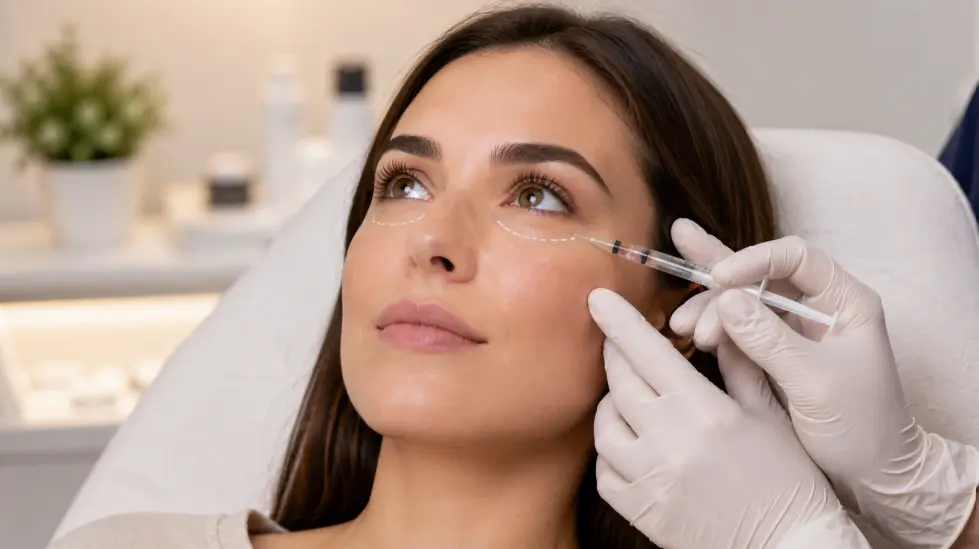
How long does under eye filler last? It is one of the first questions patients ask — and one of the most inconsistently answered. Spend ten minutes searching online and you will find everything from “six months” to “five years,” which is technically accurate and practically useless.
Here is the honest answer: for most patients, under eye filler lasts between 9 and 18 months. That range is real, and understanding what puts you at the longer or shorter end of it is what this guide is actually about. We cover the biological mechanism behind filler breakdown, how every major filler brand compares by duration, the seven specific factors that shape your personal timeline, why your second treatment will almost always outlast your first, and how to make your results last as long as possible.
1. How Long Does Under Eye Filler Last? The Direct Answer
Average Duration for Most Patients
Clinical data and large-scale practitioner outcomes consistently point to a 9 to 18 month window for the majority of tear trough filler patients. The American Society of Plastic Surgeons and multiple peer-reviewed studies confirm that hyaluronic acid fillers placed in low-movement facial zones — of which the under-eye area is one — tend to outlast fillers in high-movement zones like the lips or mouth corners.
The under-eye area benefits from one significant anatomical advantage: the periorbital region experiences minimal muscle-driven movement compared with the mouth, cheeks, or forehead. Every time you speak, eat, or smile, filler in those zones is being mechanically stressed. Your tear trough is not. That reduced mechanical load slows the enzymatic breakdown of the filler gel and is one of the primary reasons under eye filler consistently outlasts lip filler, which typically needs replacing every four to six months.
How Under Eye Filler Duration Compares to Other Facial Areas
| Treatment Area | Typical Duration | Movement Level | Notes |
| Lips | 4–6 months | Very high — constant movement | Shortest lasting due to muscle activity |
| Nasolabial folds | 9–12 months | Moderate | Mid-range longevity |
| Under eye / Tear trough | 9–18 months | Very low | Outlasts most facial zones |
| Cheeks / Midface | 12–24 months | Low — deeper placement | Longest lasting of common sites |
| Jaw / Chin | 12–18 months | Low-moderate | Firmer products used |
Why the Range Is So Wide — What This Guide Explains
The difference between a patient whose filler lasts nine months and one whose results hold for eighteen months is not random. It is explained by seven specific, identifiable factors — and several of them are directly within your control. Understanding them before your first appointment changes what questions you ask, what products you agree to, and what you do in the weeks after treatment.
2. The Science of How Under Eye Filler Actually Breaks Down
What Hyaluronic Acid Is and Why Your Body Eventually Absorbs It
All mainstream under eye fillers are made from hyaluronic acid (HA) — a polysaccharide (a long chain of sugar molecules) that occurs naturally throughout your body, particularly in your skin, joints, and connective tissue. Its principal property is water-binding: one gram of hyaluronic acid can hold up to six litres of water, which is what gives HA filler its volumising and hydrating effect in the tissue.
Because HA is biocompatible and biodegradable — recognised by the body as a familiar molecule — it does not remain indefinitely. It is gradually dismantled by a naturally occurring enzyme.
Hyaluronidase: The Enzyme That Dissolves Your Filler
Hyaluronidase is the enzyme your body continuously produces to break down naturally occurring hyaluronic acid as part of normal tissue turnover. The same process acts on injected HA filler gel. As hyaluronidase enzymes cleave the molecular bonds within the filler structure, the volume it provides gradually diminishes.
The rate at which this happens varies between individuals. Some people produce more hyaluronidase than others — a largely genetic variation — which is why two patients with identical treatments can have materially different result timelines. This enzyme variability is the fundamental biological explanation for why filler longevity is never completely predictable in advance.
This is also why hyaluronidase is the tool injectors use to dissolve HA filler deliberately when needed. The same enzyme that naturally breaks down your filler over 12 months can be injected in concentrated form to dissolve it within 24 to 48 hours.
Cross-Linking Technology: Why Some Fillers Last Longer Than Others
Pharmaceutical manufacturers engineer HA filler products to resist hyaluronidase breakdown through a process called cross-linking. Individual HA chains are chemically bonded to each other, forming a three-dimensional gel network that degrades more slowly than uncrosslinked HA. The degree and method of cross-linking is the primary technical variable that distinguishes filler products from each other and determines their longevity profile.
Volbella, for example, uses Allergan’s VYCROSS technology — a cross-linking method that blends different molecular weights of HA to produce a very soft, stable gel. Restylane products use NASHA (Non-Animal Stabilised Hyaluronic Acid) technology with controlled particle sizing. RHA fillers use a minimal cross-linking approach designed to preserve HA’s natural structure and flexibility. Each approach produces different integration properties and different degradation timelines in the periorbital tissue.
Filler Particle Size and HA Concentration
Beyond cross-linking, the particle size of HA molecules within the gel and the overall HA concentration both influence how long does under eye filler last. Larger, more densely cross-linked particles degrade more slowly. Thinner, lower-concentration fillers — sometimes preferred for the delicate under-eye area because they integrate more naturally — tend to have shorter lifespans. This is a genuine trade-off that your injector should discuss with you when selecting the appropriate product for your anatomy.
3. Under Eye Filler Brand Comparison: How Long Does Eye Filler Last
The filler brand and formulation your injector selects is one of the most significant controllable variables in how long your results last. The under-eye area requires a specific type of filler — soft enough to integrate naturally through thin periorbital skin, but stable enough to maintain volume over time. Here is how the leading options compare.
| Filler Brand | FDA Status for Under Eye | Typical Duration | Key Technology | Best For |
| Restylane Eyelight | FDA-approved (21+) | 8–14 months | NASHA particle technology | Gold-standard tear trough correction; smooth integration |
| Juvederm Volbella XC | FDA-approved (22+) | 10–18 months | VYCROSS cross-linking | Thin skin; low water-uptake; minimal puffiness risk |
| Restylane-L / Refyne | Off-label (commonly used) | 9–14 months | XpresHAn flexibility technology | Dynamic movement compatibility; natural feel |
| Belotero Balance | Off-label | 6–10 months | CPM (Cohesive Polydensified Matrix) | Lowest Tyndall effect risk; ultra-thin skin |
| Teosyal RHA | Off-label | 10–16 months | Minimal cross-linking, low moisture uptake | Deep-set eyes; minimal post-treatment swelling |
| RHA Collection | Off-label | 9–14 months | Preserves natural HA structure | Natural movement; expressive patients |
A few important points about this table. Durations are clinical estimates based on published studies and practitioner experience — individual results vary based on the factors covered in the next section. The FDA-approved designation specifically for infraorbital hollowing currently applies only to Restylane Eyelight and Juvederm Volbella XC. Other products are widely used off-label by experienced injectors and are entirely legitimate — FDA approval for this specific indication is recent and does not mean other products are unsafe or inappropriate.
Juvederm Volbella XC tends to last longer than Belotero for most patients because its VYCROSS cross-linking produces a more degradation-resistant gel. However, Belotero’s CPM technology makes it the lowest-risk choice for the Tyndall effect — the bluish discolouration that can appear when filler sits too close to the skin surface. For patients with very thin periorbital skin where Tyndall risk is elevated, a shorter-lasting but safer product is often the correct clinical choice.
4. The 7 Factors That Determine How Long Your Results Last
Factor 1: Your Individual Metabolism
This is the largest single variable and the one you can do least to change. People with faster metabolisms produce hyaluronidase more actively and break down injected HA filler more quickly than those with slower metabolic rates. Age, genetics, hormonal status, and overall health all influence individual metabolic speed. Patients who notice they metabolise medications or alcohol quickly often find the same applies to their filler. Conversely, patients who tend to retain things in their system often find their filler persists longer than average.
Factor 2: Injection Depth — The Paradox That Confuses Most Patients
This is one of the most counterintuitive aspects of tear trough filler longevity, and almost no published resource explains it clearly. Deeper filler placement — on or immediately above the periosteum (bone surface) — produces more natural-looking results and carries a lower complication risk. It is the correct technique for the tear trough area. However, filler placed deeper in the tissue is covered by more overlying tissue and may appear to disappear faster, even when the same total volume is present.
Think of it like a blanket over a pillow: a thin blanket makes the pillow obvious; a thick blanket obscures it. Deeper filler is covered by the “thick blanket” of periorbital tissue. When 50 percent of the filler volume has degraded, a patient may perceive that it has completely gone — because the threshold for visible effect is higher when the product is deeper. This means that natural-looking results achieved through correct deep placement may seem to wear off faster than superficial filler, even though the technique is better.
The clinical implication: if your result seems to fade faster than expected, the first question is whether it was placed at the correct depth. Shallow filler that lingers visibly for longer is not a sign of better technique — it is often a sign of misplacement, and carries higher risks of Tyndall effect and lumpiness.
Factor 3: Volume of Filler Placed
A small volume of filler — 0.5 mL for both eyes combined — will reach the threshold of visible diminishment faster than a larger volume correction. More filler means more material needs to be metabolised before the visual effect is lost. Patients with deeper tear troughs who require 1.0 to 1.5 mL for meaningful correction typically find their results persist longer than patients with mild hollowing who needed only 0.5 mL. This is a natural consequence of volume, not a reason to over-fill — but it helps explain why first treatments on mild hollowing sometimes seem shorter-lived.
Factor 4: Injector Technique and Experience
The skill and experience of the person performing your treatment directly affects both the quality and the longevity of the result. Precise placement in the correct anatomical plane at the correct depth, with appropriate volume distribution, allows the filler to integrate optimally with surrounding tissue. Well-placed filler integrates smoothly and behaves more like native tissue, making it more resistant to mechanical disruption and supporting a more gradual, even degradation. Poorly placed filler — too superficial, unevenly distributed, or in the wrong compartment — may break down unevenly or migrate, shortening the effective lifetime of the result.
Factor 5: Sun Exposure and UV Damage
UV radiation degrades hyaluronic acid. This is well established in the dermatological literature — UV exposure triggers reactive oxygen species (free radicals) in the skin that can cleave the HA polymer chains within filler gel, accelerating its breakdown. Patients who spend significant time in direct sunlight without adequate photoprotection will consistently find their filler results shorter-lived than those who protect the periorbital skin with a broad-spectrum SPF 30 or higher every day. This is the single most clinically substantiated lifestyle measure for prolonging filler longevity.
Factor 6: Lifestyle Factors — Smoking, Alcohol, and Intense Exercise
Smoking accelerates collagen breakdown throughout the skin and promotes systemic inflammation, both of which compromise the tissue environment that surrounds and supports filler. Chronic heavy alcohol consumption promotes systemic inflammation and dehydration, neither of which supports optimal HA filler retention. High-intensity exercise elevates heart rate, increases metabolic rate systemically, and increases blood circulation — all of which may accelerate filler breakdown in patients who train very intensively. Moderate exercise is not a concern; the effect is most significant in patients who train daily at high intensity.
Factor 7: Your Age and Skin Quality
Younger patients — particularly those in their twenties — often have faster metabolisms and may find their filler breaks down slightly more quickly than older patients. Paradoxically, younger patients’ skin quality is typically better, meaning the tissue environment surrounding the filler is more optimal for integration. Older patients with more significant collagen loss may find the filler takes on a slightly different quality in the tissue, though the degradation rate difference is modest compared with the metabolic variable.
5. How Long Does Under Eye Filler Last- Results by Age Group
One aspect of tear trough filler longevity that no major competitor resource addresses is how results differ across age groups. While individual metabolism dominates, age correlates meaningfully with several of the longevity factors discussed above.
In Your 20s and 30s — Genetic Hollowing, Active Metabolism
Patients in their twenties and early thirties seeking tear trough filler are typically addressing genetic hollowing rather than age-related volume loss. Their skin quality is good, their tissue integration is excellent, but their metabolic rate tends to be higher. First treatments for this group often last toward the shorter end of the 9 to 18 month range — sometimes 9 to 12 months. The good news: their second treatment almost always outlasts their first significantly, as established filler provides a foundation for the new product.
In Your 40s and 50s — The Typical Patient Profile
The majority of tear trough filler patients fall into this age range. Volume loss is genuine and often extends into the midface, metabolic rate is moderate, and skin quality is reasonable. This group typically falls squarely within the 12 to 15 month window for first treatments and 14 to 18 months for maintained results. Combining tear trough filler with midface support — cheek filler — in this age group often produces the longest-lasting and most natural results, as the structural foundation extends the life of the tear trough correction.
In Your 60s and Beyond — Often Longer-Lasting Results
Older patients with slower metabolisms frequently find their filler outlasts their expectations. Results in this group can extend to 18 months or beyond, particularly with well-placed, appropriate-volume treatment. The clinical caveat: as skin laxity increases, the appropriate treatment approach shifts — and for some patients in this age group, surgical blepharoplasty produces superior results that filler cannot replicate regardless of longevity.
6. Why Your Second Treatment Always Lasts Longer
This is one of the most practically valuable pieces of information for patients planning their tear trough filler journey — and it is almost entirely absent from competitor content.
The Cumulative Filler Effect
When you return for a maintenance treatment, you are not starting from zero. Even when results appear to have faded and you feel the hollow has returned, hyaluronic acid filler does not completely disappear on the schedule it appears to from the surface. Residual HA remains in the tissue, sometimes for considerably longer than the visible effect persists. MRI-based studies have detected HA filler in facial tissue more than two years after injection in some patients.
When new filler is injected into tissue that contains residual HA from a previous treatment, several things happen simultaneously: the new product integrates with the remnant gel, the combined volume restores the visible effect more completely, and the stabilised tissue environment from the previous treatment allows the new product to integrate more efficiently. The cumulative result is a second treatment that almost universally lasts longer than the first — often by three to six months.
Planning Your Top-Up Schedule
The optimal time to schedule a maintenance treatment is not when the result has completely disappeared — it is when you first notice the hollow returning. At this stage, residual filler is still present and a smaller touch-up volume achieves the full restoration. Patients who wait until results have completely gone require more product to achieve the same outcome and miss the benefit of the residual-filler foundation.
Most experienced injectors recommend a review appointment at two weeks post-treatment and a maintenance schedule of every 12 to 15 months — slightly earlier than the full dissolution point — to maintain continuous results with progressively less product per session.
7. The First Two Weeks After Treatment: What Actually Happens
Understanding the immediate post-treatment timeline is essential — particularly for patients who contact their injector in a panic at day three saying their results have already disappeared, or conversely, who think their result is final on the same day as the injection.
Immediately After — The “This Is Amazing” Moment
Results are visible immediately after injection. Volume has been placed in the tear trough; the hollow is reduced and the shadow is diminished. Many patients are thrilled at this point. However, the area is also swollen from the procedure itself, and this swelling adds apparent volume over and above the filler. What you see in the first 24 hours is the filler result plus procedural oedema.
Days 1–7 — The Difficult Week
As procedural swelling resolves over the first week, the perceived volume decreases. Some patients interpret this as the filler disappearing when in fact swelling is simply settling. Bruising, if present, peaks at days three to four and begins resolving from day five onward. The under-eye area may look somewhat variable during this week — different at different times of day, different when tired versus rested.
Week 2 — Your Actual Result
By the end of the second week, procedural swelling has fully resolved and the hyaluronic acid filler has integrated with the surrounding tissue. The filler has softened, moulded to the anatomy, and the result is at its most natural and settled. This is when a post-treatment review appointment should take place — and it is the only appropriate time to assess the outcome and determine whether any touch-up is needed.
The “It Wore Off in Two Weeks” Phenomenon — Explained
If you have ever heard someone say their under eye filler was gone within two weeks, this is almost always what happened: the procedural swelling resolved, revealing the filler result beneath — which was less dramatic than the swelling-augmented initial result — and they perceived this as the filler having dissolved. In genuine cases where the result disappears within two to three weeks, the explanation is usually that the hollow was very mild to begin with and the filler volume used was quite conservative, meaning the threshold for visible improvement was crossed quickly on the way down from peak result.
| Under Eye Filler Settling Timeline at a Glance |
| Immediately after: Results visible — filler + procedural swelling combined |
| Days 1–3: Swelling at its highest; bruising emerges; do not assess the result |
| Days 4–7: Swelling resolves; bruising fades; filler begins integrating |
| Week 2: Final settled result visible; review appointment appropriate |
| Months 9–18: Gradual return of hollow — optimal time for touch-up before complete fading |
8. How to Make Under Eye Filler Last Longer: Evidence-Based Tips
Most competitor resources list maintenance tips without explaining the clinical reasoning behind them. Understanding the why makes you far more likely to actually follow through — so here is each tip with its mechanism.
Daily SPF 30+ — The Most Important Measure
UV radiation triggers reactive oxygen species in the periorbital skin that actively cleave HA polymer chains within the filler gel. Regular UV exposure without photoprotection is the most consistently documented external factor for accelerating filler breakdown. A broad-spectrum SPF 30 or higher applied every morning — including overcast days — meaningfully slows this process. This applies to all skin tones; UV damage to HA is not pigmentation-dependent.
Stay Hydrated — How Drinking Water Directly Affects Your Filler
Hyaluronic acid is extraordinarily hydrophilic — it binds to water molecules within the surrounding tissue. Well-hydrated tissue provides the optimal environment for HA filler to perform at its full volumising capacity. Dehydrated tissue reduces the water available for HA binding, diminishing the plumping effect and making the result appear less significant. Consistent daily hydration of 1.5 to 2 litres supports your filler working at its best and appearing its most natural throughout the result lifetime.
Do Not Rub Your Eyes — Mechanical Displacement
The periorbital area is delicate, and consistent mechanical pressure on the treated zone — rubbing, pressing, or sleeping face-down on a pillow — can physically displace filler within the first several weeks of treatment. After the initial integration period, filler is more resistant to displacement, but habitual eye-rubbing creates low-level repeated mechanical stress that can contribute to faster breakdown and uneven degradation over time.
Avoid Excessive Heat for the First Two Weeks
Saunas, steam rooms, hot yoga, and hot baths in the first 14 days after treatment increase vasodilation and tissue fluid dynamics in ways that can affect filler integration and increase swelling. Beyond the initial healing period, occasional sauna use is unlikely to be significant — but regular, frequent high-heat exposure may contribute to slightly faster filler breakdown through increased metabolic activity in the treated tissue.
Skincare That Actively Supports Filler
A peptide-based eye cream stimulates collagen synthesis in the periorbital skin, improving the tissue quality surrounding the filler and extending the overall aesthetic environment in which the result is maintained. Topical vitamin C provides antioxidant protection against UV-induced free radical damage — exactly the mechanism that breaks down HA. A low-strength retinoid used in the evenings (started at least two weeks after treatment) supports skin quality and collagen remodelling. None of these products extend the filler’s molecular lifespan directly, but they maintain the skin environment in which the result is most visible and most natural.
9. Signs Your Under Eye Filler Is Wearing Off
One of the most consistently missed pieces of content across all major competitor resources is a clear explanation of what the wearing-off process actually looks and feels like — and when to act on it.
The Gradual Return of the Hollow
Hyaluronic acid filler does not disappear overnight. The process is gradual — measured in months, not days. As the filler volume diminishes, the hollow tear trough progressively reasserts itself. The first sign is usually a very subtle deepening of the shadow beneath the eye, particularly noticeable in certain lighting conditions or when you are tired. Over subsequent weeks, the shadow becomes more consistent and the hollow more pronounced, eventually returning toward the pre-treatment appearance.
Dark Circles Returning
If your dark circles were shadow-based — meaning they were caused by the hollow casting a shadow on the lower eyelid skin rather than pigmentation — they will return as the filler wears off. The progression is gradual, and most patients notice it first under direct overhead lighting or in photographs before it becomes obvious in everyday face-to-face interaction.
When to Book Your Top-Up
The optimal time to schedule your maintenance treatment is at the first consistent sign of the hollow returning — not when the result has completely gone. At this early stage, residual filler remains in the tissue and a smaller touch-up volume achieves full restoration. Waiting until the hollow is fully back requires more product, costs more, and means you have spent time with a result you are unhappy with. Most patients find that establishing a routine appointment every 12 to 15 months — slightly before the full dissolution point — produces the most consistent, cost-effective results over time.
10. Under Eye Filler Longevity vs Alternatives
Tear trough filler is one of several options for addressing under-eye hollowing. How does it compare to alternatives in terms of how long does under eye filler last results?
Under Eye Filler vs Fat Transfer — Longevity Comparison
Autologous fat transfer — harvesting fat from another part of the body and injecting it beneath the eyes — is marketed as a more permanent alternative to HA filler. Fat transfer results can indeed last much longer than HA filler, with some patients maintaining results for several years. However, fat survival rates are variable: 40 to 80 percent of injected fat typically survives long-term, and the outcome is less predictable than HA filler. Overcorrection and undercorrection are harder to address than with reversible HA filler. For patients seeking a longer-lasting solution and willing to accept the variability and surgical complexity of fat grafting, it represents a legitimate alternative. For patients seeking predictable, reversible, adjustable results, HA filler is the better choice.
Under Eye Filler vs PRP — Longevity Comparison
Platelet-rich plasma (PRP) therapy uses concentrated growth factors from the patient’s own blood to stimulate collagen production in the periorbital area. PRP does not add structural volume the way HA filler does — it improves skin quality, texture, and tone over a series of treatments. Results from PRP build gradually over weeks to months and can last 12 to 18 months with maintenance sessions. PRP is better positioned as a complement to HA filler (improving skin quality around the volumising result) than as a direct alternative for patients whose primary concern is hollowing or shadow-based dark circles.
Under Eye Filler vs Blepharoplasty — Temporary vs Permanent
Lower blepharoplasty — surgical eyelid correction — is the appropriate treatment for fat herniation, significant skin laxity, and structural changes that filler cannot address. For the right patient, surgery provides results lasting many years without maintenance. The relevant financial comparison: annual HA filler maintenance at $800 to $1,200 per year costs $8,000 to $12,000 over a decade — approaching or exceeding the cost of surgery for some patients. A specialist consultation that gives you both options honestly is worth the consultation fee.
11. Frequently Asked Questions: How Long Does Under Eye Filler Last
How long does under eye filler last on average?
For most patients, under eye filler lasts between 9 and 18 months. The average return-to-clinic rate for touch-up treatments sits at 9 to 12 months, though many patients find their results hold significantly longer — particularly after their second and subsequent treatments.
Does under eye filler last longer than lip filler?
Yes — considerably. Lip filler typically lasts four to six months due to the constant movement involved in speaking, eating, and expression. Under eye filler in the tear trough benefits from the near-complete absence of muscle-driven movement in the periorbital area, which dramatically slows hyaluronidase-mediated breakdown. Under eye filler consistently outlasts lip filler by six months or more.
Why did my filler seem to wear off after a few weeks?
In most cases, this is not filler dissolution — it is procedural swelling resolving. The first 24 to 48 hours after injection include both filler volume and inflammatory oedema (swelling). As the swelling settles over the first week, the perceived volume decreases, and patients sometimes interpret this as the filler wearing off. The final, settled result is only accurately visible at the two-week mark. If your result genuinely disappeared before that point, contact your injector for assessment.
Which under eye filler brand lasts the longest?
Based on published clinical data and practitioner experience, Juvederm Volbella XC and Teosyal RHA tend to last toward the longer end of the duration range for tear trough treatment — typically 10 to 18 months. Belotero Balance tends to have a shorter duration (six to ten months) but offers specific advantages for very thin periorbital skin. The right product for you depends on your anatomy and clinical goals, not just which brand nominally lasts longest.
Does under eye filler last longer the second time?
Yes — almost universally. Residual HA from the first treatment persists in the tissue even after the visible effect has faded. When new filler is injected into tissue containing residual HA, the products combine, and the new treatment integrates into an already-conditioned tissue environment. Second and subsequent treatments consistently outlast the first by three to six months for most patients.
Can I do anything to make my filler last longer?
Yes. The most evidence-supported measures are: daily broad-spectrum SPF 30+ to reduce UV-driven HA breakdown; consistent hydration to support HA water-binding; avoiding rubbing or pressing the treated area; and a peptide or vitamin C-rich skincare routine to maintain the surrounding tissue quality. Avoiding smoking, excessive alcohol, and very high-intensity daily exercise also supports longevity.
What happens when under eye filler completely wears off?
The process is gradual, not sudden. The hollow and shadow return progressively as filler volume diminishes. There is no cliff-edge disappearance — the return to baseline is slow enough that most patients notice it over weeks rather than days. The under-eye area returns to its pre-treatment appearance without any permanent change from the filler having been present. HA filler leaves no lasting structural alteration to the tissue.
Is under eye filler permanent?
No. All mainstream hyaluronic acid under eye fillers are temporary and biodegradable. They are gradually absorbed by the body through enzymatic breakdown over 9 to 18 months. This is actually a clinical advantage: HA filler can be accelerated toward dissolution deliberately using injected hyaluronidase if results are unsatisfactory, a revision is needed, or the patient decides they no longer want treatment.
How often should I get tear trough filler top-ups?
Most patients find a maintenance schedule of every 12 to 15 months optimal. The ideal time to book is at the first sign of the hollow returning — not when the result has completely faded. This approach uses less product per session, is more cost-effective over time, and ensures you are never spending a significant period with a result you are unhappy with.
The Bottom Line: What Determines How Long Does Under Eye Filler Last
How long does under eye filler last depends on more variables than a single number can capture — but most patients achieve 9 to 18 months of visible improvement, with subsequent treatments consistently outlasting the first. The tear trough is one of the longest-lasting filler locations on the face precisely because it experiences so little mechanical movement.
What you can control is meaningful: daily SPF, adequate hydration, the right filler brand for your anatomy, and an injector whose technique places product at the correct depth in the correct volume. What you cannot control — your individual metabolism and hyaluronidase activity — establishes the outer limits of your timeline but rarely determines whether the result is good or poor.
The most important practical insight from this guide: book your maintenance appointment at the first sign of the hollow returning, not when it has completely gone. You will use less product, spend less, and maintain a continuous result that looks consistently natural rather than cycling between treated and untreated appearances.
| Key Takeaways: How Long Does Under Eye Filler Last |
| How long Does Under Eye Filler Last -Average duration: 9–18 months for most patients in the tear trough area |
| How Long does Under Eye filler Last as compare to lip filler by 6+ months — minimal muscle movement is the reason |
| Juvederm Volbella XC and Teosyal RHA tend toward the longer end; Belotero toward the shorter |
| Your second treatment will almost always last longer than your first — residual HA builds a foundation |
| The ‘2-week disappearance’ is usually swelling resolving — always assess results at Week 2 |
| Daily SPF 30+ is the most clinically supported lifestyle measure for prolonging filler results |
| Book your top-up at first sign of hollow returning — not when fully gone — for best cost-efficiency |
| Filler wears off gradually over months — the return to baseline is slow and predictable |

Sarah Mitchell is the founder and research editor of Under Eyes Filler, an independent patient-education resource. She is a researcher and writer, not a licensed medical professional. Her work is to read clinical studies and official FDA and ASPS guidance, then translate them into clear, honest explanations of under-eye filler results, recovery, risks, and realistic costs, so readers can prepare better questions for their own qualified provider.

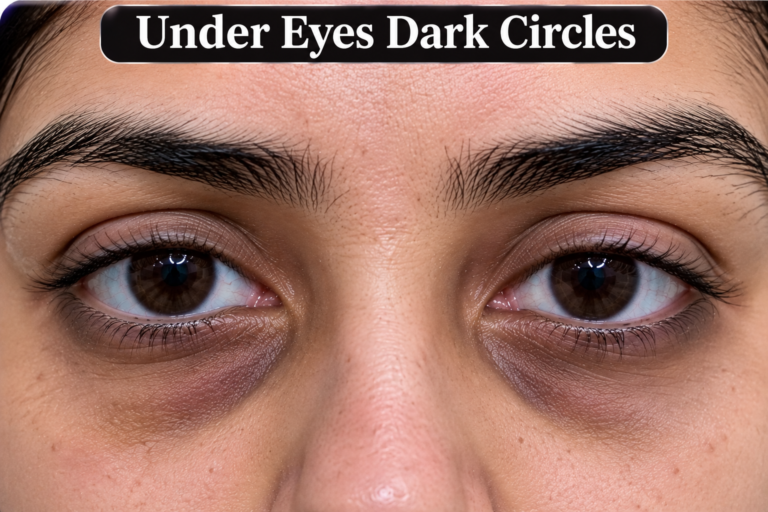
[…] “best” choice for everyone. Curious how long results actually hold up? This guide on how long under eye filler lasts breaks down the timeline in more […]