Medically reviewed • Evidence-led under-eye filler education • Updated October 2026
Under Eye Hyaluronic Acid: What It Is and Which Option Is Right for You7 min read
Disclaimer: This article is for educational and informational purposes only and does not replace professional medical advice. Always consult a board-certified dermatologist or plastic surgeon before undergoing any cosmetic injectable procedure.
Direct answer: Under-eye hyaluronic acid can refer to an injectable HA filler placed by a qualified clinician for selected volume deficits or a topical HA serum used to hydrate the skin surface. They are not interchangeable: a serum will not replace lost deep volume, while injectable results and duration vary by product and person.
This distinction matters more than most people realize before they start researching. Someone searching for under eye hyaluronic acid because they want a lasting fix for a hollow, shadowed under-eye area needs a completely different product and provider than someone looking for a gentler, non-invasive way to keep the skin there hydrated day to day. Confusing the two often leads to disappointment — a topical serum will never fill a genuine volume-loss hollow, and an injectable filler is a bigger commitment than most people need if their only concern is mild dryness or dullness.
Hyaluronic acid is a water-binding substance found in the body and used in products with different formulations. An injectable HA filler is placed beneath the skin to add volume in selected patients; a topical serum primarily supports surface hydration and does not physically fill a deep tear trough. These products have different risks and instructions.
Both approaches have a legitimate place, but they solve different problems. This guide breaks down exactly how injectable and topical under eye hyaluronic acid differ, which one actually addresses dark circles and hollows, what the treatment and recovery process looks like for the injectable route, and how to decide which option — or combination — fits your specific concern.

Injectable vs. Topical Under Eye Hyaluronic Acid
| Factor | Injectable HA Filler | Topical HA Serum |
|---|---|---|
| How it works | Physically restores lost volume beneath the skin | Draws moisture into the skin’s surface layers |
| Who applies it | A trained medical provider, in-office | Self-applied at home, daily |
| Effective for hollows/shadows | Yes | No — cannot fill structural volume loss |
| Typical duration | Around 9 to 12 months | Hours, requires daily reapplication |
| Downtime | Minimal; possible mild bruising or swelling | None |
Neither option is inherently “better” — they answer different questions. If the concern is a visible hollow or shadow under the eye that makes you look tired regardless of sleep, that’s a structural issue that only injectable filler addresses. If the concern is dry, dull-looking under-eye skin without an obvious hollow, a topical HA serum, such as a caffeine-and-hyaluronic-acid formula like this under eye revitalizing serum, can meaningfully improve how hydrated and refreshed the area looks on a daily basis.
Why Not All Dark Circles Respond the Same Way
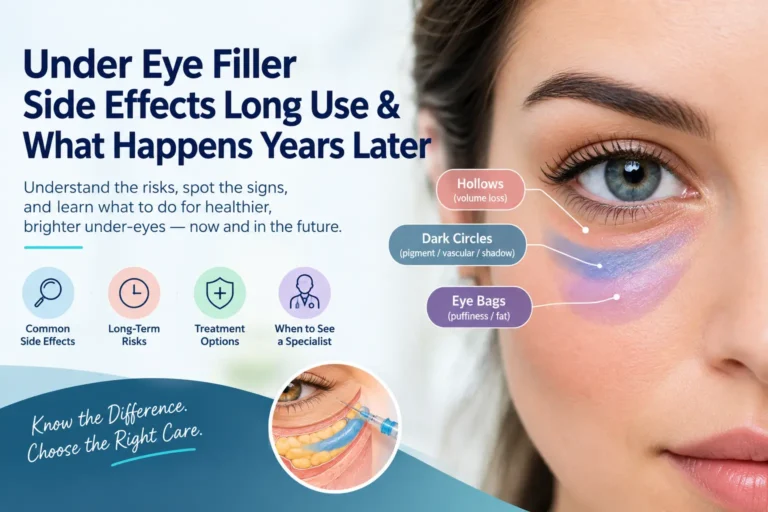
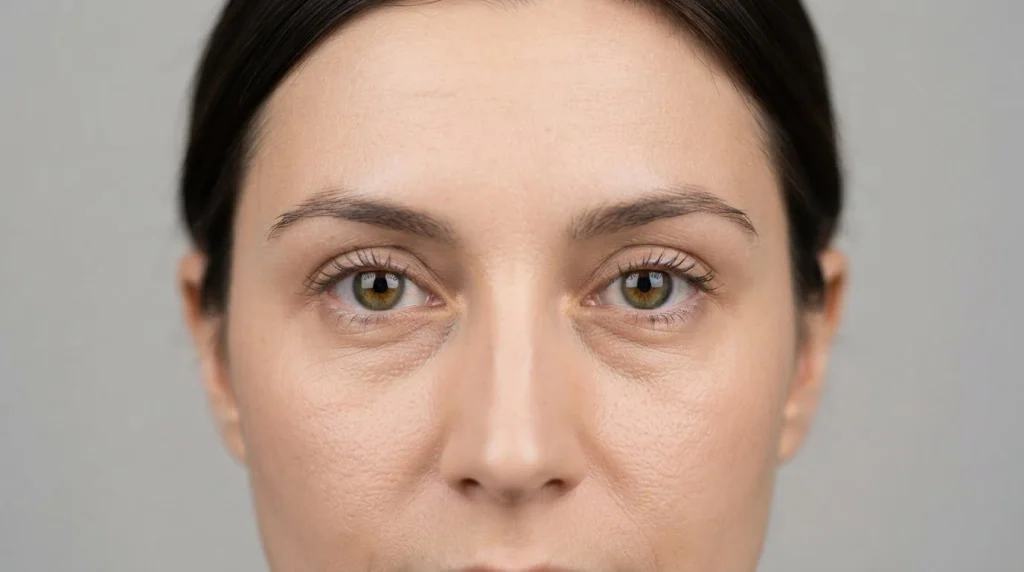
One of the most useful things to understand before pursuing any under eye filler or injectables for under eyes is that “dark circles” aren’t one single problem — they generally fall into a few distinct categories, and hyaluronic acid only addresses some of them directly.
Hollow or shadowed circles. Caused by volume loss in the tear trough with age or genetics. This is the category injectable HA treats most effectively, since filling the hollow directly reduces the shadow responsible for the dark appearance.
Pigmented circles. A brownish or purplish tone caused by melanin concentration in the skin itself, independent of any hollowing. HA filler does not act on pigmentation directly — it can only soften the associated shadow if hollowing is also present.
Vascular (bluish) circles. Caused by very thin under-eye skin revealing the network of small veins beneath it, often worsened by fatigue or genetics. Filler can partially improve the appearance here by adding a layer of volume that reduces skin transparency, though it won’t fully eliminate the vascular tone.
Puffiness or true “bags.” This is a separate issue entirely — a bulge caused by fat pushing forward, sometimes with excess skin, rather than a hollow or pigmentation problem. Fillers for dark circles don’t address true puffiness, and in some cases can make a fat-related bulge look more pronounced rather than less.
Knowing which category applies to you — often only clear after an in-person assessment — is the difference between a treatment that works well and one that leaves you disappointed with the result.

What to Expect From an Injectable Under Eye Hyaluronic Acid Treatment
The consultation, preparation, procedure and follow-up time vary by clinic and patient. Needle and cannula approaches have different considerations; the clinician should explain the proposed method and a plan for complications.
- Cannula injection — a blunt-tipped tool that reduces the risk of hitting a blood vessel, generally associated with less bruising and swelling.
- Needle injection — allows for more precise placement in small areas but carries a somewhat higher risk of bruising.
Product choice and placement depth depend on anatomy and the exact formulation. Initial swelling can affect appearance, so there is no universal one-week touch-up schedule. Ask the treating clinician when reassessment is appropriate; avoid assuming immediate appearance is the final result.
For a closer look at how results typically look at each stage, this breakdown of under eye filler before and after results and this guide to under eye wrinkle filler before and after outcomes show what realistic change looks like across different starting concerns.

Frequently Asked Questions
Does hyaluronic acid work for under eye bags? Injectable HA works well for hollows and shadow-based dark circles caused by volume loss, but it does not treat true “bags” caused by fat pushing forward. That concern typically requires a different, often surgical, approach.
Can a topical hyaluronic acid serum replace under eye filler? No. Topical HA hydrates the surface of the skin and can temporarily reduce the appearance of dryness or fine lines, but it cannot restore lost structural volume the way an injectable filler can.
How long does injectable under-eye hyaluronic acid last? Duration varies by named product and individual response. FDA information for Restylane Eyelight reports results that may last up to 12 months in its study; this is not a guarantee for every patient or product. Discuss follow-up before considering further treatment.
Does hyaluronic acid filler fix pigmented dark circles? Not directly. HA filler addresses hollowing and the shadow it creates, but it doesn’t change skin pigmentation. Pigmented dark circles typically need a different approach, such as topical treatments targeted at pigment or in some cases a dermatology consultation.
Is the injection painful? Discomfort varies. Ask the clinician what anesthetic options, product ingredients and recovery symptoms to expect. Needle or cannula choice does not remove the risk of bruising or serious vascular complications.
How much does under eye hyaluronic acid filler cost? Pricing varies significantly by provider, location, and the amount of product used. Because this treatment typically requires only a small, precise volume, cost is often driven more by provider expertise than by product amount — a consultation is the most reliable way to get an accurate quote.
Key Takeaways
Under eye hyaluronic acid isn’t a single treatment — it’s a category that splits clearly into an injectable option for structural hollows and shadows, and a topical option for daily surface hydration. Matching the right form to your actual concern, rather than assuming one solves every type of dark circle, is what determines whether the result looks meaningfully better or simply different. For hollowing and shadow-based dark circles specifically, injectable HA filler, placed by an experienced provider, remains the most direct and effective option available. For a broader look at treatment options and results, undereyesfiller.com covers the full range of under-eye filler concerns in more depth.

Sarah Mitchell is the founder and research editor of Under Eyes Filler, an independent patient-education resource. She is a researcher and writer, not a licensed medical professional. Her work is to read clinical studies and official FDA and ASPS guidance, then translate them into clear, honest explanations of under-eye filler results, recovery, risks, and realistic costs, so readers can prepare better questions for their own qualified provider.