Medically reviewed • Evidence-led under-eye filler education • Updated October 2026

Fillers Around Eyes: Types, Cost, and What to Realistically Expect10 min read
Disclaimer: This article is for educational and informational purposes only and does not replace professional medical advice. Always consult a board-certified dermatologist or plastic surgeon before undergoing any cosmetic injectable procedure.
Direct answer: “Fillers around the eyes” can refer to several locations and concerns. For a true infraorbital hollow, some named HA products have specific U.S. FDA indications. They include Restylane Eyelight, JUVÉDERM VOLBELLA XC, Belotero Balance (+), and RHA Redensity Eye / Eye Lido, with product-specific age thresholds. Filler will not correct every cause of dark circles or bags, and other injectable materials and fat transfer have different indications, risks and procedures.
FDA approval applies to the exact product and use, not a whole brand or every location around the eye. An off-label treatment may still be considered by a clinician, but it needs a clear explanation of why that product is appropriate and what alternatives exist. See the four-product FDA guide for the named indications.
The area around the eyes is also uniquely unforgiving of the wrong choice. Skin here is among the thinnest on the body, sits close to a dense network of small blood vessels, and shows even minor irregularities that would go unnoticed elsewhere on the face. That combination is why the specific type of filler used, not just the brand name, meaningfully changes both how natural the result looks and how long it lasts. A thick, dense filler that works beautifully in the cheek can look lumpy or bluish under the eye; a very soft filler that integrates well under the eye may not have the structure needed for other areas around the eye that need more support.
It’s also worth being direct about what fillers around eyes can’t do. This treatment addresses volume loss and the shadow it creates — it does not fix crow’s feet, which are caused by muscle movement and respond to a neuromodulator like Botox instead, and it doesn’t correct dark circles caused purely by pigmentation rather than hollowing.
This guide breaks down the four main filler types used around the eyes and how they compare, what the procedure and recovery actually involve, who’s a good candidate, realistic cost, and the risks worth understanding — including the rare but serious ones — before booking a consultation.

The Main Types of Fillers Used Around the Eyes
Direct answer: The four filler materials most commonly used around the eyes are hyaluronic acid, poly-L-lactic acid, calcium hydroxylapatite, and fat transfer, and they differ mainly in how long they last, how natural they look, and how invasive the procedure is.
| Approach | Regulatory and clinical question | Important distinction |
|---|---|---|
| Named HA products for infraorbital hollowing | Is the exact product indicated for this use and age? | FDA indications differ by formulation; outcomes are individual. |
| Other injectable products | Would this use be off-label, and what evidence supports it? | Do not assume they share HA reversibility or suitability. |
| Fat transfer | Is a surgical approach appropriate for this anatomy? | It is a separate procedure with different risks, recovery and costs. |
Hyaluronic acid is the material used in the significant majority of under-eye and periorbital filler treatments, largely because it’s transparent, easy for a provider to smooth evenly, and — critically — reversible if the result isn’t right. That reversibility matters more here than almost anywhere else on the face, since this is an area where a subtle, correctable result is far more forgiving than a long-lasting one that can’t easily be undone.

What the Procedure Actually Involves
A typical filler treatment around the eyes follows a consistent sequence regardless of which material is used, apart from fat transfer, which requires a separate surgical step.
- Consultation and marking. The provider assesses your anatomy, discusses goals, and marks the treatment area before cleansing it thoroughly.
- Numbing. A topical numbing cream is applied and given several minutes to take effect; many hyaluronic acid fillers also contain built-in lidocaine.
- Injection. A fine needle creates an entry point, and filler is placed either directly through the needle or through a blunt-tipped cannula inserted through that same entry point — the cannula approach is often preferred here since it tends to reduce bruising.
- Shaping. The provider smooths the filler into place by hand to distribute it evenly.
The entire procedure typically takes 5 to 20 minutes for injectable fillers. Fat transfer is a different process entirely, requiring liposuction under general anesthesia to harvest fat before it’s processed and re-injected, which adds real surgical recovery time that injectable fillers don’t carry.
Most people tolerate the injection well — a slight pinching sensation or a feeling of pressure is typical, though some find the psychological experience of a needle near the eye more uncomfortable than the physical sensation itself.
Recovery and Realistic Results Timeline
Immediately afterward, a cold compress is commonly applied, and some redness, mild bruising, or swelling is normal and usually short-lived. A follow-up appointment within a few days to a couple of weeks is common to assess whether additional filler is needed, since results can look slightly different once initial swelling fully resolves.
Because fillers gradually absorb into the body, none of these options are permanent. Planning for a touch-up on a schedule that matches your specific filler’s typical duration — sooner for hyaluronic acid, later for fat transfer — is part of realistic long-term planning rather than a sign anything went wrong.
For a closer look at how results specifically progress day by day and what changes to expect at each stage, this breakdown of under eye wrinkle filler before and after results covers the healing timeline in more depth.

Who Is a Good Candidate for Fillers Around Eyes
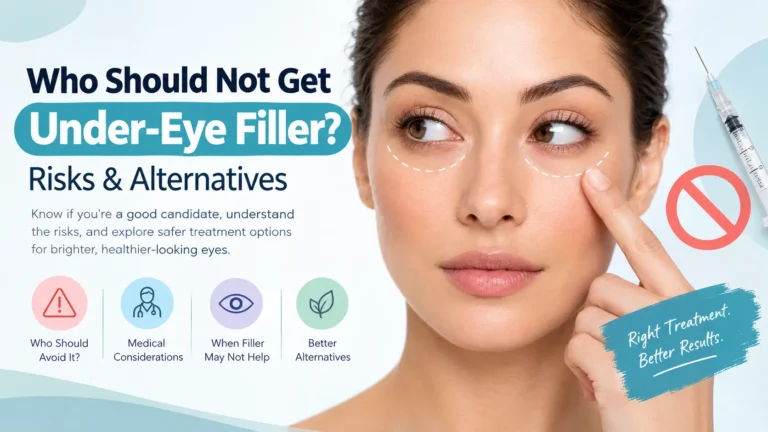
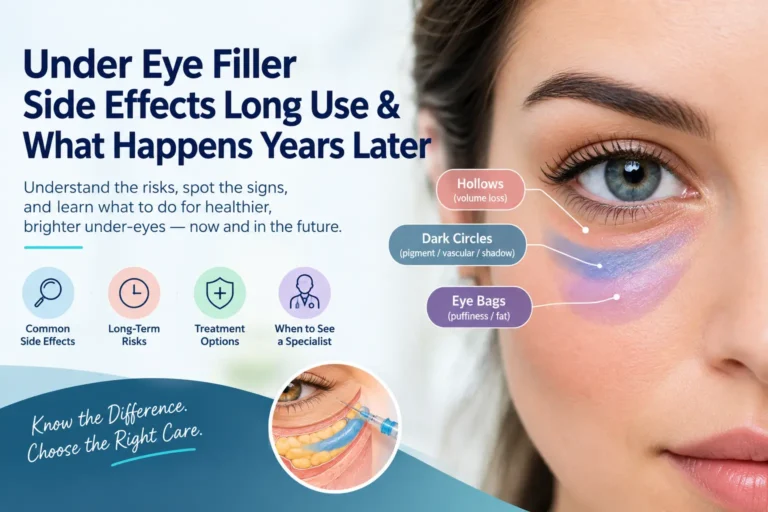
Tear trough darkness and hollowing have several possible causes — genetics, aging, poor sleep, dehydration, excess pigment, or visible blood vessels through thin skin — but fillers are most effective specifically for hollowing caused by genetics or age-related volume loss, not for concerns driven mainly by lifestyle or pigmentation.
Generally good candidates:
- Visible hollowing or a deep tear trough, present even at rest
- Volume loss attributable to aging or naturally deep-set eyes
- Realistic expectations about a subtle, natural-looking improvement
Filler is typically not appropriate, or requires extra caution, for:
- Smokers or frequent vapers, since smoking can slow healing and shorten how long results last
- Pregnant or breastfeeding individuals — fillers haven’t been studied for safety in these groups
- People whose primary concern is pigmentation or dynamic lines like crow’s feet, since filler doesn’t address either
- Very thin, translucent skin, without a provider experienced specifically in adjusting technique for that anatomy
A thorough consultation is what determines which category applies, since hollowing that looks similar from the outside can have very different underlying causes.
What Fillers Around Eyes Cost
There is no verified nationwide under-eye price range in this guide. Request a dated written quote from the treating practice that identifies the exact product, amount, areas treated, consultation and follow-up. Fat transfer is a different procedure with separate surgical costs; compare the full treatment plan rather than a syringe price.
This is a cosmetic procedure and isn’t covered by insurance, so a consultation remains the most reliable way to get a quote specific to your anatomy and the filler type you and your provider choose. For a deeper look at how hyaluronic acid specifically compares to other approaches in this area, including topical alternatives, this guide to under eye hyaluronic acid breaks down that comparison further. For a wider view of how these treatment options, costs, and risks are covered across the industry more broadly, this overview of eye fillers offers additional context worth reviewing alongside this guide.
Risks Worth Understanding
Most side effects from fillers around eyes are mild and temporary — redness, puffiness, a small red dot at the injection site, or bruising. Some are specific to how thin the skin is in this area:
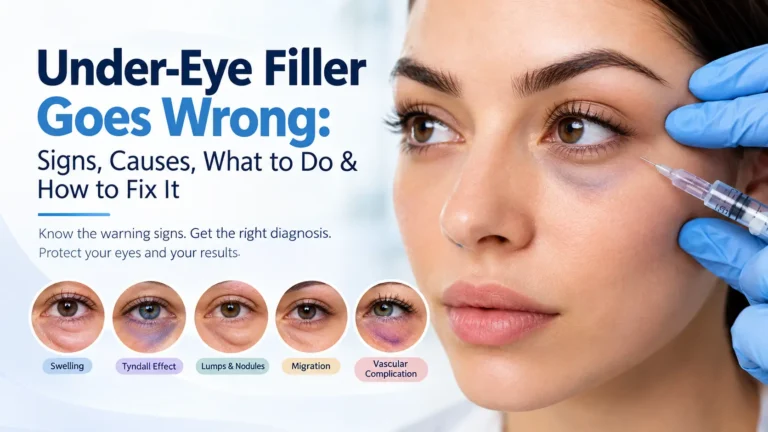
- Tyndall effect — a bluish or puffy discoloration that can occur if filler is placed too close to the skin’s surface; typically correctable with hyaluronidase if hyaluronic acid was used.
- Asymmetry — minor differences between sides are common initially and often resolve; anything persistent is worth a follow-up.
- Small lumps or nodules — more associated with thicker products like poly-L-lactic acid or calcium hydroxylapatite in very thin under-eye skin.
Rare but serious complications include accidental injection into a blood vessel, which the FDA warns can cause skin injury, vision abnormalities including blindness, or stroke. Sudden vision change, severe pain or pale/dusky skin after injection warrants urgent medical care. Appropriate training and emergency planning matter, but no provider can eliminate all risk.
Choosing a highly experienced, board-certified dermatologist or plastic surgeon — rather than selecting a provider based on price alone — is consistently the factor most associated with avoiding these complications.
Frequently Asked Questions
What’s the best filler for around the eyes?
There is no universally best material. A qualified clinician should first identify whether the concern is hollowing, pigment, edema or another condition, then discuss the exact named product, approved indication, alternatives and risks. HA filler can sometimes be broken down with hyaluronidase, but reversibility is not instant or guaranteed for every complication.
Is filler around the eyes FDA-approved?
Yes, some named products have FDA infraorbital indications: Restylane Eyelight, JUVÉDERM VOLBELLA XC, Belotero Balance (+) for adults over 21 and RHA Redensity Eye / Eye Lido for adults 22 or older, each with its own labeled use. Other uses around the eyes may be off-label. Confirm the exact product and indication with your clinician.
How long do fillers around the eyes last?
Duration depends on the exact product, indication, study endpoint and person. FDA information for Eyelight and VOLBELLA reports results that may last up to 12 months in their respective studies. This is not a duration guarantee; non-HA materials and fat transfer should not be treated as interchangeable.
Do fillers around the eyes fix crow’s feet?
No. Crow’s feet are caused by muscle movement, not volume loss, so they respond to a neuromodulator like Botox rather than filler. Filler addresses hollowing and shadowing, not expression-driven lines.
How much do fillers around the eyes cost?
Ask the treating practice for an itemized quote for the specific product, quantity, treatment areas, consultation, follow-up and potential correction. This guide does not have a verified representative under-eye price dataset.
What are the risks of fillers around the eyes?
Most side effects are mild and temporary — bruising, swelling, or redness. Rare but serious risks include the Tyndall effect, nodules, asymmetry, and in very rare cases, vascular complications affecting vision. Choosing an experienced, board-certified provider significantly reduces these risks.
Key Takeaways
The appropriate treatment depends on whether the concern is a hollow, pigmentation, swelling, skin laxity or a fat pad. HA filler, other injectables and fat transfer are not interchangeable. Compare exact indications and risks with a qualified clinician, and ask about the plan for complications before deciding.

Sarah Mitchell is the founder and research editor of Under Eyes Filler, an independent patient-education resource. She is a researcher and writer, not a licensed medical professional. Her work is to read clinical studies and official FDA and ASPS guidance, then translate them into clear, honest explanations of under-eye filler results, recovery, risks, and realistic costs, so readers can prepare better questions for their own qualified provider.