Medically reviewed • Evidence-led under-eye filler education • Updated October 2026

Under Eye Puffiness Fillers: Do They Actually Work, and When Don’t They?9 min read
Disclaimer: This article is for educational and informational purposes only and does not replace professional medical advice. Always consult a board-certified dermatologist, oculoplastic surgeon, or plastic surgeon before undergoing any cosmetic injectable procedure.
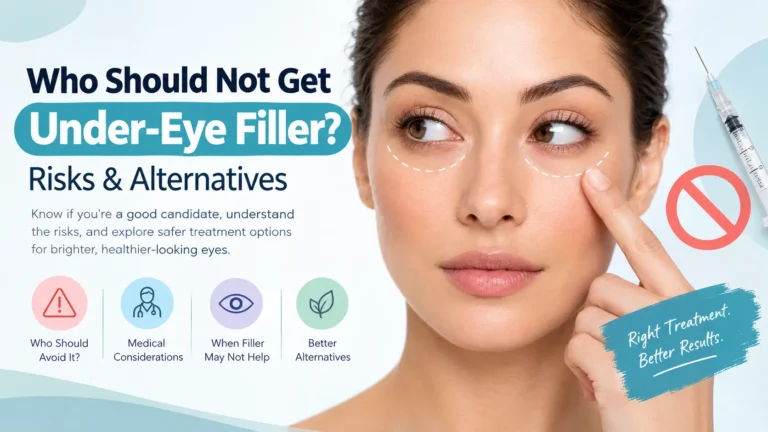
Direct answer: Filler does not treat fluid-related puffiness or remove a protruding fat pad. In selected people with a true hollow beneath a bag, carefully placed filler may soften the transition between the lower eyelid and cheek. Existing edema, prominent fat pads or loose skin may make filler unsuitable, so the cause needs an in-person assessment.
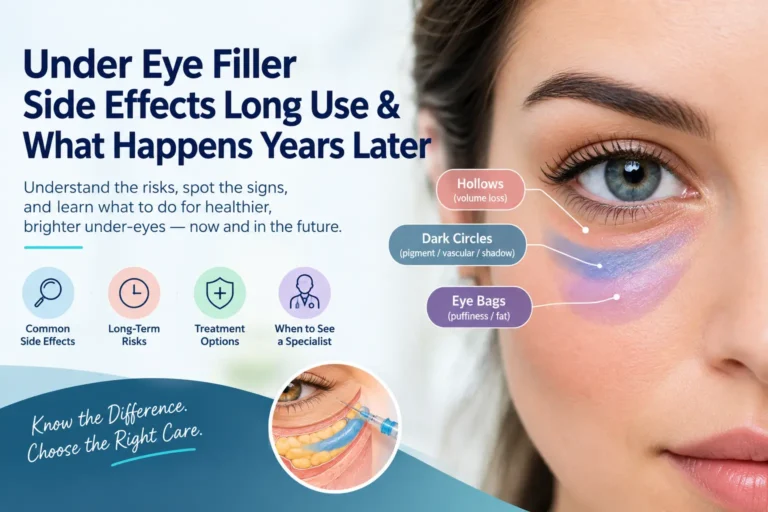
Under-eye fullness can arise from fluid retention, allergies, fat protrusion, skin laxity or a hollow casting a shadow. These may coexist. Filler adds volume to a selected hollow; it does not push back fat, remove fluid or tighten skin. Discuss what the clinician actually sees before choosing treatment.
Even a technically careful injection can produce swelling, visible filler or an unsatisfactory contour. Immediate appearance can be affected by temporary swelling, so it should not be treated as a guaranteed final result. A qualified clinician should explain alternatives and an emergency plan.
That second point matters just as much as the first. The under-eye area is one of the most technique-sensitive places on the entire face to inject filler, precisely because mistakes here are so visible — the wrong filler, too much product, or placement too close to the surface can all make puffiness look worse rather than better, sometimes taking on a bluish or swollen appearance that reads as more obvious than the original bag.
This guide breaks down exactly how under eye puffiness fillers work, when they’re genuinely the right choice versus when they aren’t, the specific mistakes that make puffiness look worse after treatment, realistic cost, and the alternative treatments worth knowing about when filler isn’t the answer.

How Under Eye Puffiness Fillers Actually Work
How it may work: In a suitable patient with a hollow beneath the lower eyelid, HA filler can change the contour between the hollow and cheek. The exact placement and suitability depend on anatomy and the treating clinician’s judgment.
Filler cannot remove or reposition an orbital fat pad. Some structural bags may warrant discussion of surgical options with an appropriate specialist; fluid-related puffiness needs an assessment of its cause.
This is why results appear so immediately dramatic in the right candidate, and also why the same treatment can look ineffective, or make things look worse, in someone whose puffiness comes primarily from a large, prolapsed fat pad rather than a shallow-to-moderate bulge paired with hollowing.

When Filler Is (and Isn’t) the Right Answer for Puffiness
| Situation | Is Filler a Good Fit? | Why |
|---|---|---|
| Mild to moderate puffiness with a visible hollow beneath it | Yes, often very effective | Filling the hollow blends the transition and minimizes visual contrast |
| Puffiness from temporary causes (salt intake, allergies, lack of sleep, fluid retention) | No | These causes fluctuate and aren’t structural; filler treats a permanent hollow, not temporary swelling |
| Significant, prolapsed fat bulge with little to no hollow beneath it | Usually not sufficient alone | There’s minimal contrast to blend, and filler can add unwanted volume on top of existing fullness |
| Puffiness paired with visibly loose or crepey skin | Limited benefit from filler alone | Filler doesn’t tighten skin; a combination approach is often needed. |
Genetics, natural aging, and the gradual weakening of the tissue that holds fat in place around the eye are the most common underlying causes of true under-eye bags — as tissue loses firmness, fat that was previously held back begins to bulge forward. Filler is best matched to the earlier, milder end of that spectrum. Bags that have become pronounced over years, with little tear-trough hollow left to fill, are a better match for surgical fat repositioning than for injectable treatment.

Why Puffiness Can Look Worse After Filler
This happens often enough that it’s worth understanding the specific causes before treatment, not after:
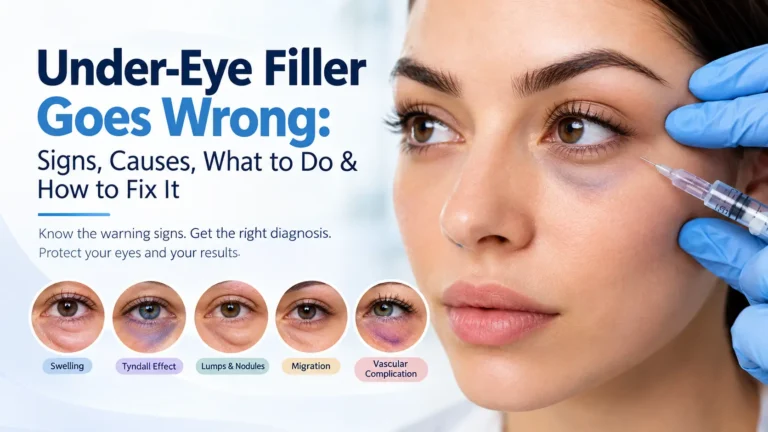
- Filler placed too superficially. The under-eye area has the thinnest skin on the body, so filler sitting too close to the surface can become visible, sometimes taking on a bluish tint known as the Tyndall effect.
- The wrong filler choice. Not all hyaluronic acid fillers behave the same way in this area. Thicker, more hydrophilic formulations designed for volume elsewhere on the face — like those typically used in the cheeks — can attract excess water and create noticeable swelling when used under the thin eyelid skin.
- Too much filler. Overfilling creates its own pouches and can erase the natural eyelid contour, effectively adding a second bulge rather than removing the appearance of the first.
- Festoons or malar mounds. These are a separate, related concern — puffy pouches slightly lower on the cheek, below the traditional tear trough — that can be worsened by filler if technique or product choice isn’t adjusted specifically for that anatomy.
- Normal, temporary post-treatment swelling. Hyaluronic acid attracts water, so some swelling in the days immediately after injection is expected and not a sign of a poor result. This typically resolves with time, cold compresses, head elevation, and reduced salt intake in the days following treatment.
HA filler can sometimes be broken down with hyaluronidase under clinician supervision, but resolution is not guaranteed or immediate. Sudden vision changes, severe pain or pale/dusky skin after injection require urgent medical evaluation.

What Under Eye Puffiness Fillers Cost
Pricing is typically structured per syringe, and most patients need only a portion of a syringe per side, since the goal is precise blending rather than significant volume. Cost is shaped primarily by:
- Provider experience — this is a technique-sensitive area, and experienced injectors who specialize in under-eye work typically charge more, which often reflects meaningfully lower risk of the complications described above
- Filler product used — different hyaluronic acid formulations are priced differently based on their thickness and suitability for thin tissue
- Geographic location — pricing varies meaningfully between major metro areas and smaller markets
- Amount of correction needed — more pronounced hollowing may require additional product or a staged approach across more than one visit
A consultation remains the only reliable way to get an accurate quote for your specific anatomy. For a closer look at how hyaluronic acid specifically compares to other filler materials used around the eyes, including longevity differences, this guide to fillers around eyes breaks down the full range of options and their trade-offs.
Alternatives When Filler Isn’t Enough
Because filler blends rather than removes, more pronounced puffiness often responds better to a different approach, or a combination of approaches. According to guidance reviewed by a facial plastic surgeon at Johns Hopkins Medicine, options for reducing under-eye bags beyond filler include:
- Laser resurfacing — treats wrinkly, crepey under-eye skin and stimulates new collagen for firmer skin, with results that can last years depending on skin type and sun exposure.
- Chemical peel — removes superficial skin layers to reveal tighter, brighter skin beneath, similarly lasting a few years depending on skin type.
- Nanofat grafting — processed fat injected to improve skin quality and collagen without adding significant volume, often suited to thin, wrinkly under-eye skin.
- PRP (platelet-rich plasma) — uses growth factors from your own blood to improve skin texture and reduce fine wrinkles, a lower-risk option for people wanting a more gradual, natural improvement.
- Lower blepharoplasty (surgical eyelid lift) — repositions or removes fat and tightens muscle and skin; for pronounced, permanent bags, this is typically the most complete and long-lasting solution, sometimes eliminating the need for future touch-ups entirely.
Combination treatment is common in practice — for example, laser resurfacing paired with filler, or filler paired with a surgical lift for more advanced cases — rather than expecting one single treatment to fully resolve every contributing factor at once.
For a deeper understanding of how hyaluronic acid injectable treatment compares to topical options for this general area, this guide to under eye hyaluronic acid covers that distinction, and this breakdown of under eye wrinkle filler before and after results shows what realistic change looks like at each stage of healing.
Frequently Asked Questions
Do fillers actually work for under eye puffiness?
Selected hollows next to mild structural fullness may look smoother after filler, but fluid-related puffiness and prominent fat pads are different problems. An examination is needed to determine whether filler is appropriate.
Can filler make under eye bags look worse?
Yes. Placement, product choice, volume and a person’s tendency toward edema can worsen the appearance. A clinician should assess unexpected swelling or new symptoms; do not assume every outcome can be dissolved easily.
How much do under eye puffiness fillers cost?
Cost varies by provider, location, and product, but is typically priced per syringe, often less than a full syringe per side since precision matters more than volume here. A consultation is the most reliable way to get an accurate estimate for your specific case.
How long do under eye puffiness fillers last?
Longevity varies by the exact product and individual response. Some FDA studies of infraorbital products reported improvement up to 12 months, which is not a guarantee for every patient. Ask about the product’s actual label and follow-up.
What’s the difference between under eye bags and puffiness?
The terms are often used interchangeably, but “bags” typically refers to a more structural, fat-related bulge, while “puffiness” can also include temporary swelling from causes like salt intake, allergies, or poor sleep. Filler addresses the structural type; temporary puffiness usually resolves with lifestyle changes rather than injectable treatment.
What treatment works best for severe under eye bags that filler doesn’t fix?
For prominent fat pads, a consultation with an oculoplastic or plastic surgeon can assess whether lower blepharoplasty or another approach is appropriate. The best option depends on anatomy, health and goals.
Key Takeaways
Filler may soften the contour of a hollow next to an under-eye bag in selected people. It does not remove fat or treat fluid-related swelling, and can worsen puffiness in some patients. Ask an appropriately qualified clinician to identify the cause and discuss risks and alternatives.

Sarah Mitchell is the founder and research editor of Under Eyes Filler, an independent patient-education resource. She is a researcher and writer, not a licensed medical professional. Her work is to read clinical studies and official FDA and ASPS guidance, then translate them into clear, honest explanations of under-eye filler results, recovery, risks, and realistic costs, so readers can prepare better questions for their own qualified provider.