Medically reviewed • Evidence-led under-eye filler education • Updated October 2026
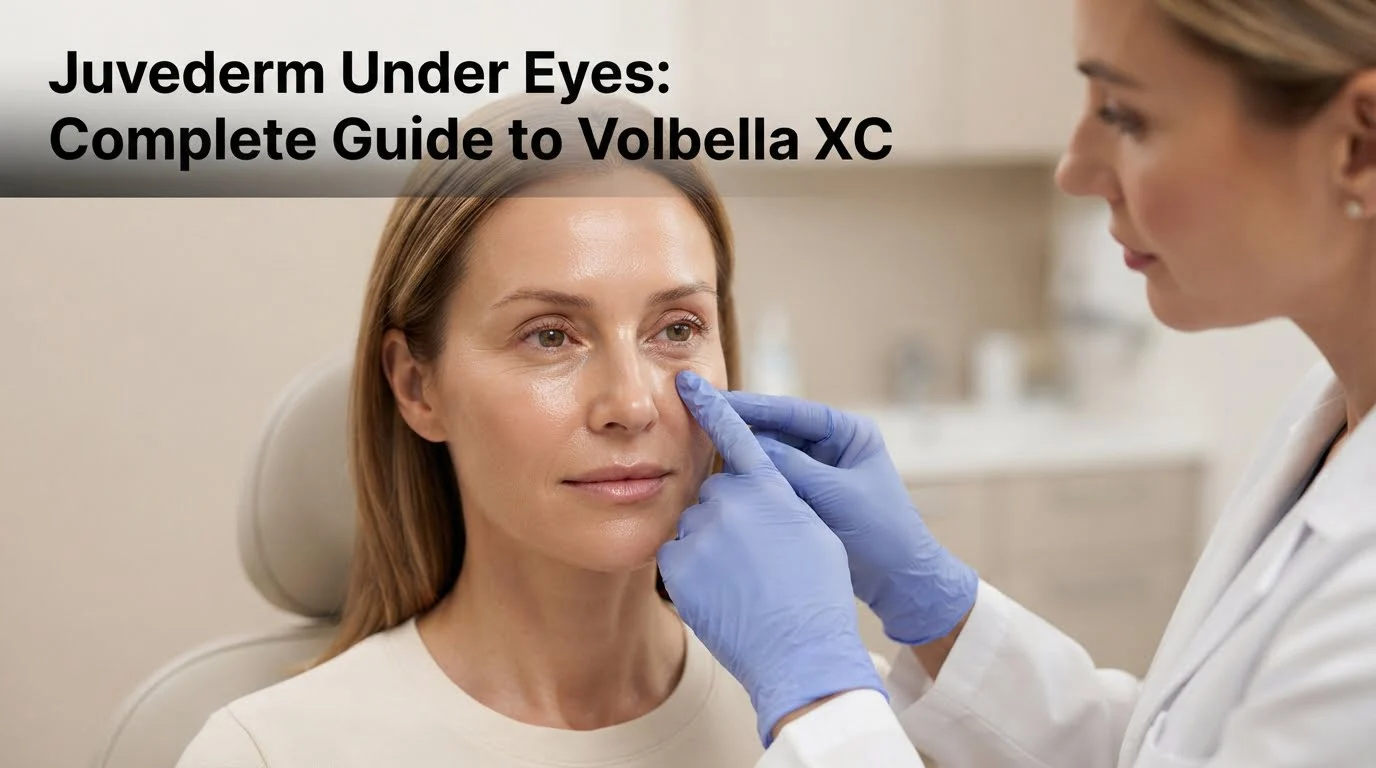
Juvederm Under Eyes: A Complete Guide to Volbella XC Under-Eye Filler8 min read
There’s a specific kind of tired that has nothing to do with how much sleep you got. It’s the hollow, shadowed look that settles in just under the eyes — a groove between the lower lid and the cheek that catches light the wrong way and reads as exhaustion even on a good day. For a lot of people, this isn’t fixable with concealer or a better skincare routine, because the problem sits beneath the skin: a loss of volume in the tear trough, not a surface-level one. That’s where Juvederm under eyes comes in.
Juvederm under eyes usually refers to Juvéderm Volbella XC, a hyaluronic acid filler whose FDA indication for infraorbital hollowing was approved on May 28, 2021, for adults over 21. That approval applies to this named formulation and use; it does not cover every Juvéderm product or every cause of under-eye darkness. Other named fillers have since received this indication. A qualified injector should discuss anatomy, alternatives, risks and whether filler is appropriate for the individual.
The appeal is straightforward. Hollowing under the eyes casts a shadow that reads as dark circles even when there’s no actual pigment problem, and it can make someone look years older or perpetually worn out regardless of how rested they really are. Juvederm under eyes treatment works by restoring that lost volume with a soft, smooth HA gel that integrates into the thin under-eye tissue, softening the shadow and smoothing the transition between the lower lid and cheek. Results are visible immediately, and because the product contains lidocaine, most people tolerate the injections with only mild discomfort.
This guide goes deeper than the basics — covering the anatomy involved, the needle-versus-cannula debate injectors still argue over, what actually determines a good candidate, and why this is considered one of the least forgiving areas on the face to treat.
What Is Juvederm Under Eyes (Volbella XC) and How It Works
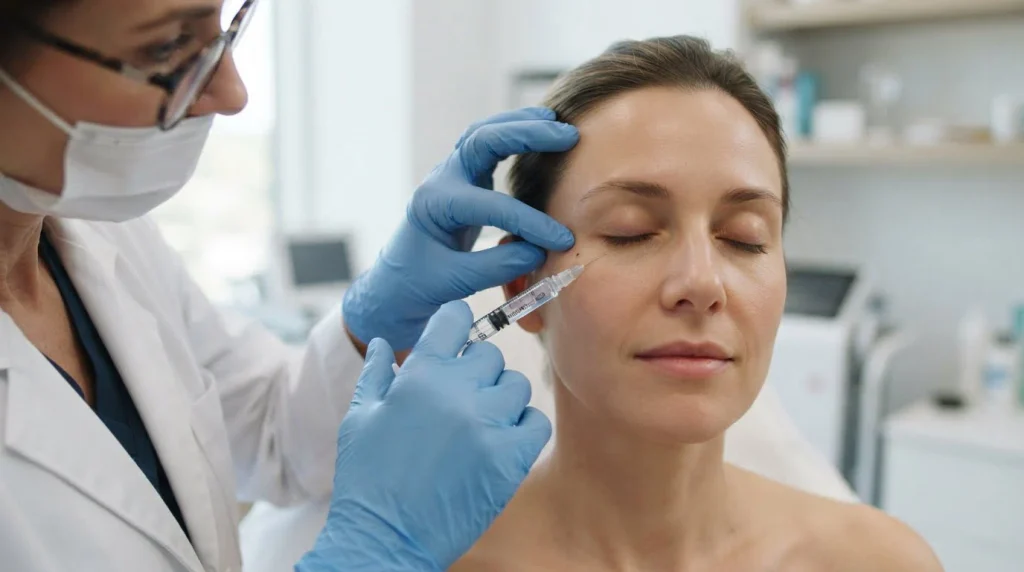
Volbella XC is a cross-linked hyaluronic acid gel engineered to be softer and less water-attracting than fillers used for cheeks or lips. That difference matters here: the skin under the eyes is often less than a millimeter thick, and a thicker or more hydrophilic filler can swell, look lumpy, or take on a bluish cast under it.
The tear trough itself sits at the intersection of several structures — the orbicularis oculi muscle, the orbital septum, and the malar and postseptal fat pads — with the infraorbital nerve and small blood vessels running close by. An experienced injector places small volumes deep, along the bony orbital rim, to rebuild lost structure rather than layering filler on top of existing tissue. This anatomical complexity is exactly why the FDA required dedicated training for this indication.
Needle or Cannula: Does the Technique Matter?
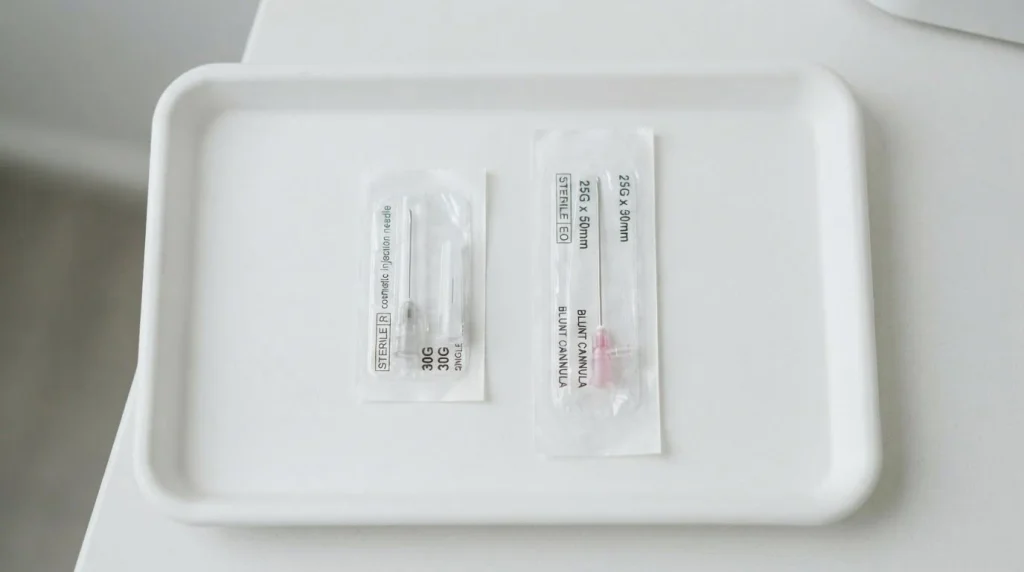
Needles and cannulas are both used for this area. Published studies differ in technique, patient selection and outcomes, so a universal safety advantage cannot be promised for either instrument. Ask a qualified injector why a particular approach fits your anatomy and what the plan is if a vascular complication is suspected; see the FDA safety guidance.
In practice, this means neither tool is inherently “safer” — the injector’s skill and anatomical knowledge matter more than which instrument they reach for. It’s a reasonable question to ask a prospective provider which technique they prefer and why.
Am I a Good Candidate for Under Eye Filler?
Injectables for under eyes work best on hollowing caused by genetics or age-related volume loss — the kind that creates a visible dip or shadow between the lid and cheek. A good injector assesses three things before recommending filler: how much fat has been lost, how thin the skin has become, and whether the underlying bone has resorbed with age, since all three change how much correction is realistic and how the tissue will respond.
Filler doesn’t fix everything that shows up in this area, though. Puffiness or bags, which usually come from fat pads pushing forward rather than volume loss, is a different problem entirely — our guide to under-eye puffiness and fillers covers that distinction. Fillers for dark circles also work better on shadow-related darkness than on pigment-based discoloration, which usually needs a topical or laser approach instead.

What to Expect During the Procedure
The injection itself typically takes 15 to 30 minutes. Most providers skip a separate numbing step since Volbella XC already contains lidocaine, though topical anesthetic beforehand is common. Mild swelling, redness, or bruising afterward is normal — ice helps — and most practices schedule a follow-up two to four weeks later, once any swelling has settled, to assess whether a touch-up is needed.
Before and After: What Results Actually Look Like
The fully settled result usually takes about two weeks to appear. In under eye fillers before and after comparisons, the change is subtle rather than dramatic: a softer transition where there was a visible hollow, less shadow, and a less tired appearance, without altering the shape of the eye. Because this area is so technique-sensitive, results vary noticeably by injector — it’s worth reviewing a provider’s own eye fillers before and after gallery, not just brand marketing photos. Our comparison of filler options around the eyes is a useful next read if you’re weighing this treatment against alternatives.
Cost, Duration, and Reversibility
| Cost per syringe | Request a dated, itemized quote from the treating practice |
| Typical need | Individualized after clinical assessment; no fixed amount per side |
| How long it lasts | FDA study: results may last up to 12 months; individual results vary |
| Reversible? | Hyaluronidase may be used by a clinician; complete correction is not guaranteed |
Because Volbella XC is hyaluronic acid–based, a clinician may use hyaluronidase to treat an unwanted result or certain complications. Dissolving filler is a medical procedure with its own limitations and risks; complete correction cannot be guaranteed. Discuss the options and urgency with the treating clinician.
Risks and Side Effects
Bruising, swelling, redness and tenderness can occur after treatment. Lumps, persistent swelling or discoloration need assessment. Accidental injection into a blood vessel is uncommon but may cause tissue injury, vision loss or stroke. Sudden vision changes, severe or unusual pain, blanching or concerning skin-color changes during or after injection require immediate medical attention. See the FDA risk information.

Choosing a Provider
Look for board certification in dermatology, plastic surgery, or oculoplastic surgery, specific experience in the tear trough (not just filler generally), and a willingness to show you their own before-and-after cases. The official Juvederm under-eye filler page and board-certified dermatologists like Dr. Michele Green both point to the same conclusion: technique and experience drive outcomes here more than the product itself.
Conclusion
Volbella XC has an FDA indication for infraorbital hollows in adults over 21, but it is not the only product with an indication for this area. Restylane Eyelight, Belotero Balance (+), and the specifically labeled RHA Redensity Eye formulations also have FDA infraorbital indications. Approval is product- and use-specific, and none is automatically the right option for every patient. Read the product-specific FDA guide and discuss candidacy and risks with a qualified clinician.
FAQ
Is Juvederm safe for under the eyes?
Volbella XC has an FDA indication for infraorbital hollowing in adults over 21, but no injection is risk-free. Discuss your history and alternatives with a qualified injector; seek immediate care for sudden vision changes or unusual severe pain. FDA safety details.
How much does Juvederm under eyes cost?
Pricing varies with the practice, location, product and amount used. Ask for a current written quote showing the planned volume, provider fee and any follow-up or correction costs; there is no standard one-syringe-per-side requirement. See our cost guide for what to compare.
How long does Juvederm last under the eyes?
The FDA summary of the Volbella XC under-eye study says results may last up to 12 months. Individual results vary; that study finding is not a guaranteed duration or a universal schedule for repeat treatment.
Is needle or cannula better for under-eye filler?
Neither technique can be declared universally safer. The choice depends on anatomy and the clinician’s training and assessment; both require a plan for recognizing and treating complications.
Can Juvederm under eyes fix dark circles?
It works well for dark circles caused by hollowing and shadow, but not for darkness caused by pigmentation or visible blood vessels, which need a different treatment.
Can under-eye filler be reversed?
A clinician may treat HA filler with hyaluronidase, but complete reversal or a particular outcome cannot be promised. Sudden vision symptoms or severe pain need urgent assessment, not a routine correction appointment.

Sarah Mitchell is the founder and research editor of Under Eyes Filler, an independent patient-education resource. She is a researcher and writer, not a licensed medical professional. Her work is to read clinical studies and official FDA and ASPS guidance, then translate them into clear, honest explanations of under-eye filler results, recovery, risks, and realistic costs, so readers can prepare better questions for their own qualified provider.